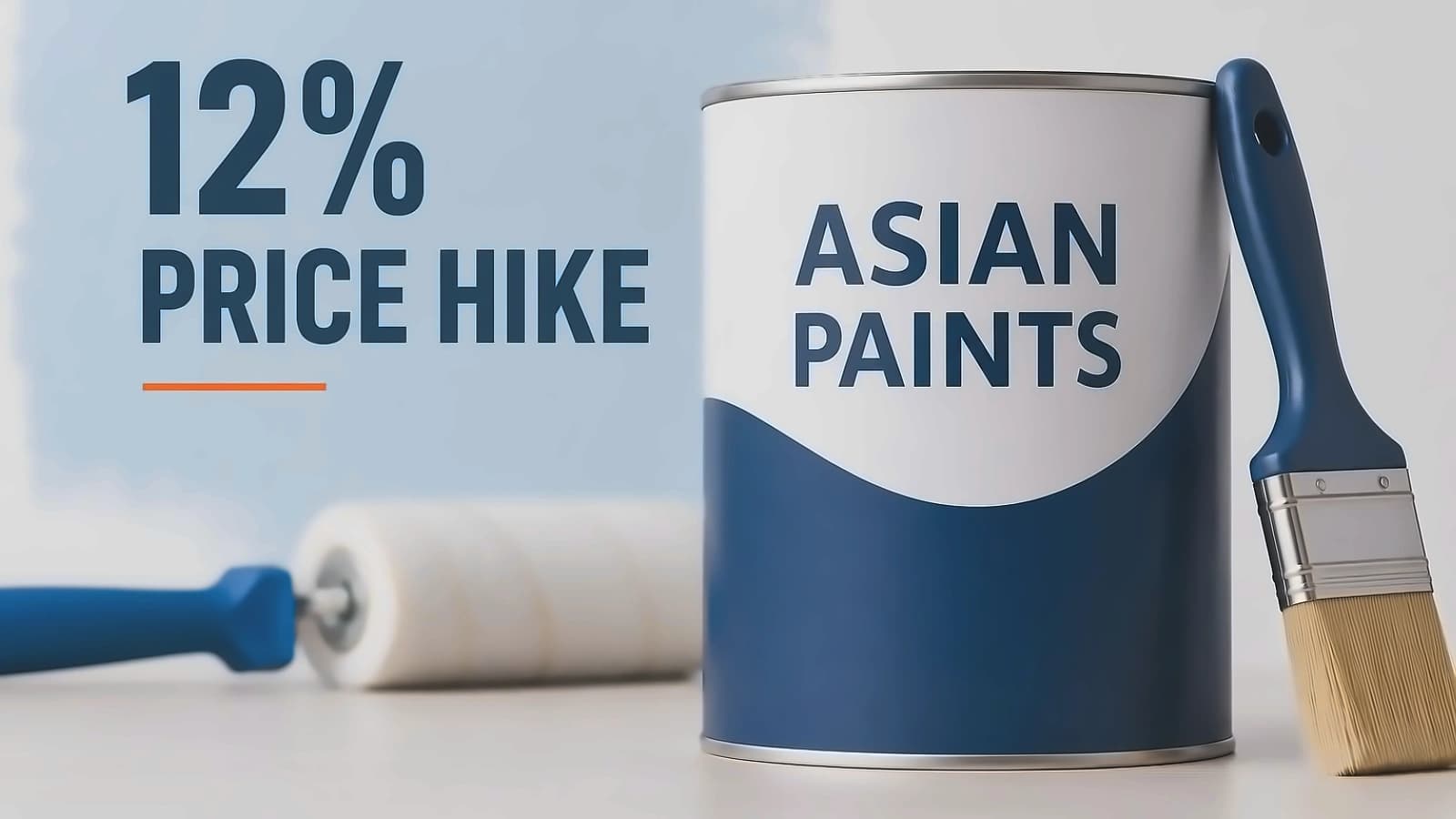
Asian Paints has implemented 12% price increases to offset rising raw material costs linked to the conflict in West Asia, marking the steepest price hike among major paint makers in India. According to the company's annual report, Chairman R Seshasayee stated that the recent escalation in West Asia has created significant inflationary pressures in raw materials, particularly through crude oil-linked inputs. The company noted that the geopolitical situation in West Asia continues to remain uncertain, hence it may take time before raw material prices return to normal levels. Speaking at the AGM, Seshasayee emphasized that while the company has taken pricing measures to offset higher input costs, it remains mindful of protecting consumer demand and will continue to adopt a balanced and responsible approach.
Asian Paints' price increase stands out among industry peers, with Berger Paints India, Asian Paints, and Kansai Nerolac Paints having previously increased prices by 2% to 3%, while JSW Dulux implemented a 10% hike. As reported by The Economic Times, other Indian paint manufacturers have also raised prices this year, with Berger Paints India increasing its prices between 1% and 2%, Kansai Nerolac Paints raising prices by 2-3%, and JSW Dulux by 10%. The paint companies have been under pressure as the conflict in the Middle East has disrupted supplies of crude oil-linked raw materials and petrochemicals, with the increase in input costs affecting production expenses and impacting profit margins across the industry.
Asian Paints reported strong financial results for FY26, with consolidated net sales of ₹35,516 crore, registering growth of 5.1% over the previous year. According to CNBC TV18, consolidated operating margin improved to 18.9% from 17.8%, while net profit after minority interest rose 17.9% to ₹4,325.4 crore. The company also noted that FY26 remained challenging due to global uncertainty, changing trade policies, tariff-related developments, geopolitical tensions and supply chain disruptions. The financial year was affected by a prolonged monsoon that compressed the festive painting season, measured consumer discretionary spending and increased competitive intensity following industry consolidation.
The Board has recommended a final dividend of ₹23 per equity share, in addition to the interim dividend of ₹4.50 per share paid in November 2025. Subject to shareholders' approval, the total dividend for FY26 will be ₹27.50 per equity share, compared with ₹24.80 per share in the previous financial year, representing an increase of around 11% and a payout ratio of 60%. This marks Seshasayee's final year as Chairman of Asian Paints, with the AGM serving as his farewell address to shareholders. The company expanded its distribution network by adding nearly 6,000 retail touchpoints across India and strengthened its institutional business through the AP Assure digital platform.
Despite strong financial results, Asian Paints shares ended lower on Monday, July 13, by 1.06% at ₹2,649.40 on the NSE, as reported by CNBC TV18. The market reaction may reflect investor concerns about the price increase impact on consumer demand, despite the company's balanced approach to cost pass-through. Seshasayee cautioned that while there are early signs that tensions in West Asia are easing, the situation remains fluid and input costs could take time to normalise. The company emphasized that the recent escalation in West Asia has created significant inflationary pressures in raw materials, particularly through crude oil-linked inputs, making the 12% price increase necessary for maintaining business viability.