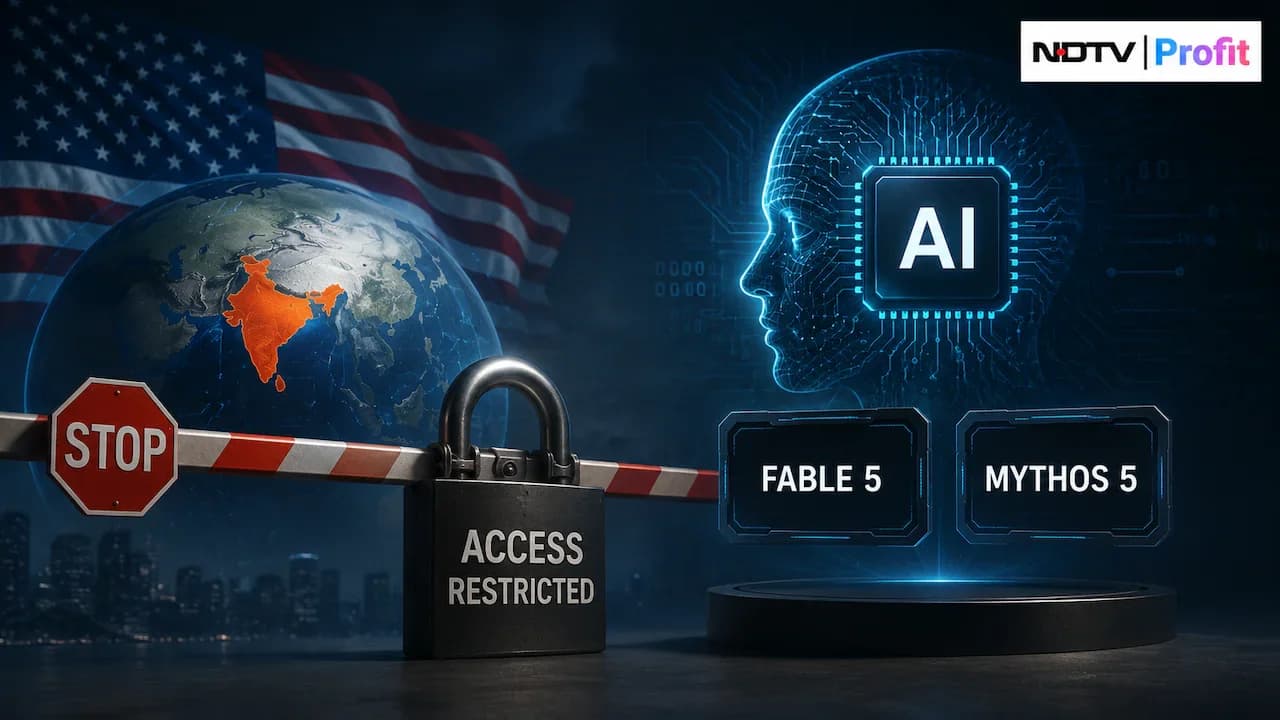
The Fable 5 episode has fundamentally exposed the geopolitical risks of AI dependency, as the US government's directive forced Anthropic to suspend access to both Fable 5 and Mythos 5 models for foreign nationals, including those working within the US. According to TechCrunch, the move has had immediate implications across markets such as India, where developers and companies had only recently begun experimenting with the systems. The shutdown demonstrates that access to advanced AI systems can be shaped by policy rather than business decisions alone, challenging the assumption that global access would remain continuous for licensed users. As reported by Business Standard, this development compels companies to rethink AI dependence, sovereign capabilities, and the risks of building on technologies they do not control, with the decision coming without detailed public explanation but likely linked to national-security concerns about the models' capabilities.
The IT industry faces significant employment transformation as TCS Chairman N Chandrasekaran has warned that the company may have as many AI agents as human employees in three years. As reported by Business Standard, this warning suggests that hiring will slow substantially for India's IT industry, which has long been viewed as a gateway to white-collar employment. The editorial emphasizes that for India's IT industry, this represents a serious signal about changing terms of entry into the labor market. Companies, universities and governments must act quickly on upskilling, reskilling and new career pathways to ensure employees and new graduates are not locked outside an AI-driven labor market. The latest analysis reinforces this trend, noting that modern employees increasingly expect businesses to operate with updated digital tools and efficient systems, with companies that continue relying heavily on outdated processes struggling to attract younger, digitally skilled talent.
The fintech sector is experiencing significant AI integration, particularly in cross-border payment processing where AI-driven cross-border payments remain at an early stage despite growing opportunity. According to Business Standard, Movin Jain, Founder of Skydo, estimates that AI will probably account for 5-10% of total cross-border payment flow by the end of this year, with the category becoming significantly more prominent in the next 1-2 years. This development comes as domestic payments processors eye attractive margins within the cross-border space, with Cashfree Payments expecting a 25% contribution to revenue from cross-border payments alone, from its current 9%, in the coming years. As reported by Business Standard, global companies are primarily focused on enabling UPI, improving card transaction success rates for international payments, and finding local partners to support their go-to-market efforts in India, with international transactions often disabled by default on newly issued cards in India, resulting in lower payment success rates.
The Fable 5 shutdown has accelerated the debate about sovereign AI capabilities and reducing dependence on foreign platforms. As reported by Business Standard, Zoho founder Sridhar Vembu argues that Indian organisations should "embrace smaller models, both Indian and Chinese open-source ones" even if they require more effort to deploy, asking "Why pay money to people who don't even want to sell to you?" Eros Innovation founder Kishore Lulla described the moment as "inevitable," arguing that dependence on "foreign platforms, foreign models and foreign infrastructure" creates a "structural dependency that India must urgently address." The IndiaAI Mission is focused on building local compute capacity and supporting domestic AI models, with Business Standard's analysis by Shankar Acharya noting that borrowed time must lead to real reform, including lower tariffs to revive goods exports, more investor-friendly bilateral investment treaties, and fiscal correction. The latest developments suggest that sovereign capability has been reframed from long-term ambition to near-term resilience policy, requiring the government to enable conditions through compute, energy, talent and data access rather than directly operating labs.