India's Battery Energy Storage System opportunity is entering a significantly larger phase with the government approving ₹50,000 crore for deploying 50 gigawatt-hours (GWh) of Battery Energy Storage Systems under the Green Energy Corridor Phase-III scheme. According to reports from The Financial Express, this allocation is part of a broader ₹1.86 lakh crore programme designed to support the evacuation of up to 135 GW of renewable energy by FY33. The programme also includes ₹1.36 lakh crore for intra-state transmission systems, creating opportunities for transmission companies. As storage demand rises with expanding solar and wind energy capacity, BESS is becoming critical to manage intermittency, meet peak-hour demand and supply power during non-solar hours, with the ₹50,000 crore allocation potentially accelerating investments across the storage ecosystem.
India's green energy transition is facing significant challenges as 24 gigawatt hour BESS projects were cancelled or re-tendered during 2018-2026, highlighting widespread viability issues in the sector. As reported by Mint, this represents over 11% of the Central Electricity Authority's (CEA) target of 208 GWh by the end of this decade. Industry experts believe as much as one-third of the projects bid out so far could be unviable, with concerns persisting over aggressive bidding practices. Alok Kumar, director general of the All India Discoms Association (AIDA), noted that "companies are still figuring out the technology. It is estimated that around 30%, or up to one-third of the projects, may not be viable as developers are yet to complete financial closure." The viability gap is particularly acute as 22 GWh capacity awarded under the government's ₹5,400 crore viability gap funding (VGF) 2.0 plan is under strain, with developers having secured contracts at unviable rates below ₹2 per kilowatthour (KWh).
The companies demonstrate strong financial fundamentals with combined order books of ₹25,803 crore plus Vikram Solar's 7.9 GW order book. According to The Financial Express, Pace Digitek reported ₹555 crore revenue in Q1FY27 with 15.5% EBITDA margin and ₹62.5 crore net profit. Vikram Solar achieved ₹1,563 crore revenue with 8.1% EBITDA margin despite facing margin pressures from raw material inflation. Premier Energies delivered ₹2,463 crore revenue with 29% operating EBITDA margin and ₹471.9 crore net profit in Q1FY27. Pace Digitek holds an executable energy order book of ₹8,453 crore (5.10 GWh executable visibility) as of June 30, with management guiding for revenue of ₹3,200-3,400 crore for FY27 and scaling to ₹4,000-₹4,200 crore by FY28.
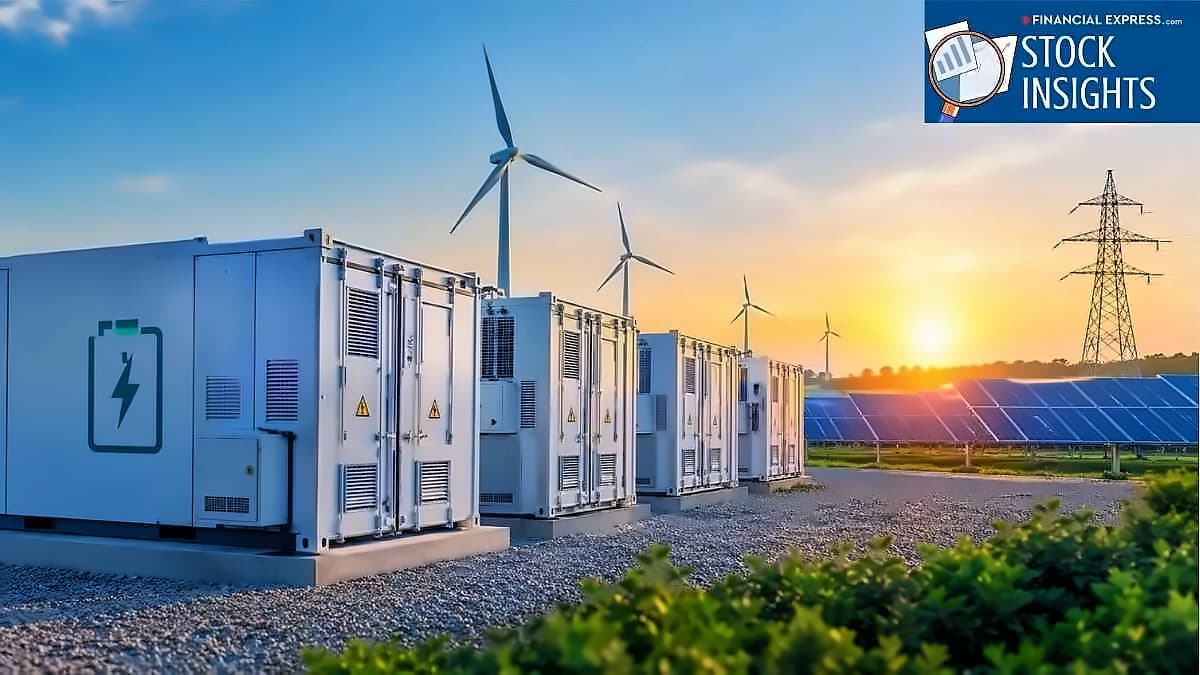
The companies are executing aggressive expansion strategies to capitalize on the BESS opportunity. As reported by The Financial Express, Pace Digitek is adding another 5 GWh manufacturing line expected operational by Q3 FY27, bringing total capacity to 10 GWh. Vikram Solar is establishing a 7.5 GWh LFP Gen2 large-format cells manufacturing facility targeted for Q4FY29, with another 7.5 GWh facility planned for FY30. Premier Energies is building 12 GWh BESS container plants with construction of the first 6 GWh plant (Phase 1) currently underway, while also expanding into transformers and inverters to contribute 25% to revenue by 2028.
Despite viability challenges, the sector shows signs of recovery with 13.47 GWh BESS capacity installed as of September end, while around 153 GWh is in the pipeline at various stages of regulatory approval. According to Mint, retendering processes for cancelled projects are seeing tariff increases, with a tender awarded at ₹1.97 per unit a few months back discovering a tariff of ₹2.35 in just months. Debmalya Sen, president of the IESA, noted that "the reverse auction that is happening for the retendered capacity is seen to jump close to today's reality." However, industry experts emphasize the need for realistic pricing, with Vikash Venkataramana from Amara Raja Advanced Cell Technologies stating that "the prospect of more cancellations was a major concern as it threatens to derail both national clean energy targets and broader market confidence." The sector's viability will largely depend on moving away from aggressive bidding toward sustainable, bankable projects that can withstand market volatility and technological uncertainties.