Hyundai Motor Group just dropped a big number: $15.5 billion for India between 2026 and 2032. This isn't a casual promise.
The money will flow through Hyundai Motor India Limited and Kia India, covering manufacturing, R&D, suppliers, and new mobility businesses. A dedicated investment entity will be set up to manage it all.
The goal is clear: India is now a "core strategic market" for the next 30 years and beyond.
The Capacity Puzzle: 1.4 Million and Counting
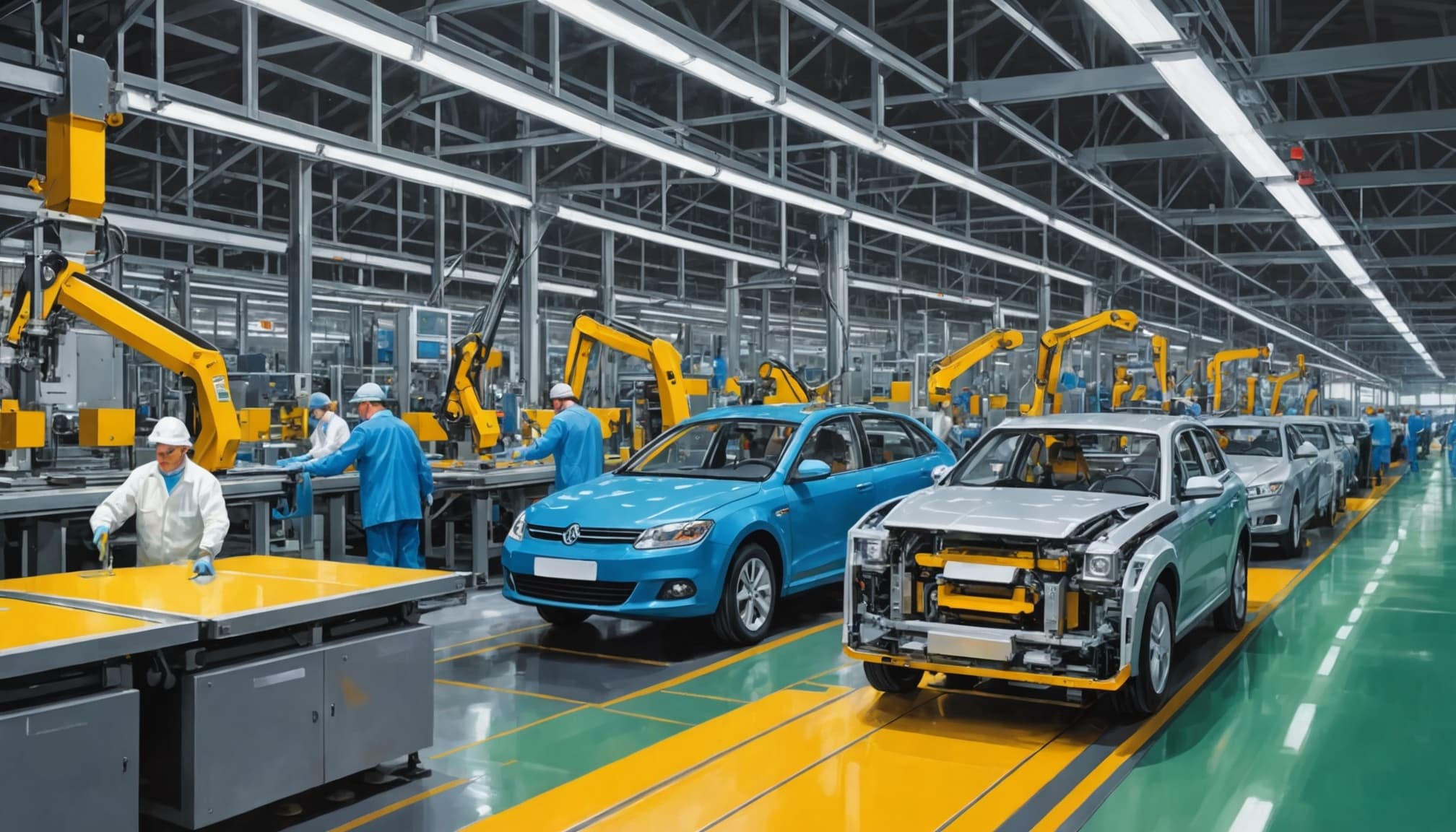
Hyundai isn't starting from scratch. It already has over 1.4 million units of annual capacity in India: 824,000 at Chennai, 170,000 at Pune, and 431,000 at Kia's Anantapur plant. The new plan will expand this, but the details are fuzzy. Pune is the lever. Its capacity is set to rise in phases—from 170,000 to 250,000 by 2028, and potentially to 320,000 by 2030. Chennai's utilisation is around 72% in 2026 but is expected to hit 90–92% in 2027 as new models launch. This phased approach is deliberate. It keeps utilisation high, which is crucial for margins. Analysts point out that factory utilisation is the key swing factor for returns. If volumes lag, the extra fixed costs and depreciation from new capacity will bite. The group hasn't said how much of the $15.5 billion is fresh money versus the previously announced ₹45,000 crore plan for Hyundai Motor India. It also hasn't given an annual spending schedule or a total capacity target. We know the direction, but the exact destination is still a guess. Investor Presentation +1
R&D and Localization: The Real Engine
About $700 million is earmarked for R&D, including a vehicle testing track. The aim is to build a "complete R&D system" and make India a "core innovation hub." Today, Hyundai's India R&D centre in Hyderabad supports global development, especially for compact cars. The new investment should speed up local validation and engineering, potentially shortening development cycles. But will India design its own platforms? That's not confirmed yet. Platforms are still largely defined in Namyang, Korea, with India doing local integration. The $700 million funds infrastructure, not necessarily a full platform shift. The benefits will likely show up after 2028, when the holistic R&D hub is planned.
Localization is the other big lever. Hyundai Motor India's localization is about 83% now, with a target of 90% by 2030. This cuts import dependency and buffers against currency swings. It also helps meet PLI scheme requirements, which demand 50% domestic value addition for EV incentives. The group plans to invest in regional suppliers to push localization further. This isn't just about cost—it's about supply chain resilience. A supplier fire in June 2026 disrupted production, showing the risks. More local suppliers, closer to plants, should reduce logistics costs and exposure to shocks. But the group hasn't quantified the savings or the number of new suppliers. We know the intent, not the math. Transcript +2
New Verticals: Charging, Finance, and Recycling
The plan goes beyond cars. Hyundai is eyeing EV charging infrastructure, specialized auto financing, and end-of-life vehicle recycling. These are meant to create new revenue streams and boost customer lifetime value. Hyundai Motor India already has 183 DC fast chargers and plans 600 by 2030. It's also experimenting with Battery-as-a-Service and assured buyback programs for EVs. Hyundai Capital India, the group's captive finance arm, is "preparing for new business" in 2026. But here's the catch: the group hasn't disclosed capital requirements, profit margins, or revenue targets for these verticals. Public charging is capital-intensive, and margins depend heavily on utilisation. Financing can improve penetration and keep customers in the ecosystem, but we have no India-specific targets. Recycling could secure materials and handle end-of-life obligations, but there's no operational detail yet. These are promising bets, but their financial impact is a black box for now. Transcript
Competitive Positioning: The Battle for Market Share
Hyundai is playing catch-up in a crowded market.
Hyundai's volumes grew, but its share slipped because the industry grew faster. The group's combined share with Kia is around 19.5%. Hyundai Motor India has a target of 15%+ share in its five-year plan, which means gaining roughly 2.5 percentage points. That's a tall order against Maruti's momentum and Tata's EV strength.
Hyundai's EV share is only about 1%. The new product pipeline—26 models by 2030, including a dedicated mass-market EV—is crucial. But aggressive expansion could trigger competitive responses. If several players add capacity into a slowing market, discounting could rise, squeezing margins.
The group hasn't disclosed how it plans to win share without sacrificing profitability. Transcript +1
Policy, Politics, and the Modi Factor
Regulation is shaping Hyundai's choices. CAFE 3 norms are pushing fuel efficiency, and CNG is the cheapest compliance route. The PLI scheme incentivizes local EV production, and Hyundai is targeting eligibility from day one for its new EV. State incentives in Tamil Nadu (valid until 2032) and Maharashtra (accruing from October 2025) also help. But what about the Modi meeting? It's political theatre with strategic intent. The announcement came right after the meeting, framing India as a "global export hub." However, there's no disclosed quid pro quo—no specific subsidy, tax break, or policy concession tied to the $15.5 billion. The meeting signals alignment with India's industrial goals, but the investment itself seems driven by market logic, not a government deal. Changes in GST, import duties, or EV rules could still swing returns. Higher import duties favour localization, while export incentives matter for the 30% export-volume target by 2030. The group hasn't quantified these sensitivities, but they're real risks. Transcript +1
Jobs, Suppliers, and the Economic Ripple
The group says the investment will create "high-quality employment" across manufacturing, R&D, engineering, and suppliers. It already employs over 24,000 people. But it hasn't given a jobs number or a wage bill projection. Hyundai Motor India's FY25 data shows 3,871 permanent employees, 2,210 permanent workers, and 10,951 non-permanent workers, with employee costs around ₹2,311 crore. That's a baseline, not a forecast. On the supplier side, HMIL localized over 1,200 components with nearly 200 suppliers, but direct MSME sourcing is only 1.73%. The push to Tier-2 suppliers could widen the MSME base, but there's no target. The multiplier effect on GDP, tax, and FDI is even murkier. The group calls this a "commitment," not an immediate cash infusion. The split between new and previously announced spending isn't clear, so the new FDI inflow can't be stated. Any economic impact will unfold in phases over seven years. For now, the jobs and GDP numbers are missing from the story. Annual Report +1
The Bottom Line
Hyundai's $15.5 billion is a bold statement about India's importance. It builds on a strong base of capacity, localization, and market share. The strategic drivers—market growth, export potential, and policy alignment—are compelling. But the execution risks are high. Capacity must fill, new products must land, and competitors won't stand still. The lack of detail on allocation, returns, and jobs makes it hard to grade the plan today. Investors and analysts will be watching for the investment entity's structure, the first capacity milestones, and the EV launch timeline. If Hyundai pulls this off, India could become a cornerstone of its global empire. If not, it's a very expensive bet in a very tough market. The next few years will tell us which way this road goes. Transcript