US stock futures are down 0.4% to 0.5% as escalating Middle East tensions cast uncertainty over peace talks ahead of a looming ceasefire deadline. The US Navy's seizure of an Iranian vessel in the Strait of Hormuz has reignited regional tensions, with Iran's joint military command calling the action an act of piracy and abruptly halting traffic through the waterway. Iran also reportedly said it has no immediate plans to attend talks with the United States, with the truce set to expire shortly. This development comes after both the S&P 500 and Nasdaq had hit multiple record highs last week following Iran's announcement of reopening the Strait of Hormuz to commercial vessels. The S&P 500 is on track for its biggest monthly advance since 2020, having capped a third straight week of gains of over 3%.
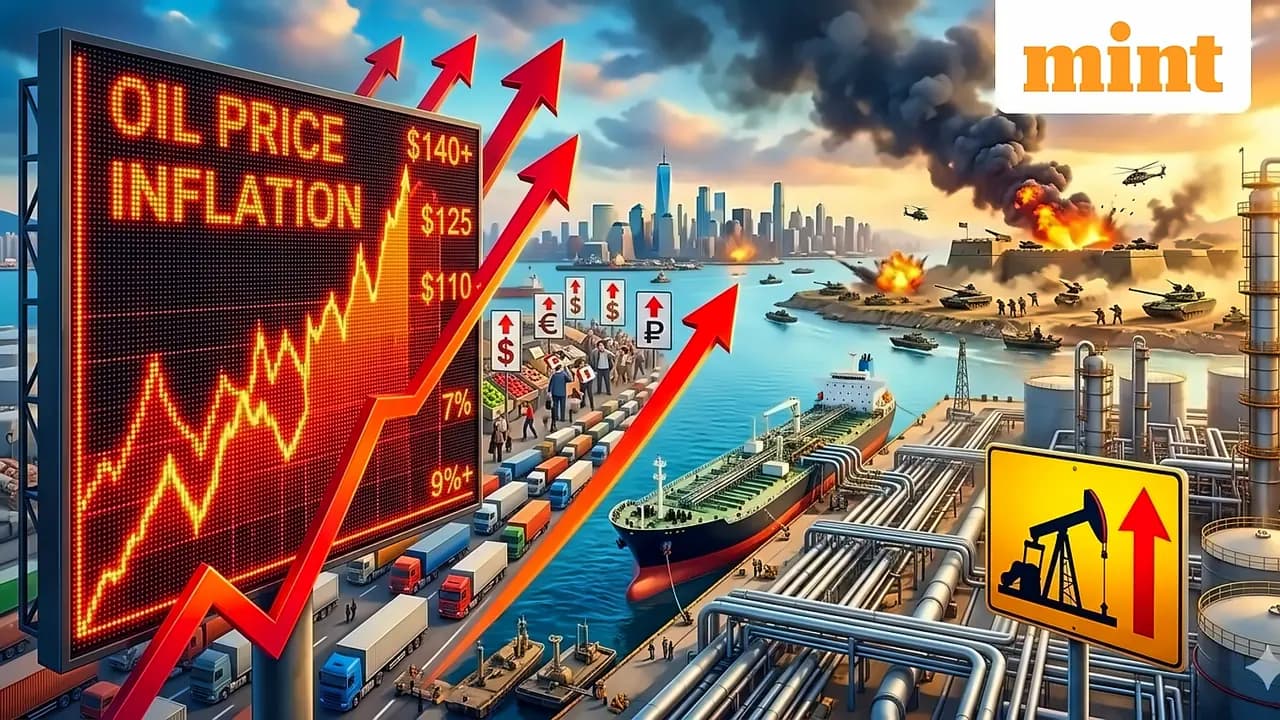
Crude oil prices rebounded significantly as traders turned cautious amid renewed geopolitical tensions in the Middle East. Brent crude gained 8% to $97.50 a barrel, while US benchmark crude rose 7% to $89.71 a barrel, reversing some of the losses from previous sessions. The recovery comes after crude prices logged two consecutive weeks of losses, which had pulled prices back to levels seen in the early days of the Iran conflict. With the two-week ceasefire set to expire on Tuesday, focus is shifting to whether the US and Iran can resume negotiations to ease tensions and reopen the key waterway, after initial talks in Islamabad failed. Vested Finance noted that oil's surge is weighing on fuel-sensitive sectors, with American Airlines trading lower as higher crude prices raise concerns over operating costs.
Saudi executives meeting in Texas have cast significant doubts on the feasibility of the global energy transition, raising questions about whose predictions about the future of oil and gas are more likely to be accurate. These executives have explicitly questioned the viability of moving away from fossil fuels, creating a stark contrast with the 2023 COP28 climate summit promise to move away from fossil fuels. The comments come as the world remains heavily dependent on oil, with Iran's tightening grip on the Strait of Hormuz creating global energy supply strains and broader economic impacts. Despite scientific agreement that global warming is driven by fossil fuel burning, the world still gets more than 80% of its total energy from fossil fuels, with current trends showing a decline so slow that reaching 0% fossil fuel dependency will take 4-10 centuries on current trajectories.
Claudio Angelo from Brazil's Climate Observatory told AFP that the transition cannot be achieved by shutting down fossil fuel companies overnight due to unprecedented worldwide economic disaster risks. Many countries including Iraq, Kuwait and Saudi Arabia depend almost entirely on oil revenues, while even countries with varied economies like Brazil could face serious damage from crude oil export cuts. As reported by The Times of India, the oil and gas sector is described as the most powerful lobbying interest globally, having played for time to delay changes for 30 years. Recent data shows that climate finance reached a record $1.9 trillion in 2023, with $2.2 trillion in clean energy investment the following year, representing more than $4 trillion in just a couple of years. This massive investment has not translated into meaningful fossil fuel reduction, with Germany spending 700 billion euros on its energy shift since 2002 yet still achieving only 79% fossil fuel energy.
Bill Hare from Climate Analytics told AFP that countries like the United States, Canada and Australia have resources to move toward cleaner energy, but it's a matter of political will. However, with Trump back in power and other right-wing leaders gaining ground globally, economic interests are taking priority over climate concerns. According to The Times of India, some leaders have even questioned whether climate change exists, while the influence of the oil and gas industry continues to block progress. Recent analysis suggests that the IPCC acts as a global risk allocation engine, determining which technologies receive subsidies, which activities become legally constrained, and which investments are encouraged or stranded. The precautionary principle has become a de-facto veto tool for ideological opposition to hydrocarbons, with every decision now subordinated to the carbon ledger.
The transition requires strong financial support for both wealthy oil-producing nations and import-dependent countries. As reported by The Times of India, Claudio Angelo emphasized that moving away from oil will require willingness from big economic powers to establish an international system facilitating the process. Despite these challenges, there are signs of progress, with renewable energy making up nearly half of the world's electricity capacity in 2025, according to the International Renewable Energy Agency. However, recent analysis reveals that poor countries want to get rich like China did, seeking to use more energy and much of this will be fossil fuels. They don't want to copy Germany's approach, which spent 700 billion euros on climate policies with electricity prices more than doubling yet still achieving only 79% fossil fuel energy.