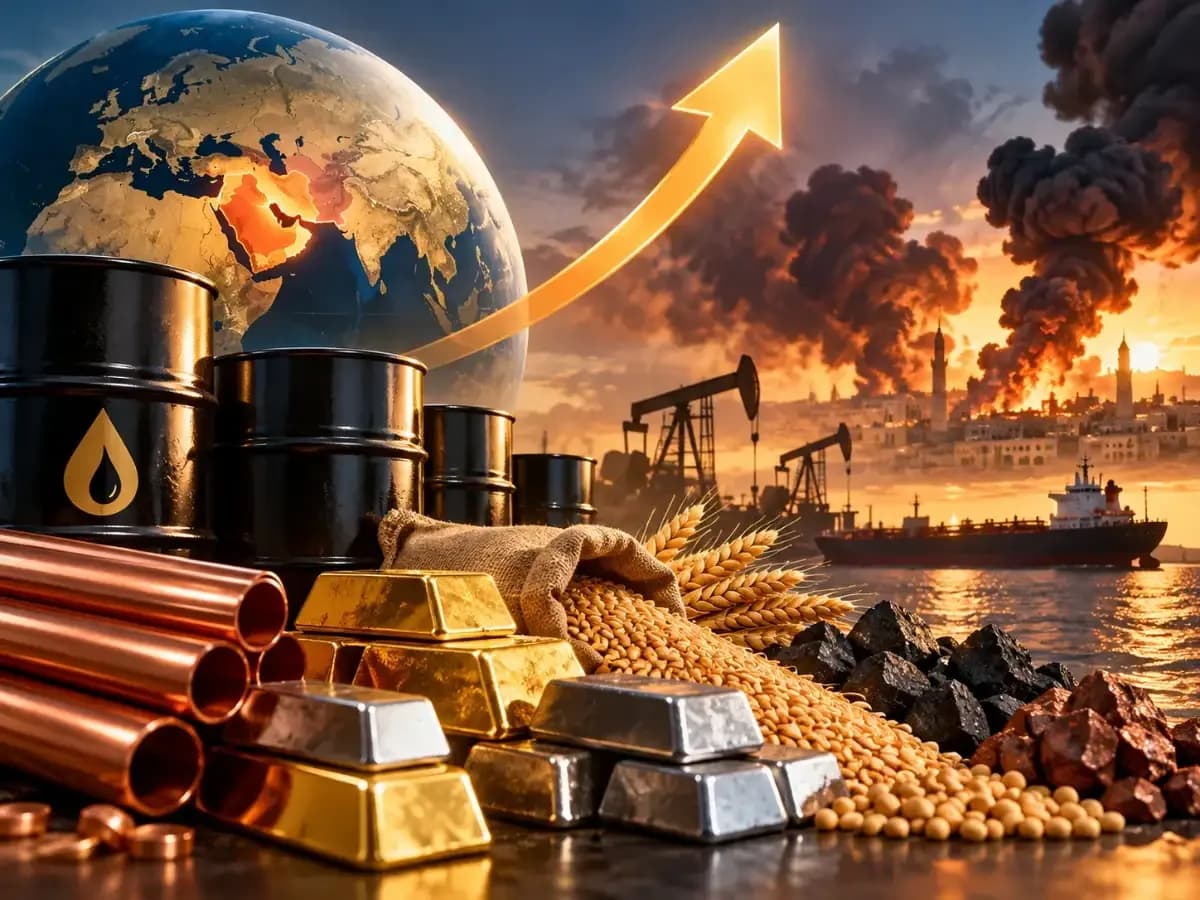
The World Bank has projected that global commodity prices will rise 23% in 2026, driven by multiple supply disruptions and geopolitical tensions. According to the World Bank Group's latest Commodity Markets Outlook, this increase represents a broad-based shock to commodity markets, with energy prices projected to rise 32% in 2026, representing upward revisions of 7% for 2026 and 14% for 2027 compared to the bank's April projections. The forecast comes as the Middle East war disrupts energy supplies and shipping routes, while grain disruptions and safe haven demand push food and metals prices higher. The World Bank warned that the situation could worsen if the conflict in the Middle East ratcheted up and damage to Russian oil infrastructure continued, with energy prices potentially rising further if escalation occurs. As reported by Reuters, the bank noted that prices for oil, natural gas, food, and metals have all risen sharply this year as global crises intensify.
Global oil supply is expected to fall 5.2% this year, marking the biggest decline in more than four decades outside the 2020 global recession. As reported by the World Bank, global oil supply is expected to drop by 5.5 million barrels per day, or 5.2% in 2026, with Brent prices forecast to average $91 per barrel in 2026, up from $69 in 2025, then ease to $79 in 2027 and $70 in 2028. Consumption is expected to decline 2.5%, or 2.6 million barrels per day, the third-largest annual contraction on record after 2020 and 1980, as high prices amid supply shortages curb demand and electrification reduces oil use, particularly in China. The World Bank noted that production remains below consumption, forcing further withdrawals from oil stocks and leaving markets more exposed to renewed disruption.
Food commodity prices are expected to rise 10.3% in 2026 and another 7.2% in 2027—a cumulative increase of 18% as conflict disrupts grain shipments, El Niño threatens harvests, and high fuel and fertilizer prices increase agricultural costs. According to the World Bank, grain prices are projected to rise 14.1% this year and 9.3% in 2027, led by a 28% jump in wheat prices in 2026 as global wheat output contracts by 3%. Grain prices are expected to rise 14.1% this year and 9.3% in 2027, driven by higher energy input costs, Black Sea shipping attacks and a strong El Niño weather pattern. The bank noted that an adverse scenario that coupled a record El Niño, more Black Sea grain shipment disruptions, escalation in the Middle East conflict and ongoing damage to Russian oil infrastructure could drive food prices 12% higher than expected, potentially reviving food crisis conditions similar to those seen in the early 2010s when more than 40 million additional people were pushed into extreme poverty.
Metals prices are projected to rise 25% in 2026, with aluminium, copper and tin reaching new highs amid supply disruptions and demand from renewable energy, electric vehicles and data centres. Precious metals prices are expected to surge 40% as investors seek safe haven assets amid geopolitical and policy uncertainty, with some moderation seen in 2027 but remaining more than three times their 2015–19 average. The World Bank warned that continued shocks - including forecasts for the worst El Niño weather effect since 1950 - could keep food commodity prices elevated, raising the specter of higher inflation and tighter monetary policy. The report's special focus examines commodity market interconnectedness, finding that links between commodity-price volatility become more pronounced during periods of economic or market stress, including since the start of the current Middle East conflict.
To support countries managing the fallout from higher commodity prices, the World Bank Group has made $50-60 billion available through existing instruments, including $25 billion in pre-arranged financing. According to the World Bank's Deputy Chief Economist Ayhan Kose, commodity markets are being hit by several major shocks at once, with higher energy costs and trade disruptions driving up prices across a broad range of commodities. The institution has made substantial progress on accelerating and simplifying its ability to mobilize private capital alongside its own financing and knowledge services, positioning it well to invest in the next generation of youth in developing countries through improved job creation conditions.