The International Monetary Fund has issued stark warnings to Europe about repeating costly energy crisis mistakes, with IMF Europe department head Alfred Kammer telling Reuters that "Prices help reduce demand and bring supply and demand back into balance. Many measures under discussion weaken that signal." The IMF analysis reveals that during the Russian energy shock, the average fiscal cost in Europe was about 2.5% of GDP, with around 70-80% of measures being untargeted. Kammer emphasized that "If support had been targeted to the bottom 40% of households, it would have cost only about 0.9% of GDP," highlighting the critical importance of targeted fiscal support over broad-based subsidies. The European Commission itself has warned member states against being too generous with financial support, with energy commissioner Dan Jørgensen noting that "What happens in one sector of the economy can spill over to the rest of society."
India has established a $50 billion sovereign credit facility to maintain oil imports at current elevated prices, demonstrating that global oil demand has achieved a structural floor near $100 per barrel. The Reserve Bank of India has instructed state-run refiners including Indian Oil Corporation, Bharat Petroleum, and Hindustan Petroleum to cease spot dollar purchases and instead access this government-backed credit line for the nation's 5 million barrels per day of oil imports. At current Brent prices near $106 per barrel, India's annual oil import bill exceeds $183 billion, representing a massive financial commitment that the central bank is now managing through this extraordinary financial engineering. This intervention comes after oil prices have sustained levels above $95 per barrel for seven consecutive months, with India's consumption growing 3.8% year-over-year in Q1 2026 despite a 39% price increase from January 2025 levels.
The West Asia conflict has triggered a sharp escalation in commodity prices, with Brent crude prices climbing nearly 33% since the beginning of the war. Key industrial materials including urea, naphtha, sulphur, titanium dioxide and PVC resins have surged between 20% and 70% over the past month and a half. According to ABP Live Business, this significant price escalation has substantially raised input costs across multiple sectors, creating mounting pressure on corporate margins. The disruption has been particularly severe for textile manufacturers, with polyester prices fluctuating by as much as 30% due to dependence on inputs like MEG sourced from West Asia. India's transportation fuel accounts for 52% of oil consumption, with diesel representing the largest single component at 38% of total demand, making the country particularly vulnerable to fuel price volatility.
The textile industry is experiencing severe disruptions with orders dropping to as low as 10% and some firms facing losses of up to 30%. As reported by Outlook India, Amit Sethi, Managing Director of Oriental Fashions, described the situation as an "absolute disaster" with sewing thread prices rising 15-20% and petroleum-linked inputs seeing 70-72% increases. The closure of the Strait of Hormuz has particularly impacted India's primary import sources for Monoethylene Glycol (MEG), with India's textile exports declining 9.91% year-on-year in March 2026 and apparel exports contracting 18.99% during the same period. The industry faces additional challenges from volatile shipping costs, with the Baltic Dry Index rising 100.08% year-on-year to 2,523 points by April 16, 2026, though container shipping rates have recently softened with the Drewry World Container Index dropping 3% to $2,246 per 40-foot container. The sector's vulnerability is evident from historical examples like the Russia-Ukraine war in early 2022, when European buyers cut apparel orders from India by up to 25% and yarn prices doubled since 2020.
The Ministry of Textiles is implementing comprehensive measures to combat rising costs and supply chain disruptions. The ministry is seeking lower import duties on essential man-made fibre (MMF) inputs like cotton, rayon pulp, and yarns to combat rising costs and supply disruptions from global conflicts. Additionally, it has asked to pause anti-dumping duty investigations on elastomeric fibre yarn and viscose rayon filament yarn. The government is also being asked to prioritize gas allocation for textiles, following a recent increase in LPG supply to labour-intensive sectors, which aims for 70% of pre-crisis levels. These efforts are crucial as Poly-ethylene Terephthalate (PET), a primary material for polyester fibre making up about 40% of India's apparel output, has seen price and availability issues due to the conflict. The industry faces an estimated $1.8 billion in exports to regions like the UAE, Saudi Arabia, and Israel, which are affected by the conflicts, while analysts forecast a 9-10% drop in textile exports to the US by 2026 due to tariffs and policy uncertainty.
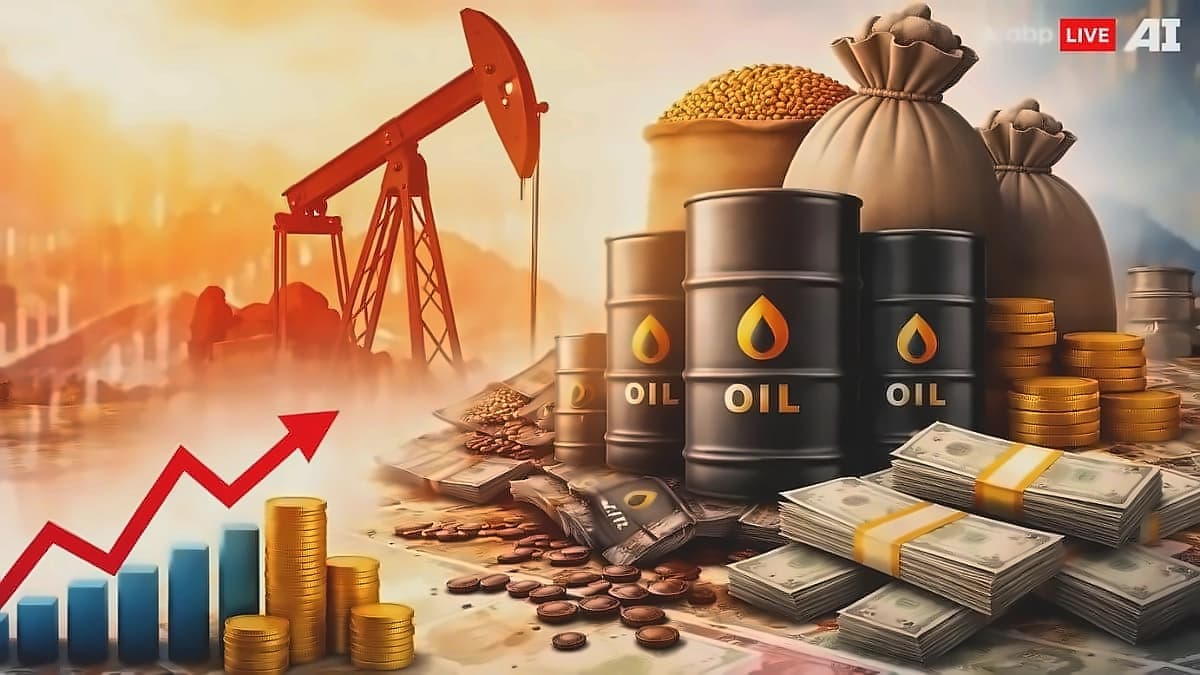
As reported by ABP Live Business, FMCG firms, consumer durable manufacturers and paint companies have already begun adjusting product prices to offset rising costs. Dabur Global CEO Mohit Malhotra stated that the current environment marks a turning point where input cost inflation may outpace pricing power. He noted that the West Asia conflict has "turned projections for FY27 on its head" and that companies are now prioritising cost management over expansion, with investments likely to resume only when conditions stabilise. The crisis is particularly affecting small businesses, with wholesale garment shop owners reporting limited opportunities to earn and workers facing potential job losses. India's passenger vehicle fleet is growing at 7% annually, adding approximately 3.2 million new vehicles per year, with electric vehicles representing only 2.8% of new sales despite aggressive government subsidies, highlighting the country's continued dependence on oil-based transportation.
The rise in crude oil prices is having cascading impacts across sectors, with every $10-per-barrel increase in crude oil prices widening India's current account deficit by about 0.4% of GDP. For oil marketing companies, this translates into tighter marketing margins, while airlines are increasing fares as aviation turbine fuel, which accounts for 35-40% of operating costs, becomes more expensive. According to Outlook India, gas suppliers within Delhi are currently only supplying 70% of the last six-month average, raising concerns about potential supply chain disruptions. The leather industry is also experiencing significant challenges, with prices increasing by 10% fortnightly due to raw material shortages. India's current account deficit is widening to 2.4% of GDP due to the massive oil import bill, while forex reserves are under pressure from the unprecedented dollar requirements.