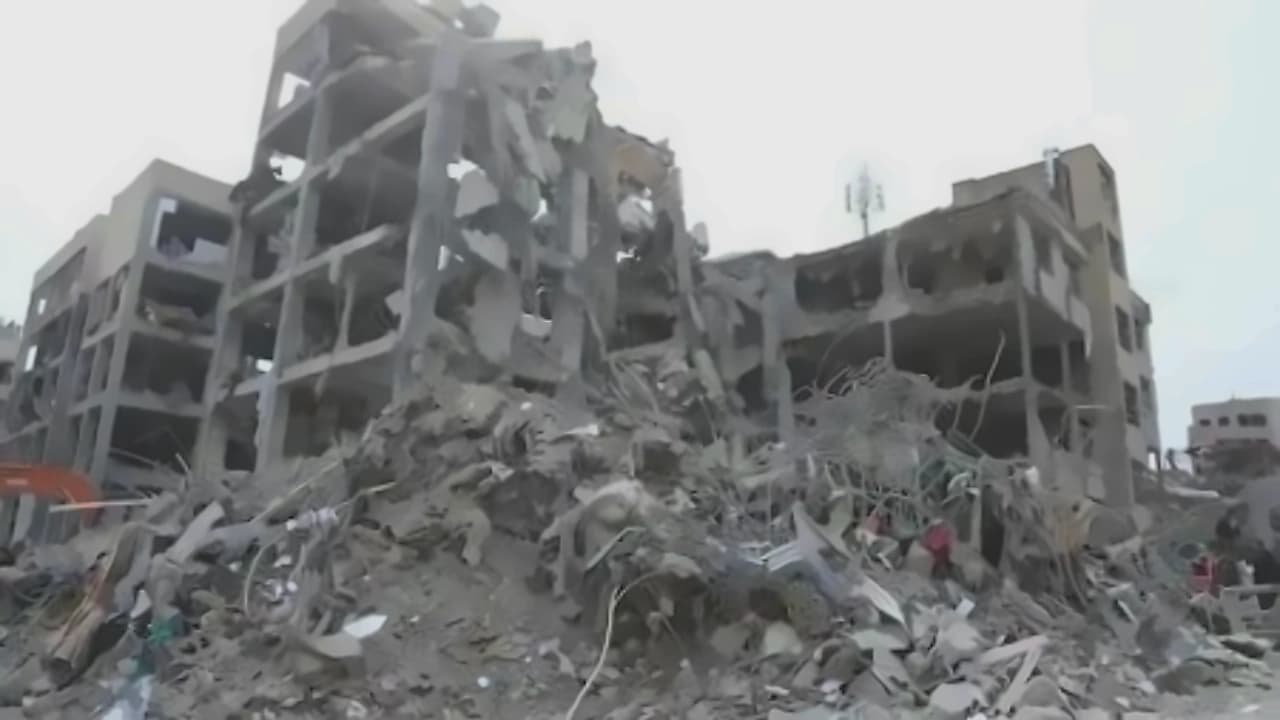
US Central Command chief Admiral Brad Cooper delivered the most sweeping public assessment yet of Operation Epic Fury's impact, telling lawmakers the 38-day U.S.-Israeli campaign effectively dismantled much of Tehran's ability to project military power across the Middle East. Cooper claimed the operation destroyed or severely degraded the backbone of Iran's missile, drone, naval, and air defense infrastructure, stating "In short: in 38 days, we rolled back 40 years of Iranian military investment." The campaign has conducted more than 10,200 sorties and over 13,500 strikes, targeting the full breadth of Iran's ability to project power. More than 85% of Iran's ballistic missile, drone, and naval defense industrial base has been damaged or destroyed, with more than 1,450 strikes on weapons manufacturing facilities setting the regime's ability to build and stockpile ballistic missiles and long-range drones back by years. Additionally, more than 2,000 strikes against Iran's command-and-control structures have created leadership vacuums and internal confusion, with reports of desertions, personnel shortages and regime attempts to enforce discipline through arrest and execution.

Cooper confirmed before the Senate Armed Services Committee that more than 700 airstrikes have eliminated Iran's 'once-massive inventory' of naval mines, destroying more than 90% of Iran's inventory of around 8,000 naval mines. The maritime dimension of the campaign featured prominently, with Cooper testifying that at sea, U.S. forces destroyed 161 vessels in total across 16 classes of warships, effectively crippling the regime's ability to operate. Iran's navy can no longer claim to be a maritime power, marking a significant shift in regional naval dynamics. The testimony also confirmed that as of this submission, U.S. air and naval forces continue to enforce the Presidentially directed blockade against Iranian ports and merchant vessels while enabling neutral vessels to transit. Separately, CENTCOM said as of Thursday its forces have redirected 70 commercial vessels and disabled 4 to ensure compliance, as commercial shipping through the Strait of Hormuz remains heavily disrupted months after the start of the conflict.
The US has established an integrated air defense system at al-Udeid Air Base in Qatar, which has proven highly effective in protecting regional allies and US forces. Cooper claimed that Iranian air power had effectively ceased functioning, noting that before the conflict, Iran's air force routinely flew between 30 and 100 sorties per day, "Today that number is zero." U.S. and Israeli strikes destroyed or rendered non-mission-capable major airfields, fuel depots, hangars, munitions stockpiles, and 82% of Iran's air defense missile systems. This defensive capability has been crucial in countering Iran's asymmetric warfare tactics, which have included drone attacks on ships and energy facilities in the region. The system has been particularly effective in intercepting over 6,000 one-way attack drones and more than 1,500 ballistic missiles aimed at US forces, Israel, and Arab partners, demonstrating the operational success of this defensive infrastructure.
Despite the extensive military campaign, Iran retains significant asymmetric capabilities that have undermined US objectives, according to Cooper's testimony. Iran retains nuisance capability including harassment, low-end drone and rocket attacks, mining activity, GPS interference, proxy attacks, or isolated strikes on commercial shipping, but no longer possesses the means to threaten major regional operations or deter US freedom of action in the air or maritime domains. Cooper acknowledged that Iran still retains enough capability to disrupt commerce and keep maritime risk elevated in the Strait of Hormuz, with the Strait of Hormuz remaining closed despite brief attempts to escort commercial ships for two and a half months. This ongoing disruption continues to drive oil volatility and risk premiums in global markets, with maritime security threats, vessel seizures, mine concerns, military escort operations, and insurance instability continuing to complicate traffic through one of the world's most strategically important waterways.
During the Senate testimony, Democratic Sen. Tim Kaine of Virginia highlighted concerns about transparency regarding the legal justification for military action against Iran. Kaine noted that the Senate Armed Services Committee has not seen the opinion produced by the Justice Department's Office of Legal Counsel that justified the president's authority to launch strikes against Iran. "We're being asked to fund a $1.5 trillion budget, but our request of the DOJ to see the OLC opinion justifying this war — they have refused to allow members of the Armed Services Committee to see it," Kaine said. "If they will not allow us to see the legal rationale for the war, what are they hiding?" GOP Sen. Roger Wicker of Mississippi, the panel's chairman, noted that Cooper would not be the person to provide that opinion since he is not a policymaker. Cooper deflected questions from Democratic Sen. Elissa Slotkin of Michigan on whether China and Russia are giving intelligence to Iran, saying they should discuss the matter in a classified setting.