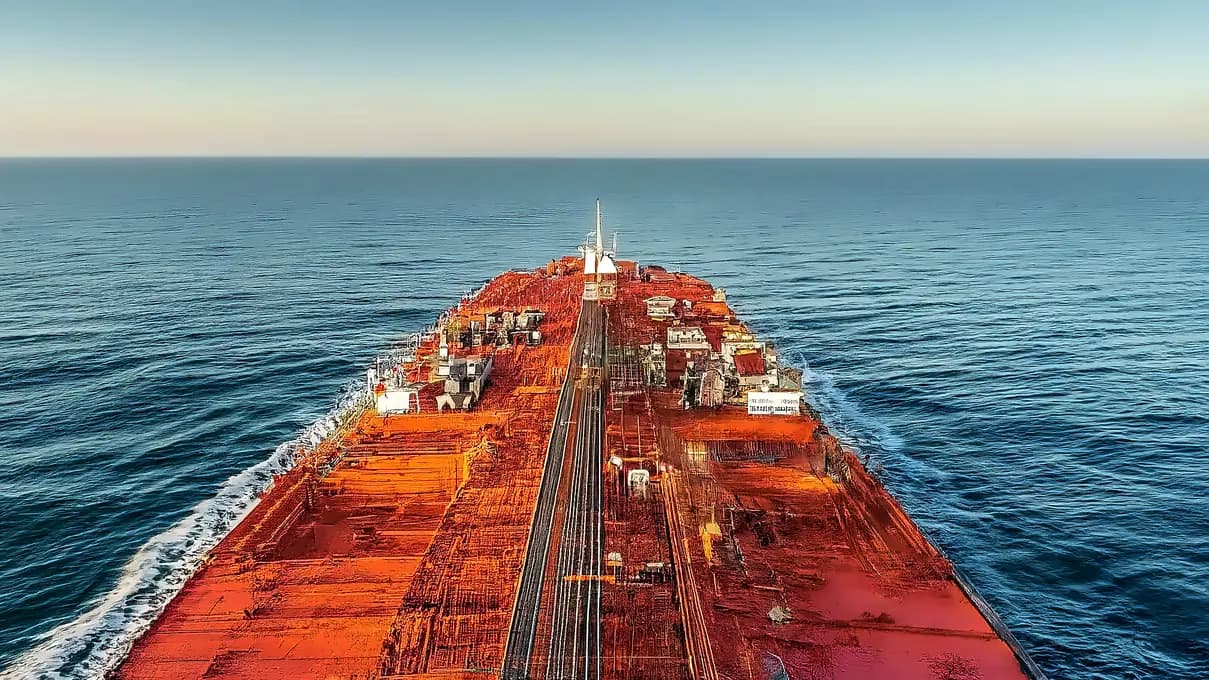
Oil giants from UAE and Qatar are implementing unconventional shipping tactics to maintain energy exports through the Strait of Hormuz amid escalating regional tensions. According to ship-tracking data and people familiar with the matter cited by Bloomberg, Adnoc has relied on 'dark transits' - journeys where vessels switch off transponders while passing through the Strait of Hormuz, allowing tankers to avoid real-time detection. This tactic has helped maintain export flows during periods of geopolitical risk, with the UAE state energy firm navigating one of the world's most sensitive maritime corridors where Iranian forces and US naval patrols operate in close proximity. Adnoc has been among the most successful producers when it comes to taking supplies out of the Middle East, according to tracking data, traders and people with knowledge of the matter. The operational sequence for these covert movements follows a consistent pattern where vessels approach the eastern entrance of the Strait, deactivate AIS transponders, transit through the Strait to Persian Gulf export terminals like Das Island, conduct loading operations, and eventually reactivate transponders after clearing the Strait.
Iran has significantly expanded its Persian Gulf Shipping Authority (PGSA) zone to include UAE coastal waters, extending control beyond the Strait of Hormuz itself. According to Windward analysis, this eastern extension is the most significant component of the recent announcement, as Fujairah is the UAE's main port for exporting oil along a route specifically built to avoid the Strait. By extending its claimed authority to the waters adjacent to the bypass route, Iran is asserting control beyond the Strait itself and into the maritime approaches to the UAE's primary Hormuz-bypass terminal. The framework requires vessels to submit declarations covering vessel owner, cargo, crew nationalities, and destination, and obtain a transit permit before entering. Fees of up to two million U.S. dollars per crossing have been reported, payable in Chinese yuan or Bitcoin, with Iran releasing no official fee schedule. Two vessels were seized near Fujairah on May 14, approximately eight to twelve hours after Iranian advance warnings to the UAE, reinforcing the enforcement mechanism.
Unlike many regional producers and commodity traders that depend on chartered vessels, Adnoc has leaned on its own controlled fleet, including ships operated through Navig8, majority-owned by its shipping and logistics arm, and its joint venture with Wanhua Chemical Group. The fleet includes crude carriers, refined product tankers and gas transport vessels, giving the company greater operational flexibility. Industry sources say this structure has allowed Adnoc to sustain relatively efficient cargo movements even as others face constraints linked to shipowners' risk appetite. Qatar has also been unobtrusively exporting through Hormuz in recent days, demonstrating that multiple Gulf producers are adopting similar strategies. Adnoc Logistics and Services has exported at least two other shipments from the Persian Gulf using the same dark transit protocol, with one cargo confirmed destined for Japan and another for China, suggesting that Persian Gulf exporters are systematically prioritising their most strategically significant long-term buyers.
Adnoc's strategy includes short-cycle 'shuttle runs', where vessels quickly return after deliveries to reload cargoes, helping maximise throughput from terminals such as Zirku Island and the Ruwais refinery complex. Ship-to-ship transfers are reportedly conducted in safer waters near Fujairah or Sohar, or onward toward India's west coast. For LNG operations, tankers approach the Strait near Fujairah before disabling tracking systems en route to Das Island, Adnoc's key export hub inside the Gulf, with satellite imagery suggesting continued activity at the facility despite limited broadcast data from vessels. The short runs mean the producer can make the most of proximity to Hormuz, with crudes such as Upper Zakum typically loading at Zirku Island, while naphtha and liquefied petroleum gas are picked up from Adnoc's mega-refinery at Ruwais. The reconstructed sequence for dark transit operations follows a consistent pattern where vessels deactivate AIS transponders to make themselves invisible to potential threats in the active security environment, with satellite imagery confirming vessel presence and loading activity even when no transponder signal is being broadcast.
Analysts cited by Bloomberg said the approach reflects both strategic urgency and logistical necessity, as storage constraints and geopolitical uncertainty push producers to keep exports moving. However, the scale of such shipments remains below pre-conflict levels, particularly in LNG trade, where only seven shipments have been identified making it through since the US and Israel started strikes against Iran, compared to roughly three exits a day before the conflict began. The reliance on low-visibility navigation also complicates verification of cargo routes, with vessels potentially choosing alternative corridors or passing through Iran-influenced waters where informal arrangements may apply. Adding to the urgency, the UAE officially left the Organization of the Petroleum Exporting Countries on May 1, making its energy exports even more critical to global markets. The current Iran conflict has fundamentally disrupted global energy trade, with more than half of India's LNG imports in the year prior to the conflict originating from Qatar and the UAE, both of which export through the Strait of Hormuz. These flows have been largely suspended since hostilities began, forcing India into elevated spot market procurement and industrial supply curtailments across gas-intensive sectors including fertiliser production, power generation, and petrochemical manufacturing.