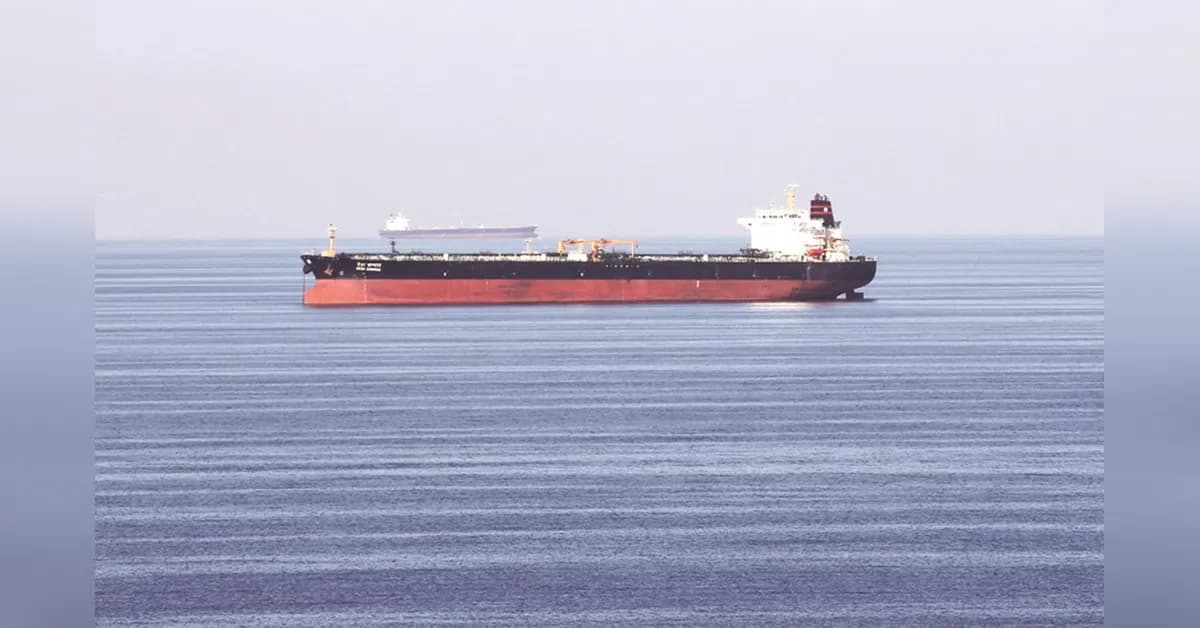
According to Bloomberg reports, Ga-Hyun Chung's Sinokor Group has emerged as a major player in Persian Gulf oil transportation through its strategic partnership with MSC Group. The Korean shipping tycoon's company started leasing ships to Abu Dhabi National Oil Co. for shuttle runs from mid-April 2026, with almost half of Emirati crude shipments sailing on vessels controlled by Sinokor by June. As reported by Bloomberg, Sinokor controls about 150 very large crude carriers (VLCCs), representing nearly 40% of the global fleet that wasn't either sanctioned or tied up on long-term leases or regular routes. The fleet expansion came after Mediterranean Shipping Company purchased a 50% share of Sinokor Maritime earlier this year. Adnoc L&S, Adnoc's shipping and logistics arm, confirmed that it has "an extensive fleet including owned and chartered vessels," though it declined to comment specifically on the Sinokor partnership. The deals with Sinokor were key to helping the UAE ramp up exports through Hormuz far faster than its Gulf neighbours, with the company able to take greater advantage of surging oil prices earlier in the war. The UAE's aggressive push to get barrels safely out of the strait relied on tactics normally associated with sanctioned countries like Iran, Russia and Venezuela: the ships traveled 'dark' without their transponders (and often under the cover of literal darkness) before offloading their cargo into other tankers waiting outside the waterway, and then returning back to collect more.
According to Bloomberg analysis, the shuttle operations have generated substantial revenue for Sinokor. Three tankers doing shuttle runs since mid-April could have earned Sinokor somewhere around ₹60 million to ₹120 million. Oil tanker markets are experiencing one of the most lucrative years ever, with shipbrokers suggesting that the premium for sailing into the Gulf during the war could have yielded three to four times the prewar rate. The terms of the deals have not been disclosed, but brokers estimated just three tankers doing shuttle runs since mid-April could have earned Sinokor somewhere around US$60 million to US$120 million. The company has continued its aggressive expansion, sending at least 18 supertankers into the Gulf in the last week alone, capable of carrying 36 million barrels of crude out of the world's most important energy producing region. Kpler and Vortexa data shows that Sinokor-flagged ships accounted for almost 50% of the UAE's June crude exports through the Strait of Hormuz, with shipments increasing from around 680,000 barrels a day in April to 1.4 million barrels a day in June. After partial resumption of shipping, demand for large tankers through the Strait of Hormuz remains high, with freight rates well above pre-war levels. In late June, Sinokor informed shipbrokers it had provisionally booked a vessel to transport oil from the Persian Gulf to India at rates that were among the highest so far this year, reflecting sustained demand for capacity even as market conditions began to stabilize following a temporary ceasefire.
As reported by Bloomberg, Sinokor's ships traveled 'dark' without their transponders and often under cover of literal darkness before offloading cargo into other tankers waiting outside the waterway. The ships would travel roughly two days through the Persian Gulf and along the Strait of Hormuz to the Gulf of Oman, pulling up alongside empty tankers waiting to receive the oil. Some of the tankers involved in operations in waters off Oman did not transmit on the public Automatic Identification System (AIS) for portions of their voyage during oil transfers between ships. According to ship tracking data from Vortexa, Sinokor ships have transported at least 680,000 barrels a day of supplies from UAE ports since April, with numbers accelerating to 1.4 million barrels a day in June. The business gained a more central role in global oil shipping since the conflict around Iran raised security concerns for commercial vessels. The operation relied on a carefully coordinated system with tankers departing UAE ports such as Zirku and Das Island, often with transponders switched off as they entered the Persian Gulf, moving in coordinated convoys along the Omani coastline before rendezvousing in the Gulf of Oman with empty vessels. At least four of Sinokor's ships appear on the Equasis maritime database as being managed by Adnoc, with two of them since mid-April, though shipbrokers said privately that it's possible some began in March. The ships would travel under cover of darkness, often in convoys that sailed close together and hugged the Omani coast, according to two people familiar with the matter. Without transponders to follow, analysts and journalists have been left poring over satellite imagery from the region to track the operations.
According to Bloomberg reports, Sinokor owner Ga-Hyun Chung invested about $7 billion in creating the world's largest private fleet of oil tankers before the outbreak of hostilities between the United States, Israel and Iran. The company currently controls more than 160 tankers, almost half of which are VLCC supertankers capable of transporting up to 2 million barrels of oil. This represents about 10% of the world's fleet of such vessels. The significant part of the expansion financing was provided by Mediterranean Shipping Co. founder Gianluigi Aponte, who earlier agreed to acquire 50% of Sinokor's tanker business. After the escalation of the situation around the Strait of Hormuz, Sinokor placed some of its supertankers in the Persian Gulf and began chartering them as floating oil storage facilities, later using them for shuttle runs. By late February, industry estimates suggested Sinokor controlled around 150 VLCCs, representing a substantial share of the non-sanctioned global fleet. The company controls more than a third of the VLCCs that would be able to reach the Persian Gulf in the next two weeks, according to shipbrokers' estimates, positioning it well for future opportunities as the shipping industry recovers. The aggressive buying combined with a swell in oil flows to send tanker rates surging even before the US and Israeli strikes on Iran led to the effective closure of the world's most important oil shipping lane. By early March, rates had soared dramatically higher, hitting unprecedented levels as the market adjusted to the reality that a large percentage of the global fleet was stuck inside the Persian Gulf.
According to Bloomberg reports, Sinokor is well-positioned for future opportunities as the shipping industry recovers. The company controls more than a third of the VLCCs that would be able to reach the Persian Gulf in the next two weeks, according to shipbrokers' estimates. In late June, Sinokor informed shipbrokers it had provisionally booked a vessel to transport oil from the Persian Gulf to India at rates that were among the highest so far this year, reflecting sustained demand for capacity even as market conditions began to stabilize following a temporary ceasefire. Freight rates have dropped after an initial surge following the peace deal, but still remain high by historical standards. As noted by Kpler's principal freight analyst Matt Wright, "Sinokor's moves during the Iran war are groundbreaking and are lifting rates for all owners. They are also willing to go to corners of the market where shipowners might still be cautious about, and we are seeing initial signs of a market recovery because of that." The interim peace agreement between the United States and Iran eventually led to a partial normalization of shipping flows through the Strait of Hormuz, with some vessels resuming standard transponder use and navigation patterns. However, the legacy of the 'dark transit' period persisted in the form of expanded operational networks, increased fleet deployment, and heightened awareness of alternative routing strategies across the industry. The flow of dark traffic is one of the factors that helped explain why oil markets had weakened significantly by early June, together with a surge in exports from the US and pullback in buying by China. As the shipping industry gathered for a major conference in Athens, the growing flow of dark transits was one of the key subjects of conversation, with many shipowners and crude exporters emulating the tactics that Sinokor pioneered.