The United Arab Emirates' shock move to exit OPEC and OPEC+, effective May 1, 2026, has completely blindsided the oil cartel and particularly Saudi Arabia, which de facto controls the grouping. According to reports from The Times of India, this decision comes amid the ongoing blockade of the Strait of Hormuz, through which 20% of the world's oil supply transits. The UAE's decision follows a thorough review of its production policy and current capabilities, with the country accounting for 4 million barrels per day, representing about 4% of global oil production. The UAE has been a compliant OPEC member unlike other countries, and its exit is expected to weaken OPEC's control over oil prices. The move raises important questions about OPEC's relevance in an increasingly multi-polar world, as the group's power and ability to influence global oil markets has eroded over years. As per recent analysis, the UAE is making a clear bet to maximise output now, convert reserves into capital, and deploy that capital into a post-oil economy, accepting lower prices and higher volatility in exchange for autonomy.
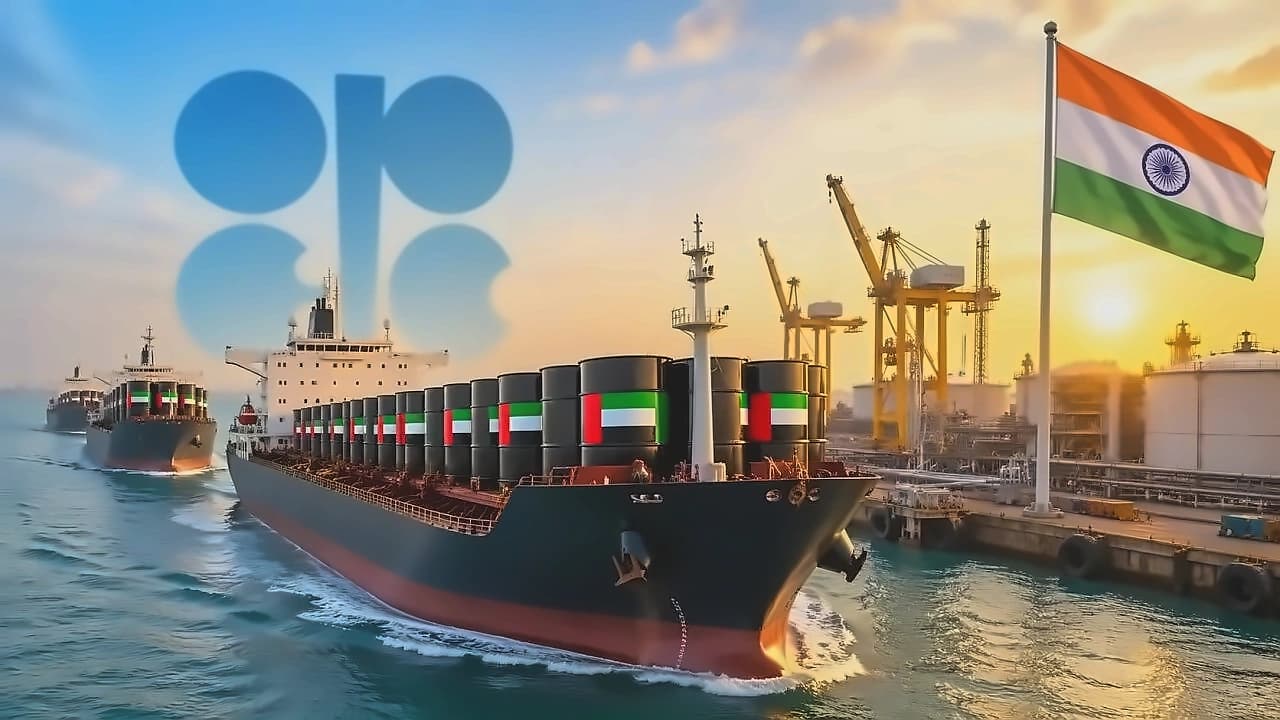
India, which imports around 90% of its crude needs, may actually benefit significantly from UAE's OPEC exit. As reported by The Times of India, UAE has consistently ranked among India's top five crude oil suppliers in recent years, with the UAE supplying about 10% of India's crude oil imports during FY 2024-25 and 10.6% in the first eleven months of FY 2025-26. India is a net energy import with OPEC accounting for around 40% of India's oil needs, while UAE represents approximately a tenth of India's overall oil imports. According to Sourav Mitra from Grant Thornton Bharat, the UAE's exit is likely to increase global oil supply flexibility in the medium term as the Emirates would be free from OPEC mandates, which could soften crude prices and be beneficial for India's import bill and inflation. However, in the short term, such events typically lead to market volatility and geopolitical uncertainty, requiring India to strengthen supply diversification and bilateral energy ties. The decision by the UAE to exit OPEC lands hardest in India, where oil prices feed directly into inflation, fiscal stability and growth, with more supply from a low-cost producer lowering the ceiling on prices over time.
The UAE's exit exposes a widening gap with Saudi Arabia, as Riyadh has long acted as the system's stabiliser, cutting output to defend prices. As per recent analysis, the UAE's departure removes a meaningful share of flexible supply from coordinated control, with its ability to act as a shock absorber weakened. Markets become more reactive to geopolitical events and less anchored by policy signals from Vienna. Global oil prices continued to surge on Wednesday, with benchmark Brent crude oil prices hitting US$111 a barrel and US West Texas Intermediate (WTI) approaching US$100 a barrel, compared to around US$70 a barrel for Brent and US$65 per barrel for WTI before the Iran war. According to Rystad Energy's Middle East senior vice-president Aditya Saraswat, "The Strait of Hormuz closure is masking the immediate impact of this departure, but once the strait reopens, a UAE pumping freely towards 4.8 million barrels per day represents a real shift of 1 to 2 per cent of global demand." The UAE's proximate location and deepening economic ties amplify India's gains, as incremental Emirati barrels can flow to India faster and cheaper than from distant sources.
The UAE exit may open up space for larger bilateral partnerships between India and UAE, particularly in energy and value-add sectors, according to Gaurav Moda from EY-Parthenon India. As reported by The Times of India, India and the UAE have been stepping up bilateral ties, with recent geopolitical events and energy priorities creating opportunities for expanded cooperation. The oil-for-rupee program is expected to gain momentum, with Anindya Banerjee from Kotak Securities noting this as part of the ongoing de-dollarisation process. India and UAE are key energy partners, with recent bilateral agreements including exploration of partnerships in advanced nuclear technologies, including the development and deployment of large nuclear reactors and Small Modular Reactors (SMRs). UAE's state-run Abu Dhabi National Oil Company is the only overseas entity that has participated in India's strategic petroleum reserves. India's energy security remains its primary concern when sourcing crude oil, with the country aiming to diversify sources to better manage supply disruptions.