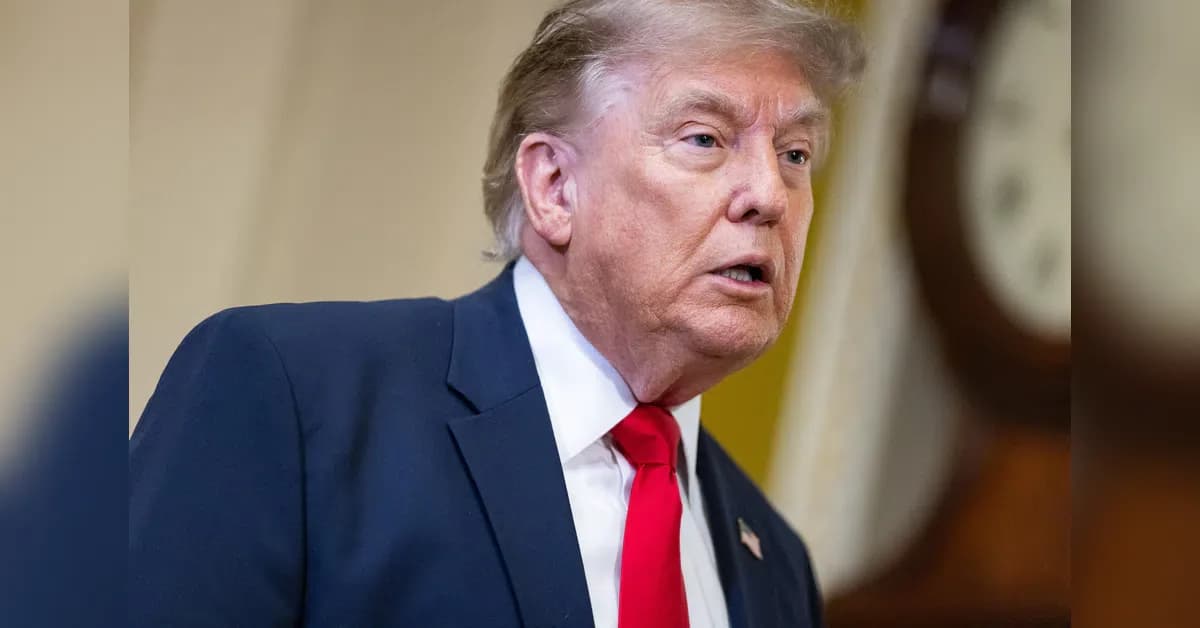
President Donald Trump claimed a 59% approval rating and credited himself with falling gas and oil prices in a Truth Social post, despite the escalating US-Iran conflict sending oil prices climbing over the weekend. However, independent polling tells a different story, with Trump's actual approval sitting closer to 37-40% and disapproval near 59%, almost the inverse of the number in his post. Trump posted on Truth Social: '59% Approval Rating. Prices coming down along with the lowering of oil and gas. Thank you! President DJT' - a claim made hours after the strikes pushed oil higher, not lower. The national average gas price sits near $3.87 a gallon, up roughly 30% since the war began in February, though it's down from a $4.56 peak on Memorial Day.
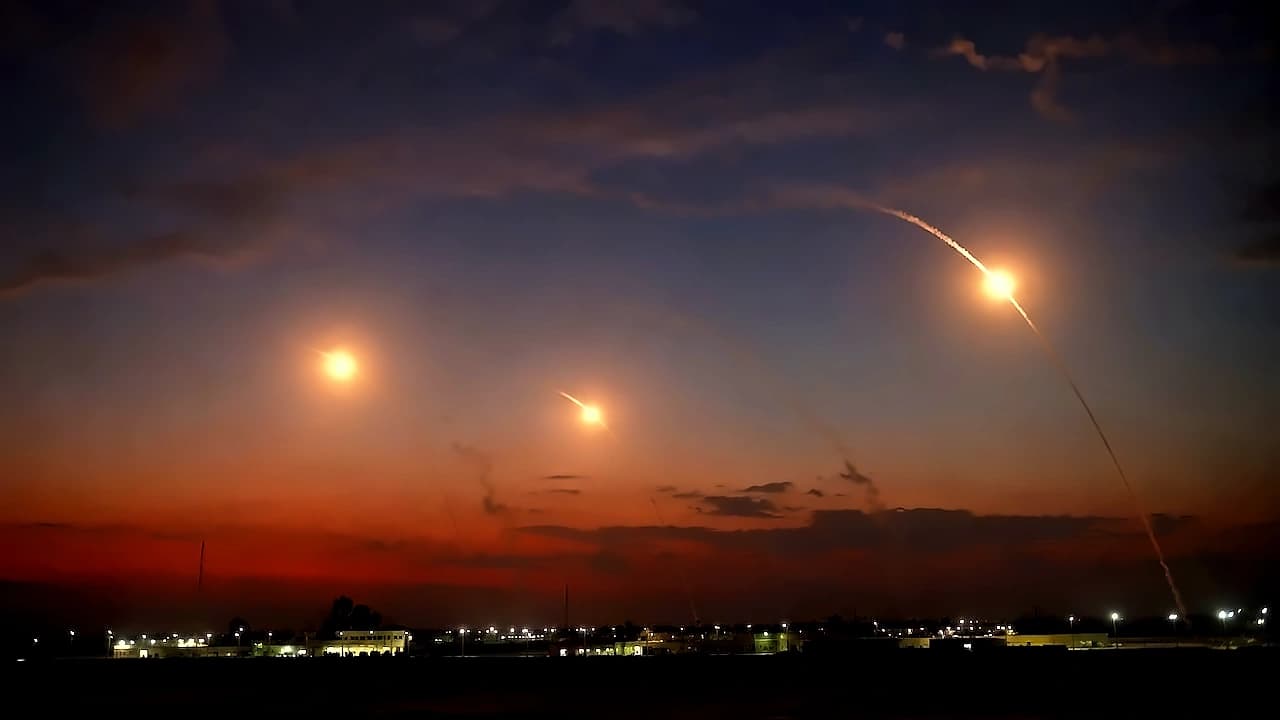
US forces launched fresh strikes against Iran on Wednesday evening, targeting over 90 military facilities including coastal radar and drone bases as part of efforts to 'degrade their ability to threaten freedom of navigation in the Strait of Hormuz.' President Donald Trump issued a fresh warning to Iran on his Truth Social platform, stating 'If it happens again, it will get much worse!' The escalation comes after Trump declared the ceasefire between Washington and Tehran 'over' and predicted that additional US military action 'probably' would occur. U.S. Central Command confirmed that about 90 Iranian military targets were hit during the latest round of strikes, as reported by NBC News. Trump also threatened Wednesday to unleash more military strikes against Iran, saying 'We would probably hit them hard again tonight,' while later adding that the latest back-and-forth fighting would not result in 'long-term' military action. 'Anything that happens is going to happen very fast,' Trump said, though he also suggested the US military might 'just finish the job.'
The US revoked a waiver that allowed Iran to sell its oil globally in response to attacks on ships in the Strait of Hormuz that it blamed on the Islamic Republic, as reported by Business Standard. Trump indicated 'We may put it back, the blockade, and it'll only be a blockade for Iran.' The moves pose the greatest threat yet to a ceasefire deal between the US and Iran and talks toward a broader agreement to end the war. The resumption of hostilities has thrown global markets into a tailspin and sent the international oil price past $US80 a barrel, according to latest reports. Oil prices surged nearly 6% after Trump said that the interim agreement with Iran is 'over,' with Brent crude jumping 5.6% to more than $78 a barrel and US benchmark crude surging 5.8% to $74.55 a barrel, as reported by NBC News. Trump also renewed his past threats to hit Iran's civilian infrastructure, including electric plants and desalinisation plants, and to seize the oil-production hub of Kharg Island, where some 90% of Iranian oil exports pass through. The US and many Gulf Arab states say they will not agree to Iran charging for passage through the strait, as reported by Business Standard.
Crude oil prices have surged 12% in two days, topping $80 per barrel amid the escalating US-Iran conflict, with Brent crude reaching a high of $80.59 per barrel on Wednesday evening, compared to pre-escalation levels of $72.11 per bbl on Tuesday's opening bell. At 10:45 am (IST) on Thursday, July 9, Brent crude oil futures were trading 1.14% higher at $78.91 per bbl, compared to $78.02 per bbl at the previous commodity market close. While the West Texas Intermediate (WTI) crude oil prices were trading 1.22% higher at $74.42 per bbl on July 9, compared to $73.52 per bbl at the previous market close. Crude oil prices in the global market have surged nearly 10% in the last five trading session basis, though they remain 13% lower in the last one month period. Oil prices remain at risk of a flare-up and are tied to the ongoing developments in West Asia, as a major chunk of the global oil trade is executed via the key maritime trading route, the Strait of Hormuz. Any further escalations also pose the risk of disruption of oil trade via the key route, similar to what happened at the beginning of the conflict in March 2026.
Iranian state media reported explosions in several cities including Bandar Mahshahr, where a Revolutionary Guard member was killed, with state television saying eight members of the Army's air and naval forces were killed in Bandar Abbas and Bushehr; the latter is home to Iran's nuclear power plant complex. The US strikes hit a railway bridge outside the city of Aqqala, causing significant infrastructure damage. A firefighter was killed in a US attack on Iranshahr Airport in southeastern Iran, with the attack damaging the airport's flight operations building and meteorological station, as reported by IRNA and Mehr News Agency. On Wednesday morning, both Bahrain, home to the US Navy's 5th Fleet, and Kuwait, home to US Army forces, sounded missile alerts. The Kuwaiti Electricity Ministry said a number of lines were out of service after shrapnel fell on them, with Kuwait intercepting two ballistic missiles and 13 drones launched by Iran. Iran's ambassador to the UN, Amir Saeid Iravani, condemned the latest US strikes in a letter to the UN Security Council, stating 'The United States has once again, in a clear violation of the United Nations Charter and its International obligations, launched and continues to carry out large-scale military attacks against the sovereignty and territorial integrity of the Islamic Republic of Iran.'