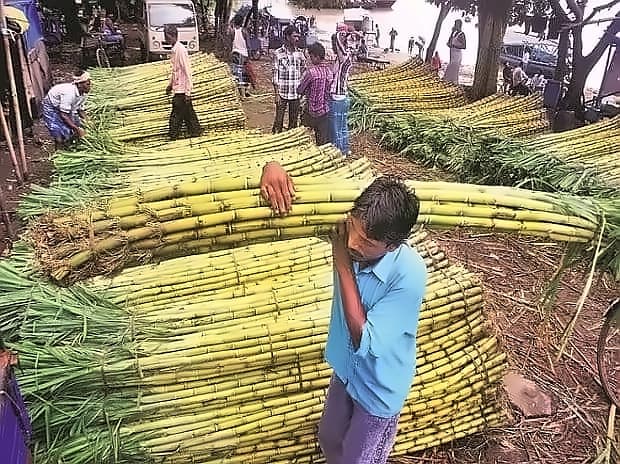
Indian sugar mills have proposed starting the 2026-27 crushing season 10-15 days earlier than usual to bring fresh supplies into the market before the festive season. The proposal was made jointly by the Indian Sugar & Bio-energy Manufacturers Association (Isma) and the National Federation of Cooperative Sugar Factories Ltd (NFCSF) after discussions with the Centre. In a joint letter to Union Food Secretary Sanjeev Chopra on Thursday, ISMA Director-General Deepak Ballani and NFCSF Managing Director Prakash Naiknavare stated that as the industry's decision to advance crushing has been taken primarily in the national interest to strengthen sugar availability and moderate prices during the festive season, the government should support in enabling mills to absorb the associated financial and operational burden. The associations requested the government to consider appropriate support to compensate recovery loss to partly offset the losses associated with the early commencement of crushing.
Indian sugar prices have jumped 10% over the past month to reach a record high of ₹4,716 per 100 kg in Kolhapur, a key trading hub in Maharashtra. According to Business Standard, this represents the highest level in more than three decades, with prices expected to remain elevated for at least the next three months as supplies tighten and festival demand gathers pace. The rally is adding to retail inflation that breached the central bank's target for the first time in 17 months in June, prompting New Delhi to take further measures to curb prices after banning exports and imposing stock limits last month. However, the government's concern is the moving prices in retail market now, which is driven more by sentiments rather actual demand-supply since a perception has been created about an impending shortage based on the statistical data.
Sugar inventories held by mills at the start of the new season on October 1 are expected to fall to about 3.5 million tonnes, the lowest level in more than three decades, after production in the current season fell short of annual consumption and mills exported about 800,000 tonnes of sugar. According to the Indian Sugar and Bio-energy Manufacturers Association (Isma), India's sugar production in the current 2025-26 crushing season is estimated at 27.9 million tonnes, while domestic consumption is expected at around 28.5 million tonnes. At the start of the current season, India had opening sugar stocks of around 47 lakh tonnes. The uncertainty gained further strength when the government ordered on July 24 physical sugar stock verification at mill level, with speculation that sugar in India as on October 1, 2026 may be marginally higher than the month's actual consumption, not sufficient to meet demand during November.

The industry associations clarified that recent price increases are not reflective of underlying demand-supply fundamentals. According to Isma and NFCSF, the pan-India average ex-mill sugar price until June during the current season was about ₹39.5-40 per kg, below the average cost of production. Even after recent increases, the season's average realisation until the end of July stood at ₹40-40.5 per kg, compared with an average production cost of around ₹42 per kg. They also revealed that sugar mills have paid around ₹1.10 trillion to sugarcane farmers during the current season. The associations claimed that India "continues to have adequate sugar stocks to comfortably meet domestic consumption requirements" and there is no cause for concern regarding sugar availability, with the proposal to advance crushing reflecting the sector's continued commitment to supporting the government's efforts to ensure uninterrupted supplies.
Despite the early crushing initiative, the associations have asked the government to consider support measures, including compensation for recovery losses, an additional domestic sugar sale quota equivalent to October production, or a waiver of CGST on domestic sugar sales. The government has imposed stringent stock limits with sugar dealers unable to hold stock for more than 30 days and limited to 4,000 quintals at any location. On July 28, the government issued an Order fixing a stock limit of 400 tonnes maximum quantity of sugar that any dealer can keep at any point of time till November 30, with traders mandated to liquidate excess stock by August 1. The sugar industry typically diverts 2.5-3.5 million tonnes of sugar annually for ethanol production, and the association has urged the government to raise ethanol prices to maintain the policy's long-term benefits.