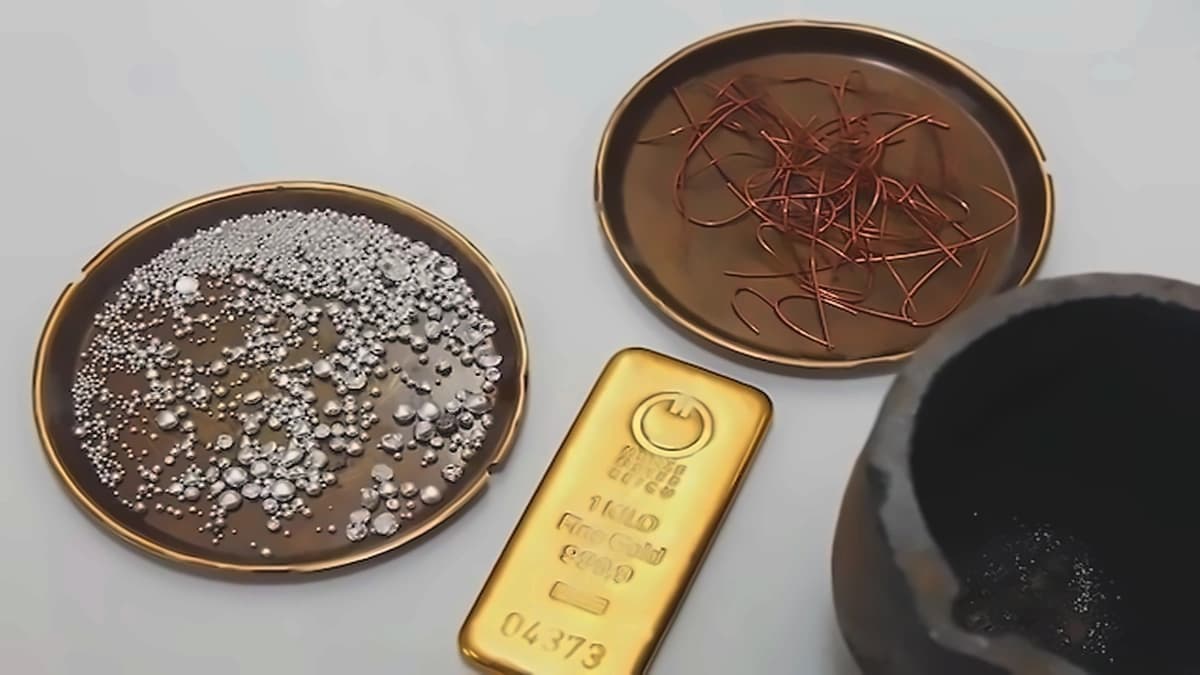
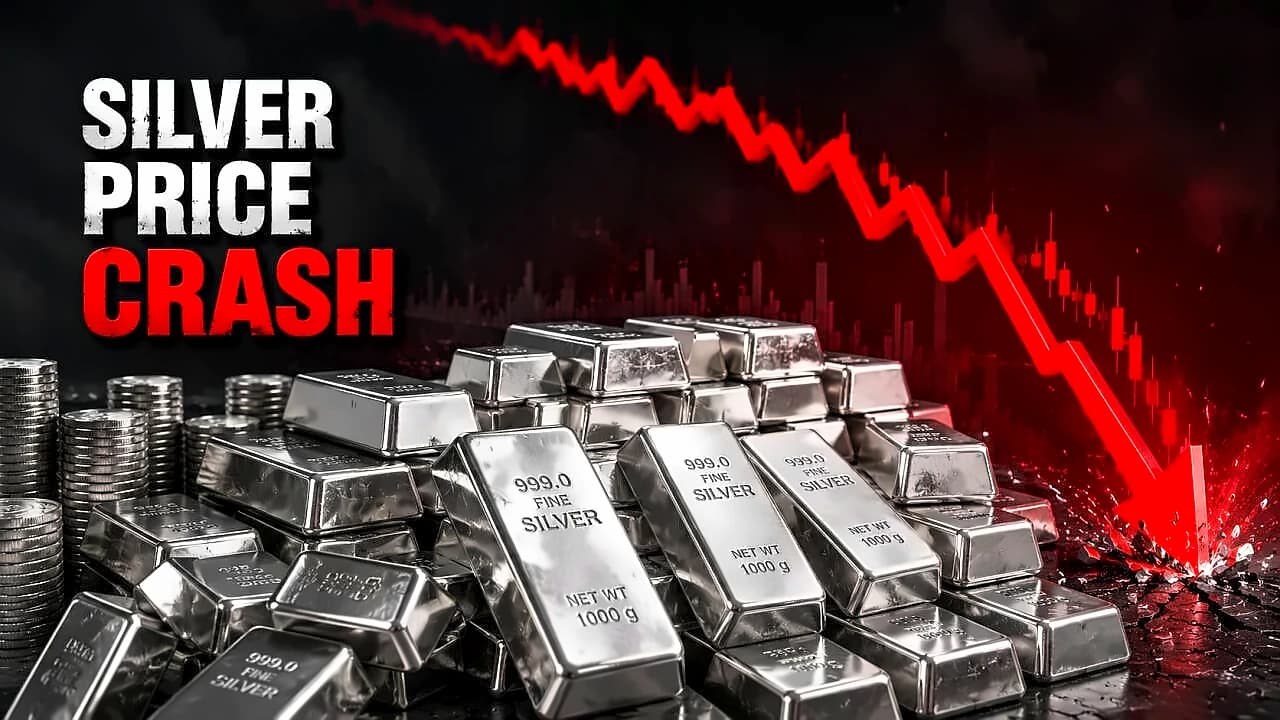
Silver continues to face significant downward pressure, with spot silver trading at $60.10 in the first week of October, down nearly 16% year-to-date compared to gold's 3% decline over the same period. According to The Financial Express, silver has plunged by nearly 50% from its all-time high of $121 reached on January 29, 2026, while gold is down 25% over the same period. In the Indian market, silver rates remain unchanged on Tuesday, October 6, with 999 purity silver priced at ₹2.35 lakh per kilogram, though regional variations persist with Chennai, Hyderabad, and Kerala cities showing silver prices ₹10,000 higher at ₹2.45 lakh per kilogram. The precious metal has suffered a nearly 50% wipeout from historic peaks scaled in early 2026, with the decline attributed to a strong US dollar and high Treasury yields that are nudging investors away from precious metals.
The primary driver behind silver's underperformance compared to gold lies in industrial demand weakness, particularly in solar power applications. As per The Financial Express, the Silver Institute expects industrial consumption to fall 3% this year, with potential for solar demand for silver to fall by around 30% this year, representing a roughly 60 million ounce reduction year over year. Over 50% of global silver demand comes from industrial applications, such as electronics, electric vehicles, and solar panels, making the metal more susceptible to economic activity than gold. Silver ETF holdings have been hovering around 800 MOz mark for the past two months, down 3.6% since the start of the Iran war, while registered COMEX silver inventory has jumped over 6.50 MOz to reach eight-month high level of 102.81 MOz. The one-month LBMA Silver lease rate at -0.13% denotes no supply concerns as quantum of free-float metal has improved, which is negative for the white metal.
Despite short-term volatility, silver demonstrates superior long-term performance when viewed over extended periods. According to The Financial Express, over 5-10 years, silver has outperformed gold considerably, with silver generating returns of 1,131% and 1,447% since 2000 till September 2026, compared to gold's 1,387.77%. Over a 10-year horizon, silver has delivered 249.72% returns compared to gold's 233.98%, though gold has held up better during recent declines with silver down 16.53% year-to-date versus gold's 3.14% decline. Silver's market size is significantly smaller than gold's, with weekly turnover at $137 billion compared to gold's $935 billion, resulting in sharper, intermittent price movements where even small sell orders can lead to significant price drops. The US-Iran war continues putting pressure on oil prices, adding fuel to inflation while US Treasury bond yields are at decadal highs and rate hike expectations are growing.
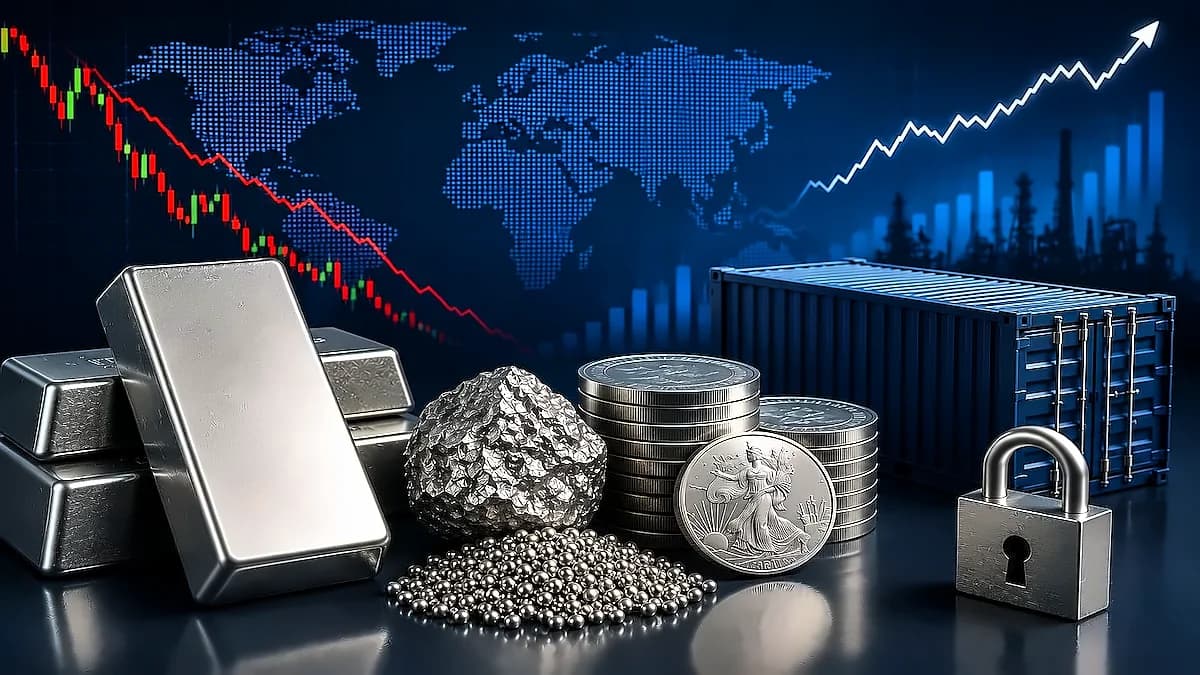
J.P. Morgan Global Research has revised its silver forecast down from a yearly average price of $84/oz set in May to $70/oz, with the metal trading around $60 in the first week of October. According to The Financial Express, the Silver Institute projects a gloomy outlook, forecasting the silver market in 2026 to end with a deficit for the sixth year in a row. Silver Institute estimates total silver demand from the electrical and electronics sector is projected to decline by roughly 10% in 2026, while total known global ETF holdings stand at 801.92 MOz, down 7.71% year-to-date. The US Dollar Index at 102.15 remains near the highest level since April 2024, benefiting from high energy prices and safe haven flows amid France's sovereign debt concerns. Two-year US yields at 4.74% were steady while ten-year yields at 5.24% were down nearly 0.7%, having retreated from the 24-year high of 5.36% noted on October 7.
Silver is expected to shift from a multi-year supply deficit to a potential surplus by 2027, driven by declining industrial and solar demand. According to reports from CNBC TV18, major brokerages expect silver prices to consolidate rather than return to recent record highs. Their 2027 price forecasts range from $65 to $95 an ounce, with UBS projecting prices at $80 an ounce and Commerzbank targeting $95 an ounce. JPMorgan expects current levels to serve as the average for next year, while institutions including Citi, Deutsche Bank, and HSBC forecast a lower consolidation range between $65 and $75 an ounce. The anticipated surplus follows a period of extreme price volatility, with silver declining 8% over the last month and down nearly 14% for the year, though it remains 27% higher on a year-on-year basis. As per Tata Mutual Fund, silver is on track for its sixth consecutive year of supply deficit, with industrial demand accounting for the majority of silver consumption.
Despite the severe price correction, market watchers warn against interpreting this as a breakdown of silver's structural investment case. Max Baecker, president of American Hartford Gold, told NDTV Profit that while speculative trading frequently amplifies silver's price swings, the metal's underlying fundamentals are firmly anchored by green-energy consumption. "Silver's volatility doesn't erase its fundamentals, although speculative trading can amplify its price swings," Baecker said. "Its uses in electronics and solar power give it an additional source of demand while making it more sensitive to an economic slowdown." Because the global silver market is significantly smaller than the gold market, institutional money moving in or out can trigger disproportionate price impacts. Baecker noted that while there is a credible long-term case for silver, anyone buying it should be prepared for a "bumpier ride."