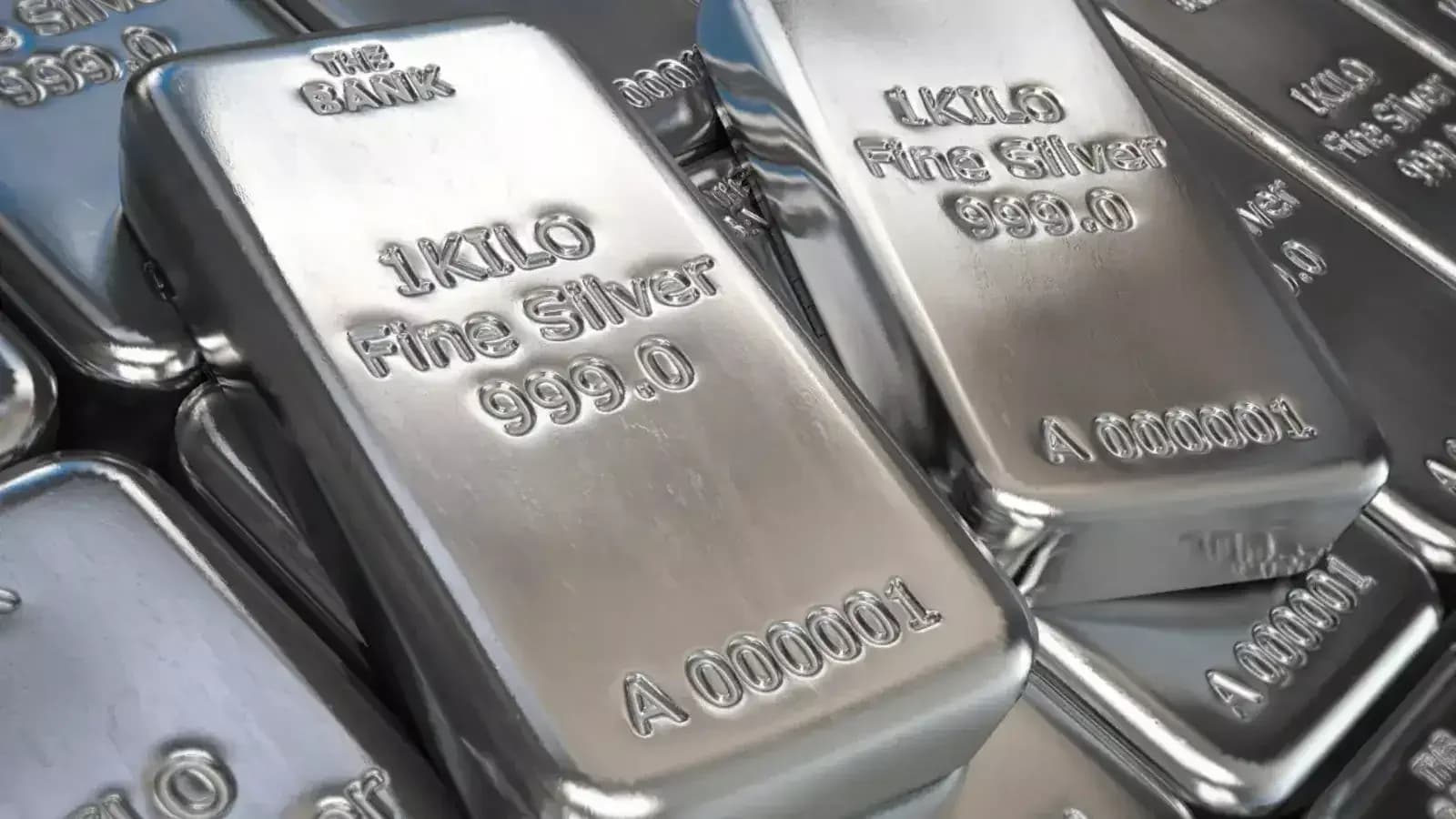
Silver prices have declined by 0.12% on June 4, 2026, with 1 gm silver trading at ₹263, 10 gm at ₹2,632, and 1 kg at ₹2,63,190. According to The Financial Express, silver prices in India are largely influenced by international spot silver rates, US dollar fluctuations, and import duties among other factors. The precious metal's pricing continues to be influenced by heavy reliance on imports, global economic shifts, and local market dynamics, with current prices showing the impact of tightened import regulations and global market uncertainty. Silver rates in India are determined based on international spot prices and then adjusted for domestic factors, reflecting the country's heavy reliance on imports and global economic shifts.
The government has significantly tightened silver import regulations by mandating Directorate General of Foreign Trade (DGFT) approval for all import channels, including routing through banks and RBI-nominated agencies. According to the latest government order, imports of silver in the form of grains, powder, unwrought and semi-manufactured forms, as well as material containing 99.9% silver, are now restricted with importers required to secure valid import authorization from the DGFT. The regulatory framework extends beyond traditional channels to include imports through DGFT-approved entities and the India International Bullion Exchange (IIBX). As reported by The Hindu BusinessLine, analysts noted that the Indian government has tightened silver import norms by bringing grain and powder forms under the restricted category, requiring prior import authorisation as the world's largest consumer of the metal tries to curb inflows and reduce pressure on the rupee.
Silver rates in India are experiencing significant volatility with prices recovering to ₹2.63-2.64 lakh per kg on Thursday, June 4, 2026. According to The Financial Express, 1 gm silver was ₹263, 10 gm at ₹2,632, and 1 kg at ₹2,63,190, reflecting a loss of 0.12% compared to its previous close. The precious metal's pricing continues to be influenced by heavy reliance on imports, global economic shifts, and local market dynamics, with current prices showing the impact of tightened import regulations and global market uncertainty. Silver rates in India are determined based on international spot prices and then adjusted for domestic factors, reflecting the country's heavy reliance on imports and global economic shifts.
Silver rates show notable differences across India's major metropolitan areas, with Mumbai, Delhi, Kolkata, Chennai, Bangalore, Hyderabad, Kerala, Pune, Vadodara, and Ahmedabad all reporting distinct price levels. As reported by The Financial Express, Mumbai and Pune both show 1 gm silver at ₹263, 10 gm at ₹2,632, and 1 kg at ₹2,63,190, while Chennai commands a premium at ₹264 per gm, ₹2,640 per 10 gm, and ₹2,63,960 per kg. Ahmedabad shows 1 gm at ₹263, 10 gm at ₹2,631, and 1 kg at ₹2,63,110, with Bangalore at ₹263 per gm, ₹2,634 per 10 gm, and ₹2,63,400 per kg. Delhi, Hyderabad, Kolkata, and Surat all maintain similar pricing patterns with 1 gm at ₹263, 10 gm at ₹2,627-2,636, and 1 kg at ₹2,62,740-2,63,610. The price disparities reflect the different supply chains and consumer behavior in each city, with import costs and local market conditions contributing to the regional price variations.
India's silver import spending has reached unprecedented levels, with the country spending a record $12 billion on silver imports in the financial year ended March 2026, compared with $4.8 billion a year earlier. According to trade ministry data, India's silver imports jumped 157% from a year earlier to $411 million in April. A Mumbai-based bullion dealer noted that "the government has made it harder for the bullion industry to bring in silver. Importers now need approval first, and there is no clear idea if they will get it or how long it will take." As reported by The Hindu BusinessLine, the uncertainty could impact procurement planning. Silver is primarily used in India for jewellery, coins, bars and industrial applications ranging from solar energy to electronics, with demand driven more by investment buying than traditional consumption. The country sources most of its silver imports from the United Arab Emirates, the United Kingdom and China.
International silver markets faced significant pressure with silver declining by more than 1% and 3% respectively as escalating tensions between the US and Iran boosted the US dollar and crude oil prices. According to The Financial Express, the Dollar Index climbed near a two-month high above 99.5, while rising energy prices fueled inflation concerns and pushed global bond yields higher, weighing on non-yielding precious metals. Additional pressure came from stronger-than-expected US economic data, including ADP employment, ISM Services PMI, factory orders, and the Fed Beige Book, reinforcing expectations that the Federal Reserve may keep interest rates elevated. As reported by LiveMint, investors were also assessing comments from New York Federal Reserve President John Williams, who said he does not expect inflationary pressures arising from the Middle East conflict to persist for an extended period. Traders now await Fed Governor Bowman's remarks and US Unemployment Claims data for fresh direction in the precious metals market.