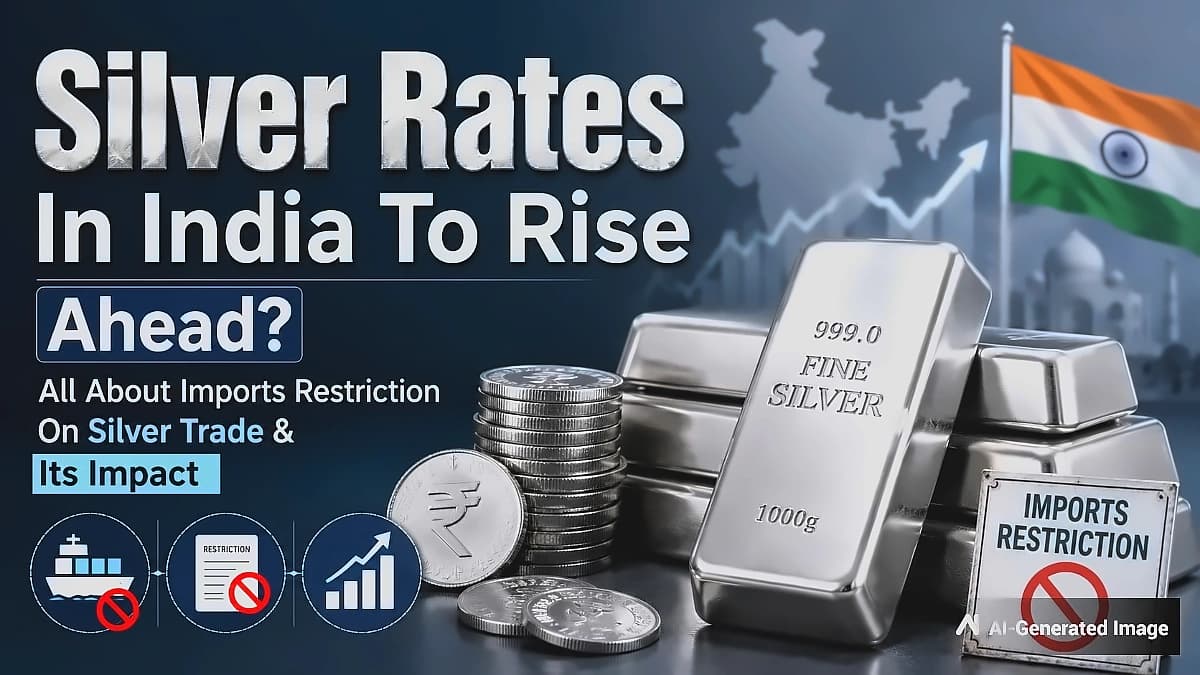
The central government has implemented comprehensive restrictions on silver imports while simultaneously increasing import tariff values for precious metals. According to The Economic Times, India's customs board has increased import tariff values for gold and silver, effective from May 16, 2026, as part of efforts to manage import costs due to global commodity price changes. The move comes alongside new government restrictions that make licences mandatory for silver imports, targeting all silver categories including those plated with gold and platinum. These changes aim to control the flow of precious metals and reduce the country's current account deficit. The Centre is also tightening rules for duty-free gold imports by jewellery exporters, with stricter compliance and reporting now in place for gold imports.
Finance Minister Nirmala Sitharaman announced a significant increase in gold import duty during her first Budget presentation, raising the customs duty from 10% to 12.5% while implementing a 5% Agriculture Infrastructure and Development Cess (AIDC). As per NDTV, this brings the effective import tax to 15% from 6%, marking the first increase in gold import duty in six years. The government has also imposed a 10% basic customs duty and 5% Agriculture Infrastructure and Development Cess (AIDC) on silver imports, taking the effective import tax to 15%. India's dependence on imported gold and silver has been rising steadily over the years, adding to trade deficit and forex depletion concerns, prompting these pre-emptive measures to save forex reserves amid geopolitical tensions.
On Friday, silver prices witnessed a sharp decline in both domestic and international markets following the announcement of import restrictions. According to Mint, MCX silver prices fell by ₹11,644, or 4%, to ₹2,79,458 per kg, while spot silver dropped 3.1% to $80.93 per ounce. The selling pressure deepened in the bullion market as investors reacted to the import restriction news and the new tariff value adjustments. The concern follows a May 8 order by the Department for Promotion of Industry and Internal Trade (DPIIT), which links compressor imports in the current fiscal to a percentage of volumes imported in FY25. Meanwhile, domestic gold prices have risen to their highest levels this year (year-to-date) around ₹30,500, tracking higher global prices as geopolitical risks over North Korea remained elevated.
The government's decision to curb silver bar imports could push exchange-traded funds (ETFs) tracking the white metal from trading at a discount to moving into a premium over spot prices, after two weeks of trading below NAV. As per Mint, this would mark a shift from ETFs trading at a discount to net asset value (NAV), which is calculated from spot prices, to potentially trading at a premium. This implies that if spot prices rise, ETF prices could rise more, and if spot prices fall, they would fall less than the spot. Premiums and discounts typically reflect demand conditions, with analysts noting that greater investment demand amid shortage concerns could push units from a discount to trading at a premium. The shift reflects growing concerns about an impending supply squeeze as India moves from "free" to "restricted" status for silver imports.
The new measures follow a significant surge in gold imports, with India seeing a substantial jump in gold imports in April, reaching USD 5.62 billion, driven by high prices, prompting the government to sharply increase customs duty on precious metals. A 10% rise in imports, despite a steep decline in inbound shipments from West Asia amid continuing geopolitical disruptions, widened the trade deficit to $28.38 billion in April from $27.1 billion a year ago. As per NDTV Profit, the government's move to shift silver imports from "free" to "restricted" status, requiring mandatory licences, is likely to control inflows, tighten supply, and push domestic prices higher. Jewellers, traders and industrial buyers could feel the impact first as the restrictions take effect.