Indian oil refiners are facing shipping costs of $12-$20 per barrel, up from $8-$10 in recent months, as Strait of Hormuz congestion and shipment diversions increase crude transportation expenses and pressure refining margins. As reported by NDTV Profit, the increase has added $4-$10 per barrel to shipping expenses, depending on the route, putting further pressure on refiners' landed crude costs and refining margins. Freight expenses were higher in the September quarter than in the June quarter and remained elevated through October and November. Oil in the physical market is trading at a considerable premium over Brent futures, with crude trading at about $20 a barrel above the Brent futures price of $115, according to industry executives. Freight costs of $10-20 per barrel, depending on the source, are adding to the burden, making crude from distant sources such as the US, Venezuela and Russia less competitive with Gulf supplies. 'Replacing Russian crude at scale is fundamentally a supply-chain challenge rather than simply a question of paying more per barrel,' said Sumit Ritolia, senior manager for modelling at Kpler. Some relief in shipping expenses is expected from December, however, freight rates remain elevated in the near term, leaving refiners exposed to higher input costs.
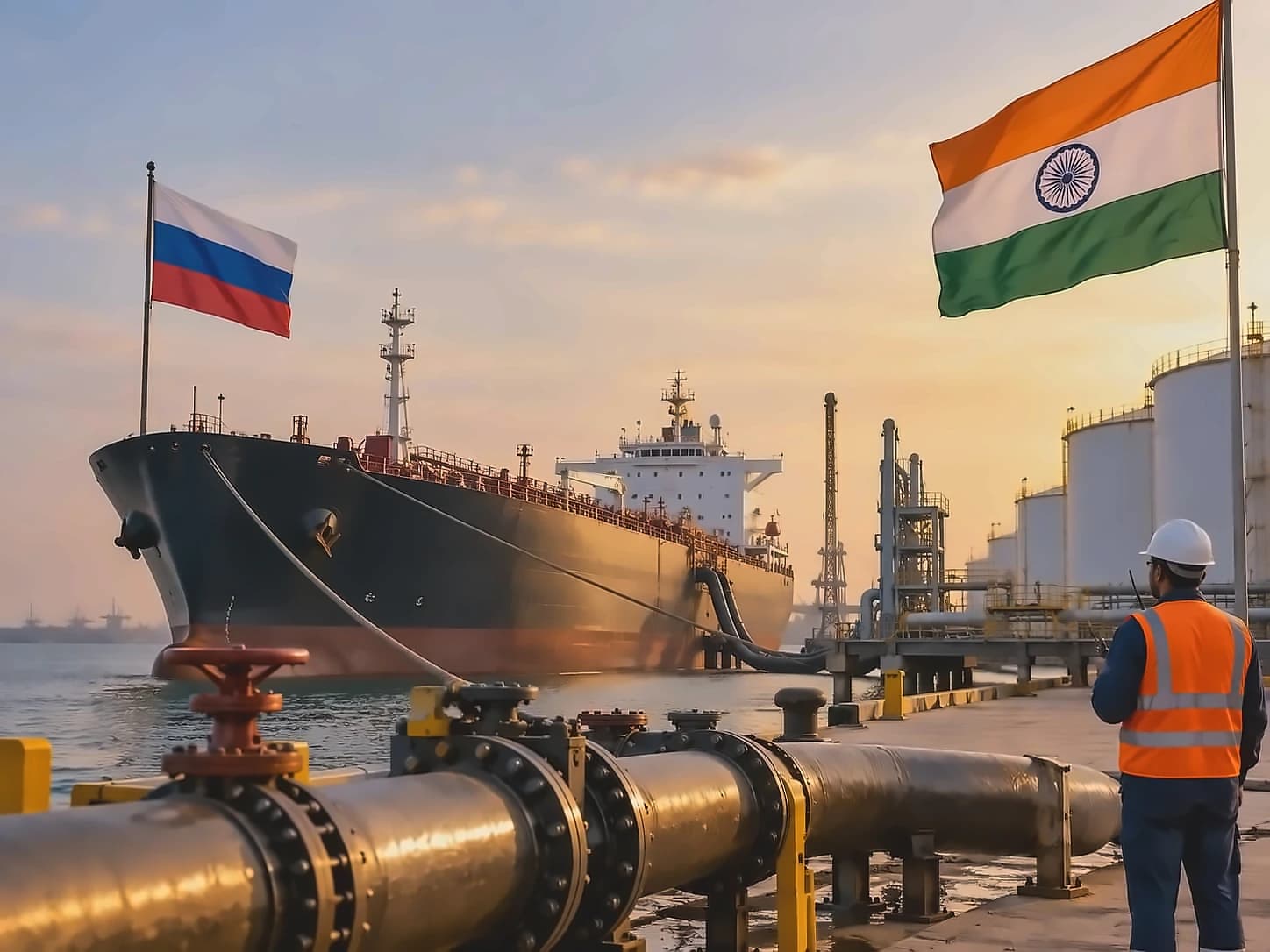
Venezuelan crude remains among the cheaper feedstock options available to Indian refiners, but its heavy, high-sulphur characteristics make it most attractive to facilities equipped to process such grades efficiently. According to Kpler analysis, Venezuela had increased production and exports since January by restarting existing operations and improving export infrastructure, but growth appeared to have plateaued over the preceding two to three months. Ritolia estimated that output and exports could rise by only a further 100,000 to 200,000 barrels per day without more substantial investment in production and export infrastructure. This could limit the scope for India to increase purchases, even if diplomatic engagement by Washington encourages greater trade in Venezuelan crude. For Reliance Industries, Kpler estimated that the company was already importing about 300,000-350,000 barrels per day of Venezuelan crude, equivalent to roughly 20-25 per cent of its crude intake. However, with Venezuelan production and exports showing signs of plateauing, the scope to increase purchases significantly could remain limited unless additional supply becomes available.
The impact would extend across the Indian refining industry rather than fall disproportionately on private-sector or state-run refiners, as noted by Kpler. India's state-run refiners, which largely sell in the domestic market where fuel prices do not quickly reflect global trends, are likely to face margin pressure from the combination of high freight and crude prices. A scramble for replacement supplies from the Middle East, Africa and other producing regions could increase competition for available grades and raise transport and procurement costs. India's exposure to Russian crude is therefore not simply a question of discounts, as refining margins also depend on freight, crude quality, refinery complexity, product yields and the prices refiners can secure for products such as diesel and gasoline. The changing freight economics are also influencing India's crude sourcing decisions, with US and Russian oil cargoes becoming less attractive as higher transportation costs reduce their competitiveness. Indian refiners have consequently leaned more towards Middle Eastern crude instead of Russian shipments during October and November.
India's refining expansion is primarily aimed at meeting rising domestic fuel and petrochemical demand, with new capacity additions increasingly incorporating petrochemical production. According to Kpler analysis, the increase in nameplate capacity is unlikely to translate immediately into a comparable rise in refined-product supply. Commissioning, stabilisation and the ramp-up of new units can take several months, while higher maintenance activity expected in 2027 could offset some incremental output. A more meaningful contribution from capacity additions expected in 2027 is likely in the second half of that year and into 2028, rather than immediately at the start of 2027. Projects such as HPCL Rajasthan Refinery Ltd. (HRRL) and the Bina refinery expansion illustrate this broader strategy, with many new capacity additions led by public-sector refiners increasingly incorporating petrochemical production.
Indian refiners are adapting to the challenging freight environment through strategic initiatives. Indian Oil Corporation (IOC) is exploring ship ownership as a way to reduce its dependence on external shipping arrangements and manage transportation risks. The company has floated tenders to purchase vessels amid rising freight expenses and uncertainty surrounding international shipping routes. This move could give IOC greater control over crude transportation and reduce its exposure to volatile freight markets. Indian refineries have been operating at high utilisation rates, in some cases above nameplate capacity, supporting exports to Asia, Africa, Europe and the US West Coast. Strong global product cracks have supported margins across the refining industry, benefiting less complex refiners as well. For Reliance Industries, Kpler estimated that the company was already importing about 300,000-350,000 barrels per day of Venezuelan crude, equivalent to roughly 20-25 per cent of its crude intake. However, strong global product cracks have supported margins across the industry, potentially narrowing the relative advantage of facilities like Jamnagar.