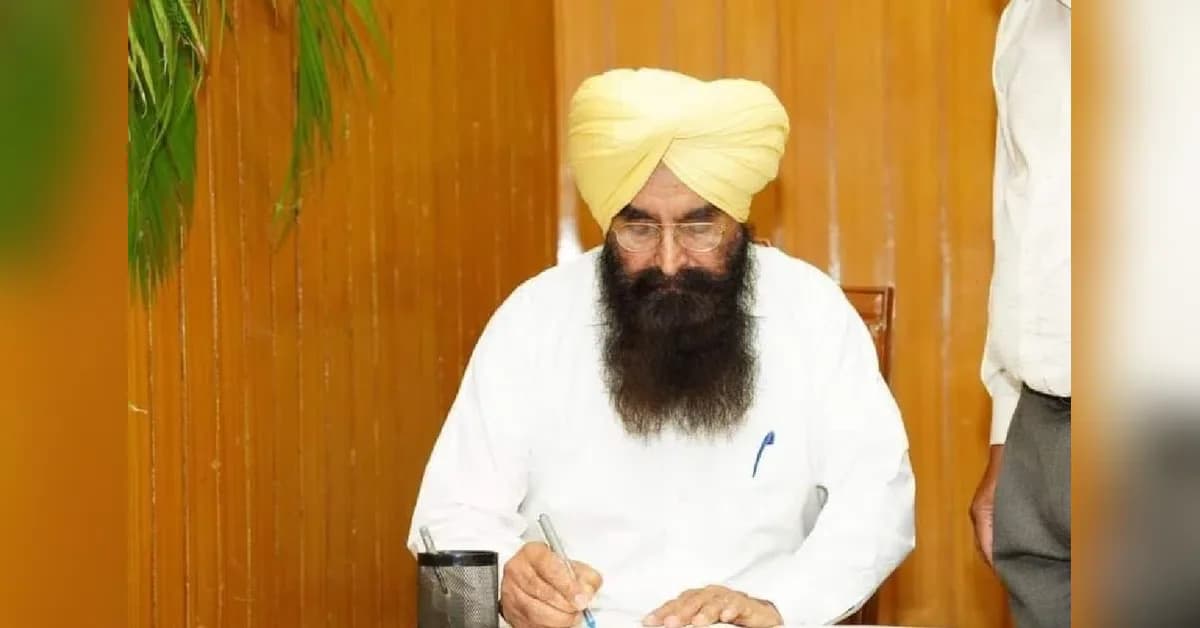
Punjab has achieved a remarkable 36% increase in Direct Seeding of Rice (DSR) cultivation during the 2026 Kharif season, with over 4 lakh acres now under the water-saving technique. According to Agriculture Minister S. Gurmeet Singh Khudian, 31,478 registered farmers adopted DSR across this expanded area, compared to 2.94 lakh acres in 2025. This represents a significant acceleration from last year's 16% growth rate, demonstrating the growing farmer confidence in DSR as a sustainable alternative to conventional paddy transplantation. The minister emphasized that this 36% jump, more than double last year's 16%, shows farmers now trust DSR as a sustainable alternative to conventional paddy transplantation.
The Punjab government is providing substantial financial incentives to encourage DSR adoption, offering ₹1,500 per acre for DSR cultivation. As reported by the Agriculture Minister, the total financial assistance expected to reach nearly ₹61 crore for this season. The initiative aims not only to support farmers financially but also to promote long-term groundwater conservation in the state. The state government is providing continuous technical guidance and field-level support to encourage wider adoption of DSR in the coming years. The Agriculture Minister noted that this is not just about incentives, but about building a lasting culture of conservation in Punjab.
DSR technology offers significant environmental advantages, helping save 15 to 20% of irrigation water per acre compared to conventional paddy cultivation. According to the Agriculture Minister, this makes DSR an important tool in addressing Punjab's depleting groundwater levels. The technique involves direct sowing of rice seeds in standing water, eliminating the need for transplantation and reducing water consumption during the critical early growth stages. The minister called the farmer-led shift the state's strongest defence against the groundwater crisis, emphasizing that every acre under DSR saves 15 to 20 per cent of irrigation water.
Fazilka district recorded the highest DSR coverage in Punjab with 1,55,422.77 acres under the technique by 12,063 farmers. Sri Muktsar Sahib ranked second with 1,06,038.81 acres cultivated by 7,345 farmers, followed by Ferozepur with 38,088.59 acres under DSR by 1,929 farmers. Bathinda and Sangrur also featured among the top five districts in terms of DSR coverage. The minister directed district-level agriculture officers to ensure speedy verification of claims and timely disbursal of DSR incentives to eligible farmers. The Punjab Government, under the leadership of Chief Minister S. Bhagwant Mann, is extending continuous technical guidance and field-level support to ensure further expansion of the DSR area in the coming years.