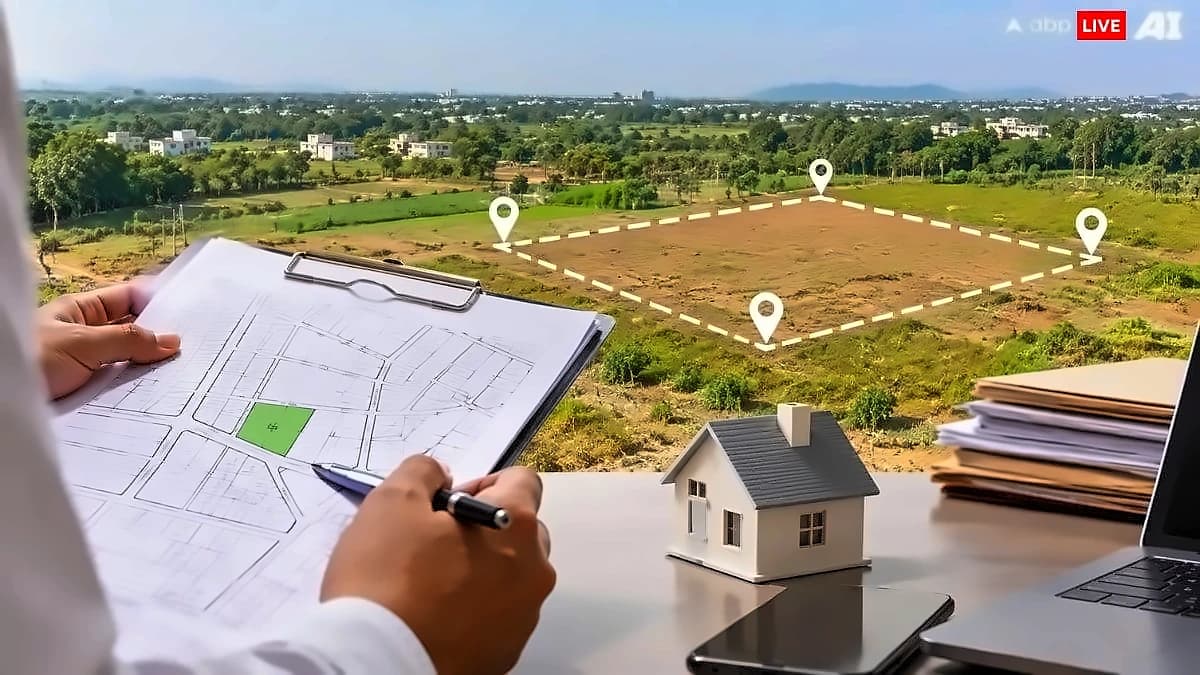
The government has launched the operational guidelines for the third phase of the Digital India Land Records Modernisation Programme (DILRMP 3.0), with an outlay of ₹565.50 crore for 2026-31. According to reports from The Economic Times, Union Rural Development Minister Shivraj Singh Chouhan launched the guidelines on Thursday, emphasizing that the programme would move beyond digitisation of individual records towards an integrated land management system. Chouhan stated that land is not just a piece of soil, but the pride of farmers, blessing of ancestors and identity of future generations. The guidelines were launched during a hybrid event at Krishi Bhawan, bringing together State Revenue and Registration Ministers, Principal Secretaries and senior officials from across the country.

Under DILRMP 3.0, each state will be able to develop its own 'land stack' by integrating land-related datasets and systems through APIs. As reported by The Economic Times, these state-level stacks will form the building blocks of a federated national land stack, enabling interoperability while retaining ownership and control of data with the authorities concerned. The programme will assign a 14-digit Bhu-Aadhaar, or Unique Land Parcel Identification Number (ULPIN), to every land parcel and provide for full georeferencing of cadastral maps. The initiative will introduce end-to-end online, paperless property registration and establish a new Registration Repository. Minister of State for Rural Development Chandra Sekhar Pemmasani said the programme would address legacy challenges through greater spatial accuracy, georeferencing and seamless interoperability across departments.
As part of the initiative, 75 high-footfall sub-registrar offices will be modernised as 'registration seva kendras', modelled on passport seva kendras. According to The Economic Times, the centres will feature improved citizen amenities and digital queue management systems. The programme will also modernise the Revenue Court Case Management System (RCCMS) by linking it directly with land records, with the aim of reducing case pendency and speeding up mutation settlements. Secretary, Department of Land Resources, Narendra Bhooshan described DILRMP 3.0 as a move towards building an integrated Digital Public Infrastructure for land administration. For urban areas, the NAKSHA pilot will be accelerated to create accurate GIS-based urban land records and facilitate the issuance of Urban Property Cards (UrPro Cards). Minister Chouhan noted that DILRMP 3.0 would help farmers access institutional credit and reduce the need for repeated visits to government offices.
The earlier phases of DILRMP have achieved significant progress, with 99.90% of Records of Rights (RoRs) and 97% of cadastral maps digitised, while 99% of sub-registrar offices have been computerised, as reported by The Economic Times. The scheme will be implemented across all states and Union territories with 100% central funding through a phased, performance-linked mechanism using the Public Financial Management System (PFMS). The progress will be monitored through a real-time DILRMP-MIS dashboard under the oversight of the Project Sanctioning & Monitoring Committee. The Department of Land Resources is set to launch the comprehensive, GIS-enabled digital land records overhaul by 2031.