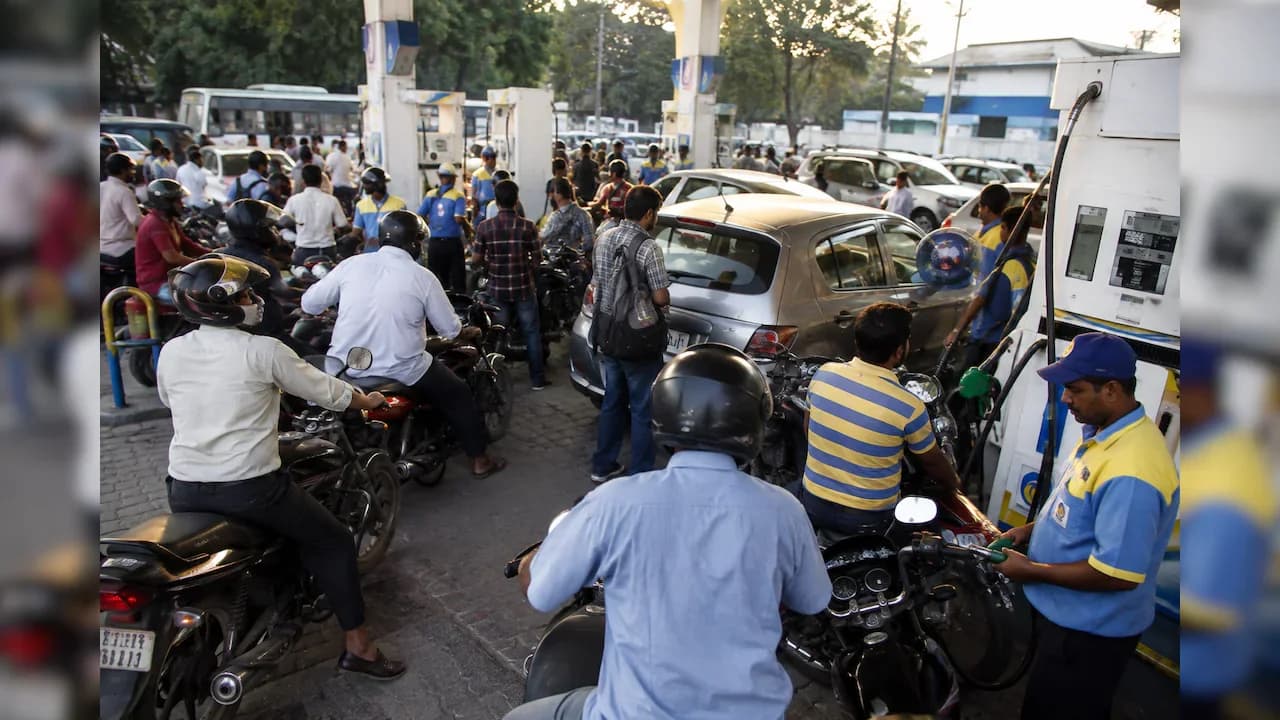
According to the latest fuel price data, petrol prices range from ₹102.12 per litre in Delhi to ₹115.69 per litre in Hyderabad across major Indian cities. Diesel prices vary from ₹95.20 per litre in Delhi to ₹103.82 per litre in Hyderabad. In Delhi, petrol continues to be priced above ₹100 per litre at ₹102.12, while diesel is retailing at ₹95.20 per litre. Mumbai has also continued to see petrol prices above the ₹110 mark, with petrol selling at ₹111.12 per litre and diesel at ₹97.78 per litre, representing a slight increase from previous pricing levels. In other major cities including Kolkata, Chennai, and Bengaluru, petrol prices remain above ₹110 per litre, with diesel prices below ₹100 in these cities except in Hyderabad where diesel is priced at ₹103.82. The price differential reflects state-wise tax structures and local market conditions, with fuel rates revised daily by oil marketing companies in line with global crude oil prices and currency movements.
Brent crude prices edged higher on Tuesday, hovering around the $91-a-barrel mark, as renewed tensions between the US and Iran weighed on market sentiment. According to latest reports, Brent crude futures were up 0.42% at $91.12 a barrel following recent geopolitical developments. Oil prices had jumped on Monday after US forces struck two Iranian rocket launchers on Larak Island, marking a resumption of combat between Washington and Tehran. Brent crude for September delivery gained 2.7% to settle at $90.49 a barrel, while US West Texas Intermediate futures rose 2.8% to close at $85.76 per barrel. The retreat comes as amid stalled US-Iran talks and US President Donald Trump's economic pressure campaign, Tehran signaled no retreat on Saturday, vowing to withstand US sanctions and maintain control over the Strait of Hormuz. Iranian Deputy Foreign Minister Kazem Gharibabadi noted that "The Strait of Hormuz remains closed, and any vessel passing through the strait does so in coordination with Iran," adding that the country will continue defensive measures and is prepared for any scenario.
Compressed natural gas (CNG) prices were increased in Delhi and adjoining cities on Saturday, 29 August, with Indraprastha Gas Ltd (IGL) implementing the price revision citing sharp rise in international LNG prices due to disruption in gas cargo movement through the Strait of Hormuz. CNG price in Delhi was increased by ₹3.89 per kg, which is now priced at ₹86.98 per kg. The price adjustment takes the cumulative increase in Delhi CNG prices this year to nearly ₹10 per kg, as reported by PTI. This increase reflects the broader impact of geopolitical tensions on energy markets, with disruptions affecting not only crude oil but also natural gas supplies through strategic shipping routes.
For India, which meets more than 85% of its crude oil requirements through imports, a sustained rise in global oil prices could significantly impact the country's energy economy. As reported by NDTV Profit, a sustained rise in global oil prices could increase the country's import bill and add to inflationary pressures. Higher crude prices could also raise the prospect of further domestic fuel price revisions, making India particularly vulnerable to international oil market fluctuations. The combination of global, economic, and domestic factors shapes fuel prices at the pump, with the rupee-dollar exchange rate being another key variable given India's heavy reliance on imported crude. Despite recent volatility, fuel prices have remained stable for the past three months despite volatility in global energy prices majorly due to US-Iran war and closure of Strait of Hormuz shipping route, with the last major fuel price revision coming on 25 May when prices of petrol and diesel were increased by ₹2.7 to ₹2.8 per litre, respectively.
According to market analysis, global crude prices remain the biggest determinant of retail fuel prices in India, but domestic rates are influenced by multiple factors beyond international oil prices. Domestic petrol and diesel rates are also influenced by central and state taxes, refining margins, freight and distribution costs, as well as movements in the rupee against the US dollar. These domestic factors contribute to the final retail pricing across different cities and states in India, with state governments levy different rates of Value Added Tax (VAT) or sales tax on fuels, while the Central Government's excise duty is generally uniform across the country. Transportation costs and prevailing demand-supply conditions also factor into the retail price consumers see at the pump, making fuel prices vary significantly across different regions and time periods. The recent CNG price increases in Delhi and surrounding areas demonstrate how disruptions in international energy supply chains can quickly translate into higher domestic fuel costs.