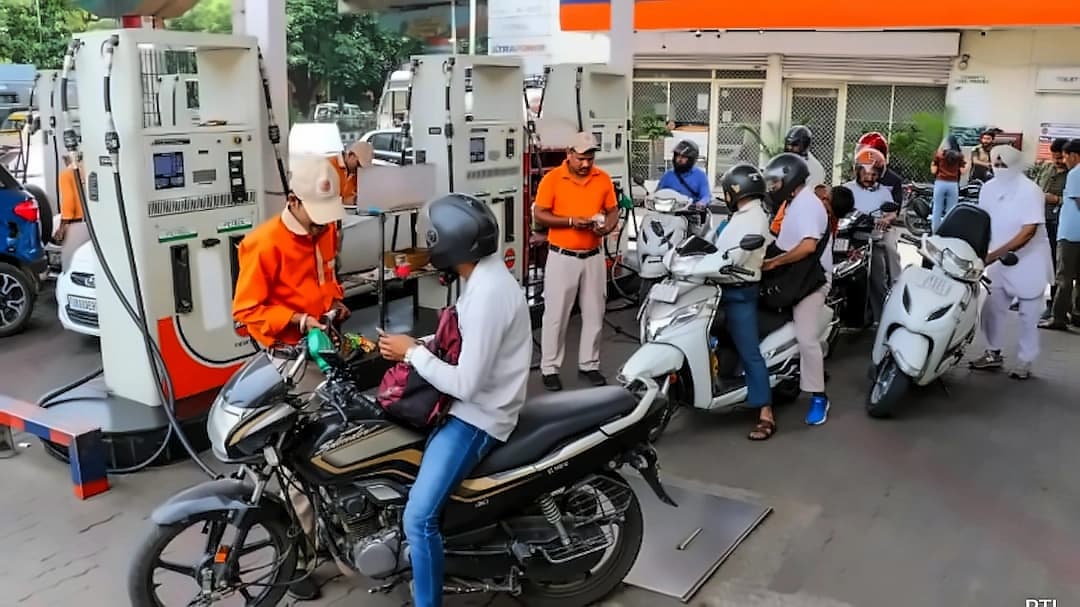
Oil marketing companies have implemented another price increase for petrol and diesel, raising rates by nearly 90 paise per litre on May 19. According to reports from Zee News, this marks the second price hike within a week after the first increase of ₹3 per litre that occurred on May 15. The latest hike brings petrol and diesel prices to their highest levels in around four years of stability. With the latest increase, prices of the two retail fuels have increased about ₹3.90 per litre since Friday (May 15, 2026). As per NDTV, the ongoing conflict in Iran has disturbed global oil supply, with the earlier ₹3 increase not fully covering the losses of oil marketing companies. The ₹3-per-litre hike in petrol and diesel prices implemented Friday provided some relief to OMCs, reducing their combined daily losses on sales of the two automobile fuels and liquefied petroleum gas (LPG) by a fourth, or about ₹250 crore, to about ₹750 crore a day, as per the Petroleum Ministry.
Following the May 19 increase, petrol in Delhi was priced at ₹98.64 per litre while diesel reached ₹91.58 per litre. The premium variant of diesel, XG of Indian Oil, is now priced at ₹96.90 per litre following a 91 paise hike. The high-octane variant of petrol, XP95, has been hiked 87 paise to ₹105.76 per litre. As reported by Zee News, similar price hikes have been implemented across key metro cities including Mumbai, Kolkata, and Chennai. Mumbai shows petrol at ₹107.59 per litre and diesel at ₹94.08 per litre, while Kolkata shows petrol at ₹109.70 per litre and diesel at ₹96.07 per litre. Chennai's rates stand at petrol ₹104.49 per litre and diesel ₹96.11 per litre.
The price increases are attributed to rising global crude oil prices and supply concerns linked to the ongoing West Asia crisis, according to Zee News reports. The oil marketing companies are operating under pressure from squeezed supply and rising crude prices, which have forced them to implement these consecutive price adjustments within a short timeframe. According to the latest report released on May 18 by the Petroleum Planning and Analysis Cell (PPAC), crude oil prices (Indian basket) have surged to $110.73 per barrel as of May 15, 2026, compared to $69.01 per barrel in February 2026. This represents an overall increase of 60.45 per cent amid 81 days of ongoing conflict. India imports over 85 per cent of its crude oil requirements and nearly 60 per cent of its LPG from the international market, with around 40 per cent of crude oil and 90 per cent of LPG reaching India via the Strait of Hormuz. However, due to tensions between the United States and Iran, cargo ship movement through the Strait of Hormuz has been severely disrupted, resulting in India's overall expenditure on crude oil imports increasing by more than 60 per cent.
The government had informed that losses being incurred by oil-marketing companies from liquified petroleum gas (LPG), petrol and diesel combined have come down by ₹250 crore to ₹750 crore following the ₹3 hike in prices of petrol and diesel done May 15. As on date, the government there was no bailout package for oil-marketing companies being considered. Prime Minister Narendra Modi last week urged fuel conservation, work-from-home practices and reduced travel as higher energy prices strain India's foreign exchange reserves and threaten to widen the current account deficit for a third straight year. Some State governments have already instructed departments to limit travel, avoid physical meetings and operate with reduced office staffing. Additionally, CNG prices were also hiked by a rupee per kilogram in Delhi-NCR on Sunday (May 17), marking the second increase after last Friday's ₹2 hike. The combined losses of the three refiners-cum-fuel retailers are projected at ₹1 lakh crore in the April-June quarter at current price levels, enough to wipe out their collective profits for the entire 2025-26 (FY26). The government had slashed excise duty by ₹10 per litre on petrol and diesel late March to blunt the impact of high international prices on the OMCs, but the retailers continue to bleed, with the excise duty cut resulting in the government foregoing revenue of about ₹14,000 crore a month.
Private fuel retailers have already increased pump prices significantly. Nayara Energy, the country's largest private fuel retailer, in March, raised petrol prices by ₹5 per litre and diesel by ₹3, while Shell increased petrol prices by ₹7.41 and diesel by ₹25 per litre from April 1. In Bengaluru, Shell sells petrol at ₹119.85 per litre and diesel at ₹123.52. India's retail inflation, measured by the Consumer Price Index (CPI), rose to 3.48% in April 2026 from 3.40% in March, while wholesale price inflation (WPI) surged to 8.3%, a 42-month high, driven by a sharp rise in fuel and energy prices amid elevated global crude oil rates. Industry sources said the price hike appears calibrated — enough to partially ease margin pressure on oil companies without creating a major inflationary shock. The hike in petrol and diesel rates has a direct impact on the price of all daily-use commodities, with small traders, transport businesses, and public transportation users bearing the direct impact of the price increases. Given the weightage of petrol and diesel in the CPI basket, a 3-5% increase (in fuel prices) likely adds about 15-25 bp (basis points) to the headline inflation, besides second round impact, according to Radhika Rao, senior economist and executive director, DBS Bank.