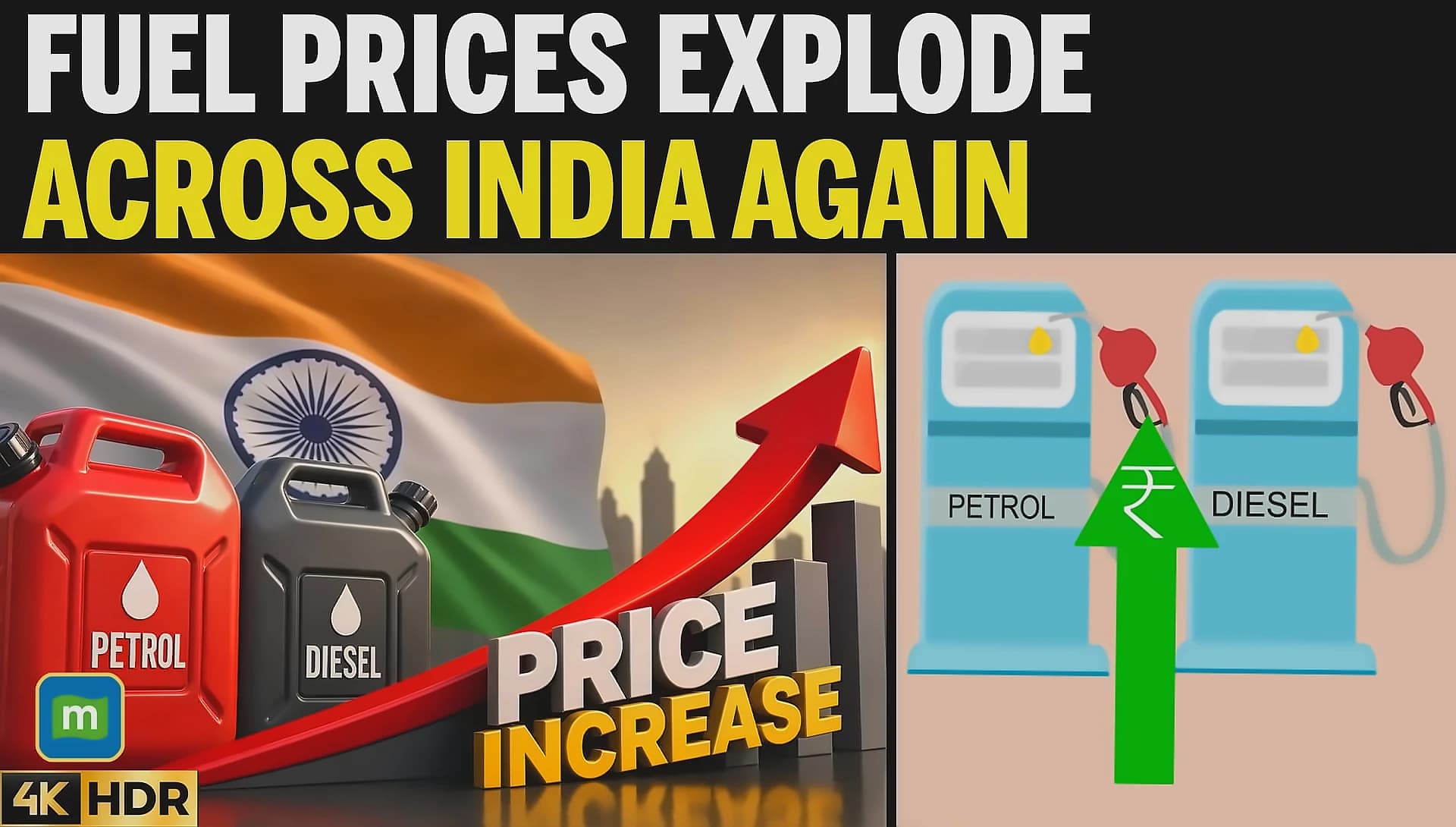
Fuel prices have surged again across India, with petrol crossing ₹100 per litre in most cities for the second time in recent days. According to latest reports from Indian Oil Corporation, petrol prices were increased by ₹2.61 per litre, taking the retail price in Delhi to ₹102.12 per litre from ₹99.51. Diesel prices also saw a steep rise of ₹2.71 per litre, reaching ₹95.20 per litre from ₹92.49. This marks the fifth fuel price hike in less than two weeks, with the latest increase taking cumulative increases to around ₹7.5 per litre since May 15. The price hikes come at a time when wholesale price inflation (WPI) hit a 42-month high of 8.3% in April, while retail inflation touched a 13-month high of 3.48%. As per Outlook Business, the latest revision in petrol prices has cumulatively raised rates by nearly ₹7.5 per litre, with cities such as Delhi seeing petrol breach the psychologically crucial ₹100-per-litre mark.
The latest fuel price hike comes against the backdrop of rising uncertainty in global energy markets due to the ongoing conflict involving the United States and Iran. The crisis has created significant disruptions in global energy markets, with the closure of the Strait of Hormuz - one of the world's most critical oil transit routes - being a major concern. A significant portion of global crude oil shipments passes through this narrow maritime corridor, making any disruption a major concern for energy-importing countries like India. Following the combined US-Israel attack on Iran, Tehran shut down the Strait of Hormuz, through which nearly 20% of global energy trade passes. Following the shutdown, benchmark Brent crude repeatedly hit multi-year highs, with prices reaching as high as $126 per barrel. The US had to lift some sanctions on Russian crude, and the International Energy Agency announced its largest-ever release of emergency stockpile reserves to prevent global crude prices from hitting $150 per barrel, which would enter recession territory. As per ONGC's Sushma Rawat, "Whenever there is an announcement of a peace accord, crude prices begin to fall. But when it becomes clear that there is no immediate resolution, prices rise again."
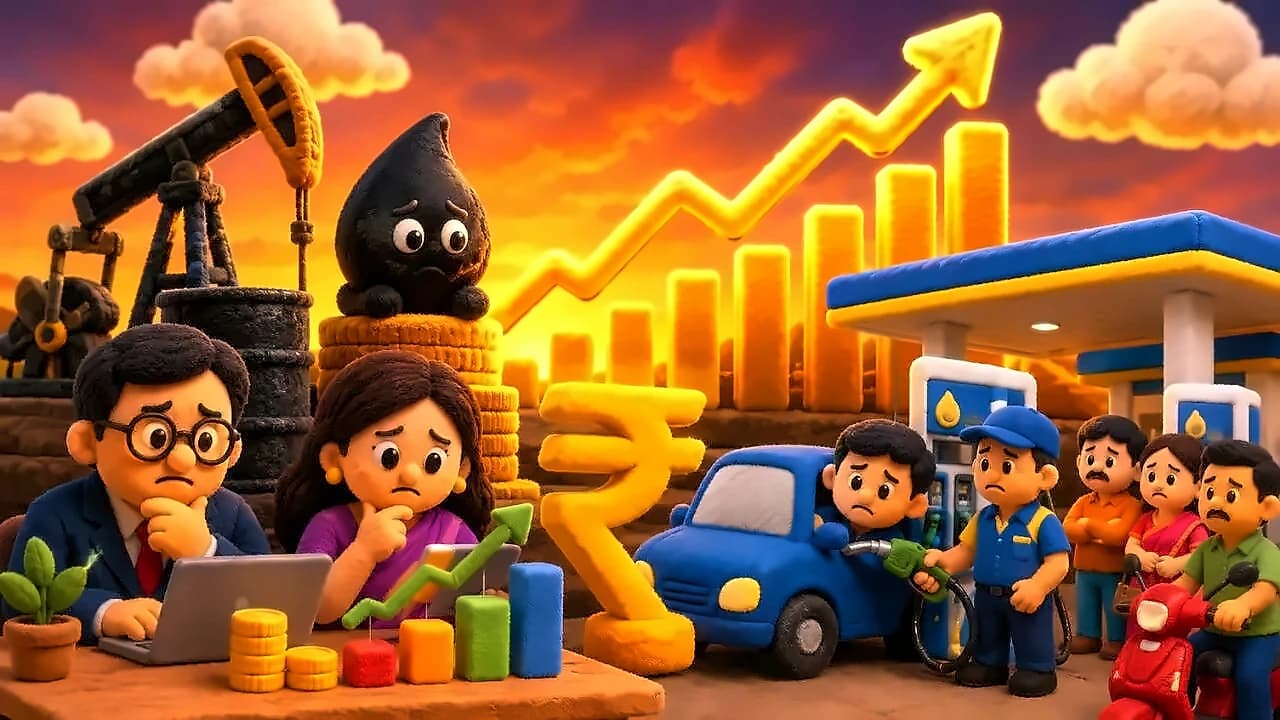
The sustained fuel price increases are creating visible pressure on monthly budgets of millions of Indians and are expected to ripple across almost every corner of the economy. India imports nearly 90% of its crude oil requirements, which means fluctuations in international oil prices directly affect domestic fuel costs. Industry experts warn that sustained increases in fuel prices could push up the prices of essential goods including groceries, food delivery, and e-commerce logistics. Logistics-heavy sectors such as e-commerce, quick commerce, food delivery, mobility platforms, and supply-chain startups are particularly vulnerable to sustained fuel inflation. Since over 70% of goods in India are transported by road, a rise in diesel prices quickly increases transportation costs across the country. As per Outlook Business, diesel prices are at ₹95.20 per litre, as per reports citing industry experts, and fuel accounts for a major share of a truck operator's expenses, so logistics companies often raise freight charges almost immediately when diesel prices go up. For commercial vehicle operators and small businesses, the impact may lead to shrinking margins due to increasing operational expenses.
The latest hike comes after oil marketing companies held fuel prices steady for nearly 76 days despite global crude oil prices crossing the $100-per-barrel mark. According to a senior petroleum ministry official, daily losses of India's state-run oil marketing companies on the sale of petrol, diesel and LPG have narrowed to about ₹600 crore from nearly ₹1,000 crore before retail fuel prices were first raised on 15 May. Union finance minister Nirmala Sitharaman on Monday said the government is sacrificing ₹1 trillion of revenue by cutting excise duties on diesel and petrol, with the government reducing excise duty by ₹10 per litre in March, taking a monthly hit of ₹14,000 crore to its exchequer. As per Icra Ltd, despite the latest hike, oil marketing companies are incurring a loss of about ₹700-800 crore daily on the sale of auto fuels and domestic LPG, even after factoring in the fuel price hikes. However, state-owned oil companies are still trying to recover revenue losses, with analysts believing a fifth increase is likely on the table unless Brent stabilises well below $100 per barrel for a sustained period. As per Reuters, energy analysts believe a fifth increase is likely unless global oil prices stabilize.
The mounting economic pressure from the West Asia crisis is further expected to challenge policymakers managing imports, inflation, growth, and fiscal math. Petroleum Minister Hardeep Singh Puri said that "at some stage the government has to take a view" on petroleum pricing amid soaring global prices and supply disruptions. RBI Governor Sanjay Malhotra earlier this month warned that India may soon be "forced" to raise retail fuel prices if the West Asia crisis continues. Prime Minister Narendra Modi urged citizens to conserve fuel, citing foreign exchange pressures, by adopting carpooling, shifting to public transport, and avoiding unnecessary travel expenditure. For nearly four years, petrol and diesel prices in India stayed frozen, as the government quietly absorbed global oil shocks and cut excise duty by ₹3 a litre. Company executives have warned that current retail prices do not fully reflect the surge in global oil and transportation costs, with government officials stating that the escalating situation in West Asia has pushed up freight rates, weighing on India's import bill. Despite the challenges, state-owned oil companies — IOC, BPCL, and Hindustan Petroleum — reported strong profits with combined net profit of over ₹77,000 crore in FY26, driven by stable crude prices and strong refining margins.