The Centre on Friday raised petrol and diesel prices by ₹3 per litre nationwide, marking the first increase in 4 years since the previous revision on May 15, 2026. According to reports from Republic, the hike comes as the ongoing Middle East conflict and blockade of the Strait of Hormuz continue to disrupt oil supplies and push global energy prices higher. Global crude oil prices have surged from nearly $69 in February to above $120+ per barrel, currently at the $107 mark. This price escalation has put significant pressure on oil marketing companies due to rising input costs and shrinking marketing margins. The latest revision on May 15, 2026 marks the end of a four-year price freeze during which state-run oil marketing companies accumulated losses exceeding ₹1 lakh crore over the past ten weeks alone.
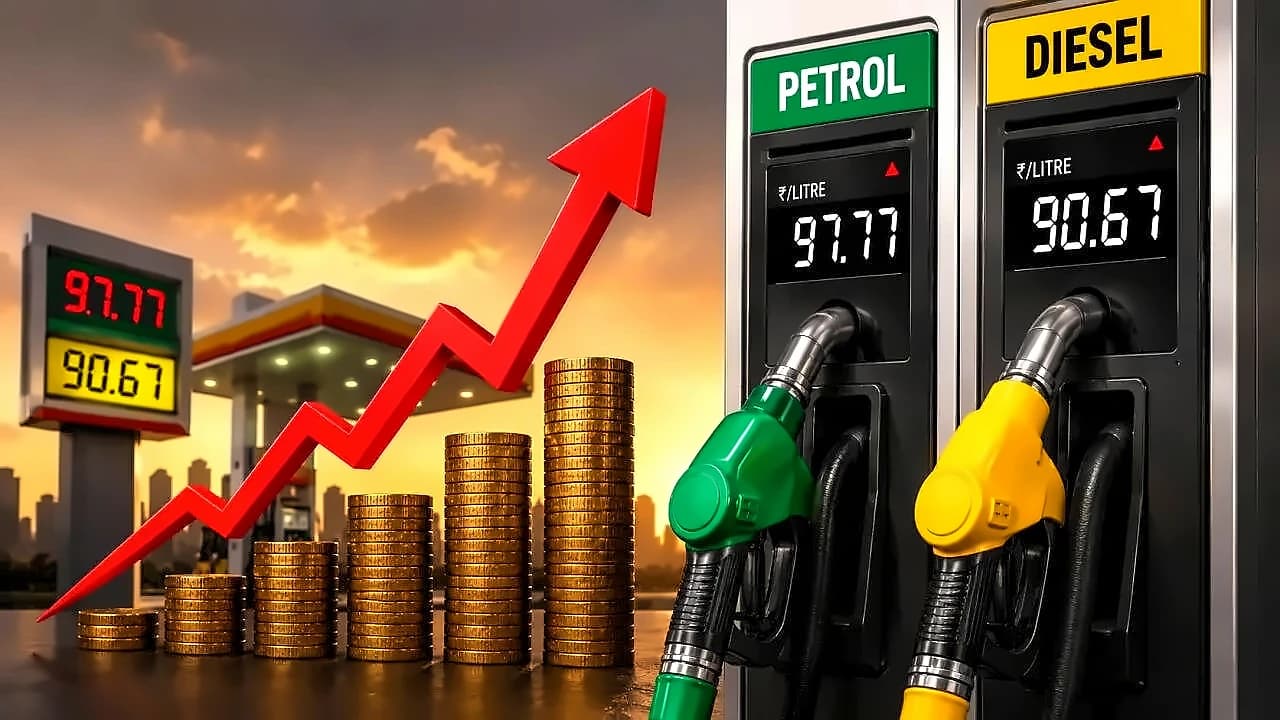
Despite the nationwide hike, petrol remains below ₹100 per litre in several cities. As reported by Goodreturns, the cheapest petrol is available in Chandigarh at ₹97.27 per litre (₹2.97 increase), followed by Lucknow at ₹97.58 per litre (₹2.85 increase). In the National Capital Region (NCR), petrol prices range from ₹97.77 in New Delhi to ₹98.29 in Gurgaon (both ₹3.00 increase), while Noida is at ₹98.04, up ₹3.30. However, petrol prices have reached above ₹110 per litre in Hyderabad at ₹110.89 and Thiruvananthapuram at ₹110.75. The range between cheapest and most expensive petrol is ₹13.62 per litre, entirely a function of differential state taxation rather than central duty or crude cost.
According to Ajit Mishra, SVP Research at Religare Broking, the sharp price increase reflects the direct impact of the escalating West Asia energy crisis and supply disruptions around the Strait of Hormuz. As reported by Goodreturns, while fuel availability remains stable, the hike is likely to intensify inflationary pressures across the economy. Higher transportation and logistics costs could gradually push up prices of essential goods and services, increasing the burden on household budgets and raising overall cost-of-living concerns. Industry estimates suggest OMCs need a hike of ₹10 per litre on petrol and ₹15 per litre on diesel to fully break even at current crude levels, with the latest revision covering less than a third of the required correction.
Diesel prices have also increased significantly, with Chandigarh offering the cheapest diesel at ₹85.25 per litre despite a ₹2.80 hike. According to Goodreturns, New Delhi diesel is priced at ₹90.67 per litre after a ₹3.00 increase, while Gurgaon stands at ₹90.77 and Lucknow at ₹90.87. Mumbai's diesel stands at ₹93.14, up ₹3.11, with Jaipur at ₹93.43 and Bengaluru at ₹94.10 per litre. Thiruvananthapuram is at ₹99.63, up ₹3.37, making it the highest diesel price across all major cities. Hyderabad tops the list with diesel at ₹98.96, up ₹3.26, while Bhubaneswar is at ₹96.11, up ₹3.56.
The data reveals a clear northern advantage in fuel pricing, with petrol and diesel prices generally cheaper in northern cities compared to southern cities. As reported by Goodreturns, Chandigarh and Lucknow offer the most competitive rates for both fuels, while Kolkata stands at ₹108.74, up ₹3.29 — one of the steepest increases among major metros. Bhubaneswar sees petrol at ₹104.57, up ₹3.60 — the highest absolute hike among the cities listed. Hyderabad, Thiruvananthapuram, Kolkata, and Patna sit at the expensive end of the spectrum, with Hyderabad topping petrol prices at ₹110.89 and Thiruvananthapuram leading diesel at ₹99.63. This regional pricing pattern reflects different state VAT rates, freight charges, and local levies across different parts of the country.