Petrol and diesel prices were increased once again on Monday, marking the fourth revision in 11 days as firms continued passing on the burden of rising international crude oil prices to consumers. According to industry sources, from 6 am on May 25, 2026, petrol in Delhi became costlier by ₹2.61 per litre, taking the retail price to ₹102.12 per litre from ₹99.51 per litre. Diesel prices also saw a sharp jump, climbing by ₹2.71 per litre to reach ₹95.20 per litre from ₹92.49 per litre. The cumulative increases since daily revisions resumed on May 15 have now reached nearly ₹7.5 per litre, with rates increasing by around ₹8 per litre since the first hike. As per Upstox News Desk, the latest revision takes the cumulative hike to more than ₹7.5 per litre since May 15. With the latest revision, petrol and diesel prices have climbed to their highest levels since May 2022, marking a significant escalation in fuel costs for consumers.
The sustained price increases have created significant regional disparities, with petrol prices in several cities now racing towards the ₹114-per-litre mark after the latest hike. According to price notifications issued by state-owned Indian Oil Corporation, Bharat Petroleum Corporation Ltd and Hindustan Petroleum Corporation Ltd, Kolkata leads at ₹113.47 per litre with a ₹2.87 per litre increase, followed by Mumbai at ₹111.21 per litre with a ₹2.72 per litre rise, and Chennai at ₹107.87 per litre with a ₹2.46 per litre increase. Diesel prices also show similar regional differences, with Kolkata at ₹99.82 per litre, Mumbai at ₹97.83 per litre, and Chennai at ₹99.66 per litre. Regional variations extend beyond metros, with cities like Bhopal recording petrol prices at ₹114.57 per litre and Jaipur at ₹112.66 per litre. Rates vary from state to state depending on the incidence of local value-added tax (VAT) and other levies imposed by respective state governments.
Compressed Natural Gas (CNG) prices have also experienced significant increases, with CNG prices in Delhi-NCR raised by ₹2 per kg on May 26, marking the fourth increase in just two weeks. Following the latest revision, CNG now costs ₹83.09 per kg in Delhi, while consumers in Noida and Ghaziabad will pay ₹91.70 per kg. The sharp rise in CNG prices comes just a day after oil marketing companies increased petrol and diesel prices across India on Monday, sparking speculation that another round of fuel price revisions could be on the horizon. Earlier, the government had increased CNG prices by ₹2 on May 15, followed by hikes of ₹1 each on May 18 and May 23. The latest hikes follow a prolonged period during which retail fuel prices were kept unchanged despite soaring crude oil prices, narrowing refining margins, and a weakening rupee increasing import costs.
The latest price increases have significantly impacted fuel costs for consumers across different vehicle categories. In Delhi, where petrol costs ₹102.12 per litre, filling a 35-litre hatchback tank will now cost around ₹3,574.2, while a 50-litre SUV refill may cost nearly ₹5,106. For motorcycles with a 12-litre tank, a full refill will be priced around ₹1,225.4. In Mumbai, where petrol costs ₹111.21 per litre, a 35-litre car tank will cost around ₹3,892.25, while a 50-litre SUV refill will be nearly ₹5,560.5. The cost impact is particularly significant in Kolkata, where petrol prices have touched ₹113.47 per litre, making a 35-litre tank refill cost around ₹3,972.85 and a 50-litre SUV refill approximately ₹5,675.5. For motorcycles, a complete 12-litre refill will cost around ₹1,362.12 in Kolkata.
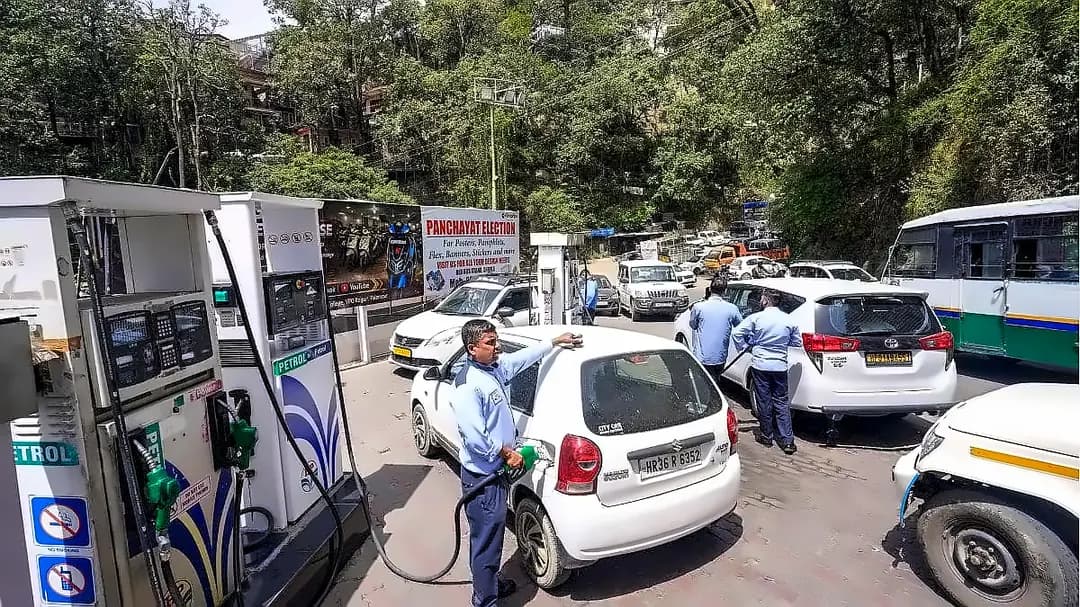
Global oil prices have shown mixed movements, with U.S. crude falling more than 8% over the previous week after Trump said he had halted planned airstrikes against Iran to allow additional time for talks. As per NDTV Profit, Brent crude dropped more than 5% during the same period. However, oil prices have surged more than 30% since the United States and Israel launched attacks on Iran on February 28. On Monday, West Texas Intermediate crude futures fell about 5% to $91.65 per barrel, while Brent crude futures also declined around 5% to $98.30 per barrel. The latest round of increases comes amid sustained high global crude oil prices, which have risen more than 50% since late February following US-Israeli strikes on Iran and disruptions in shipments through the Strait of Hormuz. The continued volatility reflects ongoing geopolitical tensions in the Middle East that continue to impact global energy markets, with a major concern remaining the instability in the region and its impact on global oil supply routes, particularly the Strait of Hormuz, a key maritime corridor through which a substantial share of global crude oil shipments pass.