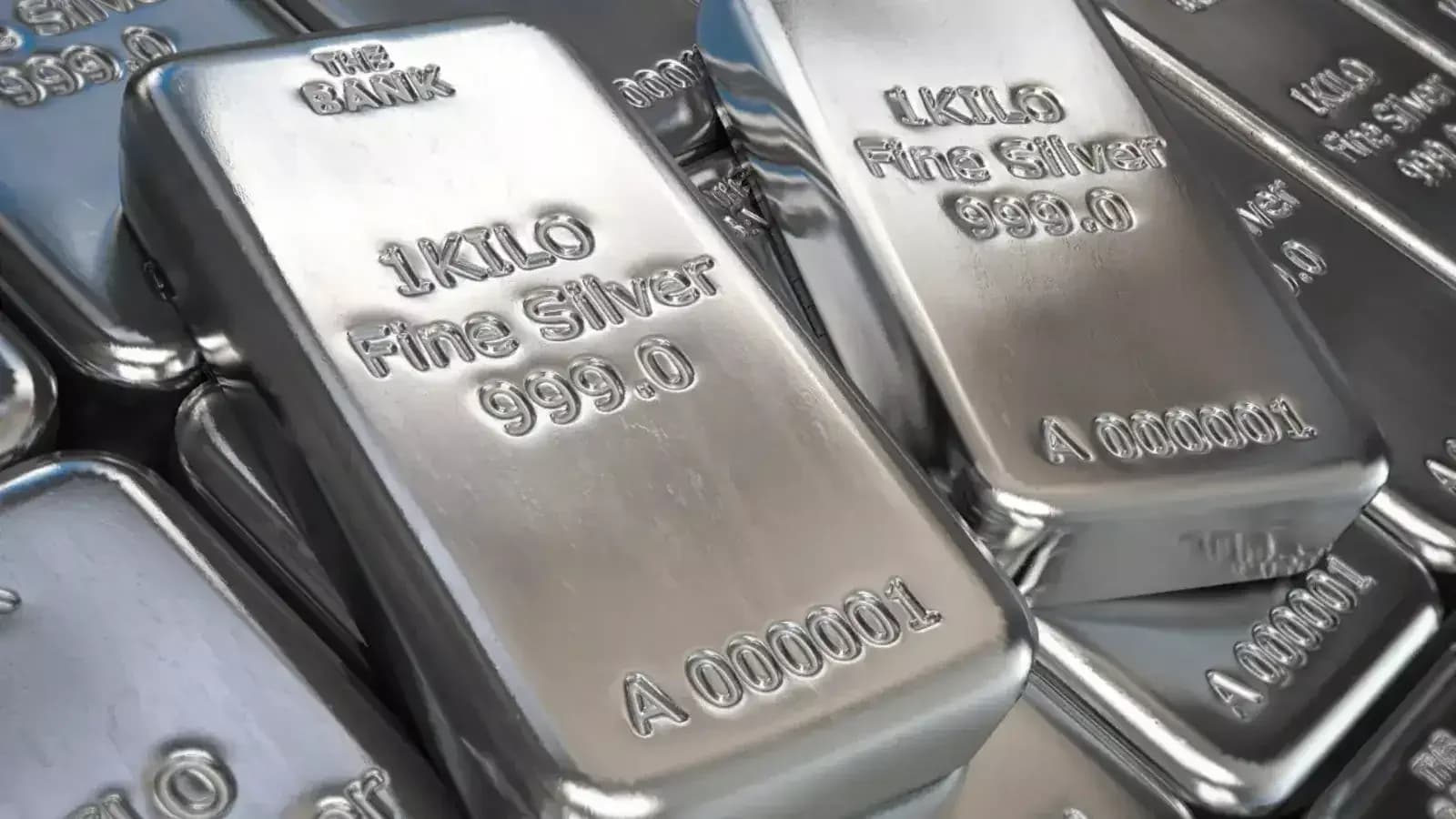
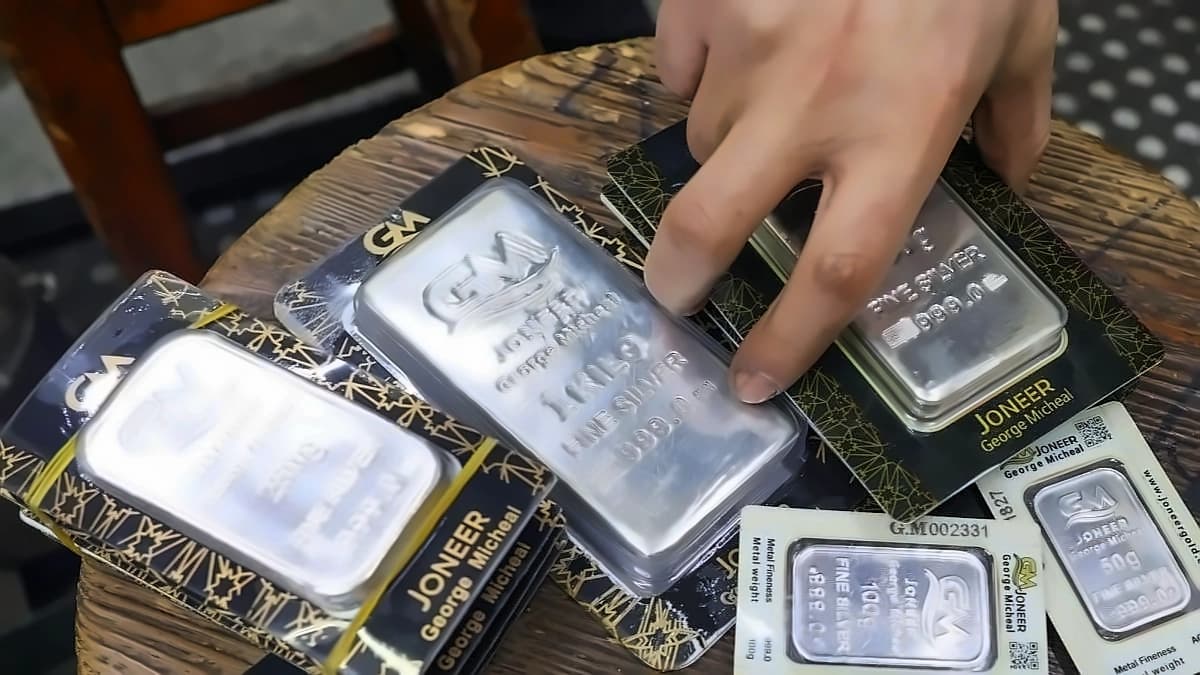
The government has tightened import norms for select categories of silver bars, following its earlier decision to sharply raise import duties on gold, silver and platinum. According to The Financial Express, the import policy for silver, including silver plated with gold and platinum, has been revised from 'free' to 'restricted' with immediate effect. This means importers will now require prior government approval to bring several categories of silver into the country. The revised framework specifically covers import of a bar containing 99.9% or more by weight of silver, with certain categories also subject to regulations prescribed by the Reserve Bank of India (RBI) under the ITC (HS) classification system. The restrictions apply to imports of silver bars, unwrought silver, semi-manufactured silver forms and silver powder. As per Financial Adda, the Directorate General of Foreign Trade issued a notification on Saturday (May 16, 2026) confirming that goods under the restricted category now require government license for imports. The latest notification specifically mentions that the restrictions have been implemented amid the ongoing West Asia conflict.
Petrol and diesel prices were hiked by ₹3 per litre each on Friday, marking the first increase in more than four years. According to reports from Business Standard, state-run fuel retailers passed on part of the hit from surging global crude prices triggered by the Iran war. Alongside, compressed natural gas (CNG) prices in cities like Delhi and Mumbai were raised by ₹2 per kg. The benchmark Indian crude basket has averaged $106.2 per barrel in May, up from $69 in February, with the Indian currency weakening by ₹5 against the dollar since the start of the war and ₹10 over the past year, breaching the 96-per-dollar mark on Friday. As consumers absorb Friday's increase, industry executives expect additional incremental hikes over the coming days and weeks. The last significant revision in fuel prices came in 2022, when companies raised rates in small daily increments between March 21 and April 6, increasing petrol and diesel prices by ₹10 per litre within just 16 days.
The oil ministry has revealed that oil marketing companies (OMCs) — Indian Oil Corp, Hindustan Petroleum Corp and Bharat Petroleum Corp — are incurring a combined loss of ₹30,000 crore a month due to the Iran war-triggered turmoil in oil markets. Despite showing resilience in absorbing losses, HPCL reported a 46% rise in profit to ₹4,902 crore in the March quarter, largely supported by strong earnings in January and February. However, Indian Oil fell 4.06%, HPCL was down 2.89% and BPCL dropped 3.63% at the close on Friday, reflecting the under-recovery gap. The under-recovery, or the gap between international fuel prices and domestic pump rates, stood at ₹14 per litre for petrol, ₹42 for diesel and ₹674 per cylinder for LPG on Monday, according to a petroleum ministry official. These figures change daily and do not reflect actual cash losses for refiners, with oil company executives expecting further hikes as the revision is insufficient to bridge the wide gap between higher input costs and retail prices.
Congress leader Rahul Gandhi criticized the government, stating that the public would pay the price for the Modi government's mistake. As reported by Business Standard, Gandhi posted in Hindi on X, "Galti Modi sarkaar ki, keemat janta chukayegi (The public will pay the price for the Modi government's mistake)." The leader of opposition in the Lok Sabha warned that the ₹3 shock has already arrived, with the rest of the recovery to be done in instalments. Congress party chief Mallikarjun Kharge alleged that the country was facing an economic crisis due to leadership crisis, lack of vision and incompetence. The latest social media discourse highlights broader concerns about India's foreign policy and geopolitical positioning during the current global crisis.
The Communist Party of India (Marxist) strongly condemned the Centre for raising petrol, diesel and CNG prices, according to Business Standard reports. The CPI(M) Polit Bureau warned that the hike would impose a greater burden on people already reeling under inflation, unemployment, stagnant wages and deepening economic distress. Kharge specifically highlighted that when diesel prices rise, inflation has a cascading effect across the country, adversely affecting industries, household budgets and farmers. Officials opted for a calibrated increase to assess how higher fuel costs are transmitted through the supply chain, particularly after wholesale inflation surged to a 48-month high of 8.3% in April. The current fuel price increase comes amid broader economic challenges, with critics pointing to failed foreign policy and geopolitical mismanagement as contributing factors to the current crisis.
The government's decision to hike import duties on silver and impose restrictions likely stems from India's silver imports jumping over twofold to $411.06 million in April, as reported by Business Standard. The government also hiked import duty on precious metals from 6% to 15% on May 13, followed by the recent import curbs. The Bharatiya Janata Party (BJP) defended the hike, claiming that India managed to shield citizens from the global oil shock for more than two months while implementing only a "limited and calibrated" rise. As reported by The Financial Express, the latest measures signal the government's intent to strengthen oversight of precious metals trade while curbing excessive imports and improving regulatory monitoring across the bullion sector.