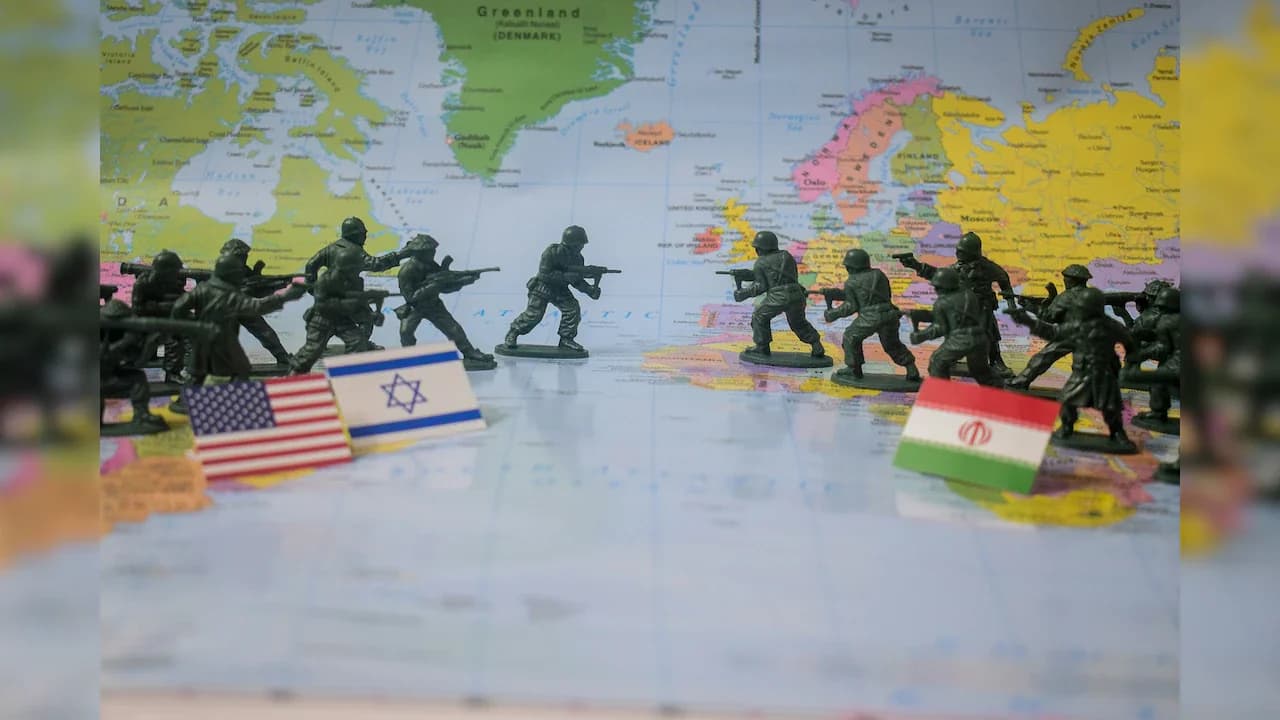
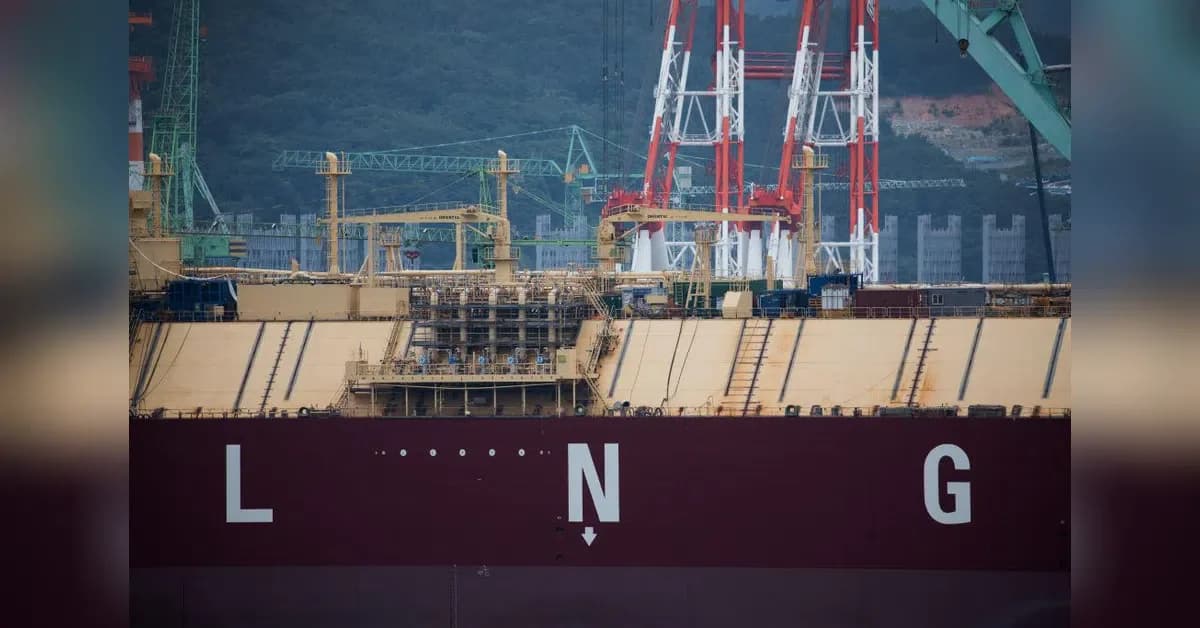
Oil prices steadied after US President Donald Trump cast his doubts over the Iran ceasefire post rejecting Iran's recent peace offer, with Brent crude trading over $104 a barrel and West Texas Intermediate close to $98 a barrel. Trump told reporters in the Oval Office that the truce was on 'massive life support' while deriding the Iranian response to his proposal to end the 10-week war. The ceasefire has been in place since early April and has held even after a series of flareups in violence recently, including attacks on ships, but the near-closure of the Strait of Hormuz has significantly disrupted flows of crude, natural gas and fuels to global customers, raising concerns about an inflation crisis. As per CNBC TV18, gauges of market strength have weakened in recent sessions as refiners dial back their buying, with Brent's prompt spread near $4 a barrel in backwardation on Tuesday, compared with high of almost $10 early last month.
President Trump announced the halt of Project Freedom — a naval effort to escort vessels through the Strait of Hormuz — citing 'great progress' toward a 'complete and final agreement' with Iran. According to The Wall Street Journal, the draft memorandum under discussion between the U.S. and Iran is unlikely to resolve tensions around the Strait of Hormuz, as the document merely 'calls on Iran to ease' its restrictions on the waterway. The framework reportedly asks Washington to scale back its blockade of Iranian ports during a 30-day negotiation period. Trump issued a stark ultimatum on Wednesday, warning that failure to finalize a deal would lead to a resumption of strikes at even greater intensity, underscoring the fragile and high-stakes nature of the negotiations. Trump is due to arrive in Beijing on Wednesday and is expected to discuss Iran, among other issues, with Chinese President Xi Jinping, as reported by Reuters, with experts hoping he can persuade Beijing to leverage its influence over Iran to push for a comprehensive ceasefire. The US president is meeting with his national security team to discuss the war, including a possible resumption of military action, with Trump also telling Fox News that he's looking at reviving a plan to escort ships through the strait.
Latest media reports suggest that Iran responded to Trump's peace proposal by demanding the US lift a naval blockade and provide sanctions relief, while maintaining a degree of control over traffic through the Strait of Hormuz, according to a person familiar with the matter who asked not to be identified discussing sensitive information. Iranian Foreign Minister Abbas Araghchi insisted Tehran would only accept 'a fair and comprehensive agreement,' leaving the outcome of negotiations uncertain. According to Iranian state media, Tehran's proposal includes demands for compensation for war-related damages and a reaffirmation of Iranian sovereignty over the strait. The semi-official Tasnim news agency reported that Iran also called on the United States to end its naval blockade, guarantee no further attacks, lift sanctions and remove restrictions on Iranian oil sales. On the nuclear front, there are tentative signs of progress, with discussions centering on a potential freeze of 12–15 years, after which Iran could resume enrichment at 3.67%. However, little progress appears to have been made on the issue of highly enriched uranium (HEU), which remains a major sticking point.
The Strait of Hormuz remains largely closed, with Saudi Aramco Chief Executive Officer Amin Nasser saying global markets are losing 100 million barrels of supply every week the Hormuz is shut. The company has redirected some of its exports through its western port, but prices remain high, and buyers — including China — are taking less volumes. The world has lost about 1 billion barrels of oil over the past two months due to the ongoing conflict, as reported by Saudi Aramco CEO Amin Nasser on Sunday. This massive supply disruption has kept global energy markets tight and will take time to stabilize even if flows resume. The International Energy Agency confirms the conflict has triggered the largest supply shock on record. Despite a month-old ceasefire and nearly 48 hours of relative calm, hostile drones were detected over several Gulf nations on Sunday, underlining the continuing risks facing the region. Recent attacks include a drone strike on Sunday that briefly ignited a cargo ship off the coast of Qatar in the Persian Gulf, marking the latest attack on shipping routes since the ceasefire took effect in early April, with the UAE and Kuwait also reporting intercepted hostile drones.
MCX Crude oil is showing a recovery attempt on the hourly chart after forming a base near the ₹8,380 support zone, with prices moving back above the 20-EMA and 50-EMA, indicating an improvement in short-term momentum. However, the recovery is facing resistance near the ₹9,560 zone, and the current price is hovering close to the ₹9,207 level. A sustained move above ₹9,560 may open the way towards ₹9,800–₹10,000, while on the downside, ₹9,200–₹9,100 is the immediate support zone, followed by ₹8,800. A close below ₹8,800 would weaken the short-term setup and shift focus back towards ₹8,380. Gold is trading in a sideways-to-weak structure on the hourly chart after failing to sustain at higher levels, with the price hovering near the 20-EMA and 50-EMA zone around ₹1,52,500–₹1,52,600, which is acting as an immediate hurdle. The key support is placed at ₹1,51,400, while the major resistance is around ₹154,934, with gold holding above ₹1,51,400 limiting downside risks.