The U.S.-Iran conflict has intensified significantly with both sides conducting military strikes over the weekend following U.S.-Iran peace talks in Washington. The U.S. announced on Sunday that it had conducted 'self defence strikes' on Iranian radar and control sites on Iran's Goruk and Qeshm island in response to what it called 'aggressive actions' from Tehran. In retaliation, the elite Islamic Revolutionary Guard Corps of Iran said that its 'aerospace forces' targeted an airbase used in what they called a U.S. assault on a telecommunications tower on Sirik Island. As per CNBC TV18, fighting has escalated in the Middle East with Iran firing ballistic missiles at Kuwait and Bahrain — which broke apart en route or were intercepted — while US forces conducted strikes on the Islamic Republic's Qeshm Island. The escalation came after US-hosted peace talks between Israel and Lebanon on Friday failed to deliver a breakthrough, with hopes for an extension of the existing US-Iran ceasefire now faded. Israel continued military operations in Lebanon, while Iran reportedly launched ballistic missiles toward Kuwait and Bahrain, according to NDTV Profit. Another round of talks between Israel and Lebanon is scheduled for Wednesday, though markets remain cautious about the prospects of a durable ceasefire.
Global crude oil prices tumbled sharply on Thursday after US President Donald Trump indicated that negotiations to end the conflict with Iran were entering their final stages, raising hopes of a diplomatic breakthrough and easing concerns over potential supply disruptions in the energy market. As of 5:58 p.m., Brent crude futures were trading down 3.51% at $94.38 per barrel after falling as low as $94.33 during the session. US West Texas Intermediate (WTI) crude declined even more sharply, dropping 4% to $92.18 per barrel. The steep decline comes after weeks of elevated oil prices driven by geopolitical tensions in West Asia, with markets pricing in the risk of supply disruptions from one of the world's most critical oil-producing regions. Investor sentiment shifted after Trump suggested that efforts to bring an end to the Iran conflict were progressing rapidly. "We're in the middle of final negotiations to end the Iran war," Trump said, expressing confidence that diplomatic discussions could soon result in a resolution to the conflict. The possibility of a negotiated settlement prompted traders to unwind part of the geopolitical risk premium that had been built into prices over recent weeks.
Iran's semi-official Tasnim News Agency reported that Tehran had paused talks, citing continued Israeli military action in Lebanon. As per Mint, "Given the continuation of the Israeli regime's attacks in Lebanon, and considering that Lebanon had been one of the preconditions for a ceasefire – which has now been violated on all fronts, including Lebanon – the Iranian negotiating team is suspending 'talks and exchanges of texts through mediators,'" the report stated. The development came after US President Donald Trump said he had urged Israeli Prime Minister Benjamin Netanyahu to withdraw troops from Lebanon's capital, Beirut, and had spoken with Hezbollah representatives, who he said had agreed to halt attacks on Israeli forces. However, Netanyahu's office later said Israeli strikes on Beirut would continue if Hezbollah kept targeting Israeli cities and citizens, while military operations in southern Lebanon would proceed as planned, according to Al Jazeera. Iran's chief negotiator and parliament speaker Mohammad Bagher Ghalibaf said in a social media post: "In my conversation with my brother, President Nabih Berri, I affirmed that if the Israeli aggression against Lebanon continues, we will not only halt the path of negotiations, but we will also be in direct confrontation with the enemy."
Hours after reports on Iran suspending peace talks, Trump said on his Truth Social platform that indirect talks with Iran were continuing at a 'rapid pace.' As per Mint, this contradicted earlier reports from Iran's semi-official Tasnim News Agency about the suspension of talks. Trump issued a social media post saying talks with Iran were continuing and told ABC News on Monday that he expects an agreement to extend the ceasefire and reopen the Strait of Hormuz within the next week. However, Trump said in an interview with ABC News that 'a few more points' still needed to be resolved before reaching a final agreement. According to CNBC TV18, Trump wants Iran to put specific nuclear concessions in writing as part of a preliminary agreement to end the war, ABC News reported, citing people familiar with the matter. According to an ABC News report, Trump is seeking written commitments from Iran on specific nuclear concessions as part of a preliminary agreement aimed at ending the conflict. The report added that Tehran had previously provided verbal assurances regarding certain aspects of its nuclear program. A fresh round of negotiations between Israel and Lebanon is set to take place on Wednesday, with US President Donald Trump expressing confidence that Washington and Tehran could soon reach an interim agreement, dismissing reports from Iranian state media suggesting that talks had been halted because of the ongoing conflict in Lebanon, according to a Bloomberg report.
Beyond geopolitics, supply fundamentals are also providing support to prices. Industry data showed US crude inventories fell by 6.8 million barrels last week, with if confirmed by official government figures, it would mark the sixth consecutive weekly drawdown, pointing to continued tightness in the world's largest oil market. At the same time, elevated volatility has prompted traders to reduce risk exposure, with open interest in Brent crude futures falling to its lowest level since August, highlighting the degree of uncertainty surrounding the outlook for both diplomacy and oil supplies. Uncertainty surrounding a possible extension of the current ceasefire and the resumption of shipments through the Strait of Hormuz has fueled volatility in oil markets. Prices, which declined last month on hopes of a diplomatic breakthrough, are now facing renewed pressure as delays raise concerns that global crude stockpiles may need to be drawn down further while Persian Gulf exports remain constrained.
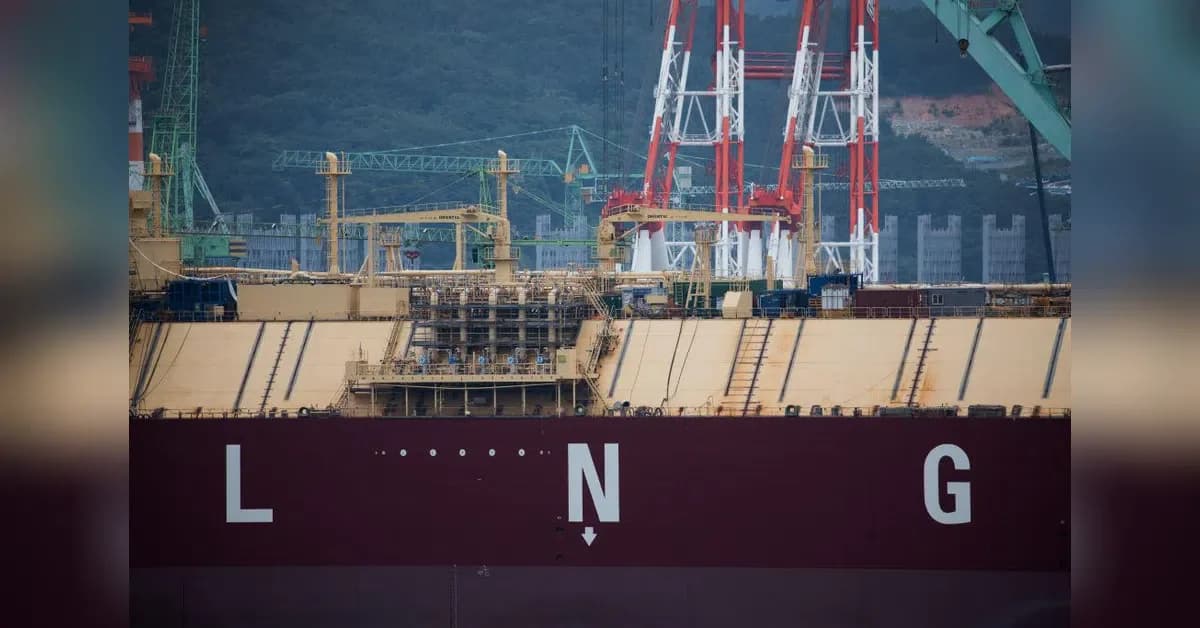
US crude oil exports rose to a record 5.6 million barrels per day in May, driven by stronger demand from Asian and European refiners amid the escalating Middle East crisis, according to ship-tracking data released on Monday. Since the outbreak of the war, Iran has largely restricted non-Iranian shipping activity in and out of the Gulf, disrupting nearly one-fifth of global oil and liquefied natural gas trade and pushing energy prices sharply higher. According to Kaynat Chainwala, AVP Commodity Research at Kotak Securities, oil markets have already experienced a substantial repricing of geopolitical risk, with Brent crude falling roughly 11% last week to near $91/bbl and recording its steepest monthly decline since 2020, losing 19% in May. The delay in a resolution is raising concerns that the world will need to tap crude inventories further as it waits for Persian Gulf exports to fully resume. On the technical outlook, Ponmudi R, CEO of Enrich Money, noted that MCX crude oil is trading above the ₹8,500 level, staging a technical bounce near the lower end of the ascending trendline structure with MACD and broader technical indicators suggesting a weakening of bearish momentum on the daily timeframe. Immediate resistance stands at ₹8,625– ₹8,650; a sustained move above this zone could trigger a recovery toward ₹8,700– ₹8,770. On the downside, ₹8,450– ₹8,390 acts as immediate support; a break below this area could extend the decline toward ₹8,300– ₹8,250. Anindya Banerjee, Head of Commodity and Currency Research at Kotak Securities, believes that May was Brent's worst month since the Covid pandemic, down around 19% and off about 20% from its 2026 peak, almost entirely on deal hope. "Near term, it stays binary: a credible US–Iran deal reopens the strait and drags Brent towards the $70s, while a hardened deadlock — or a Red Sea flare-up — pushes it past $130 as inventories run low through the summer. At around $95, the market is still pricing a deal it does not yet have," Banerjee said.