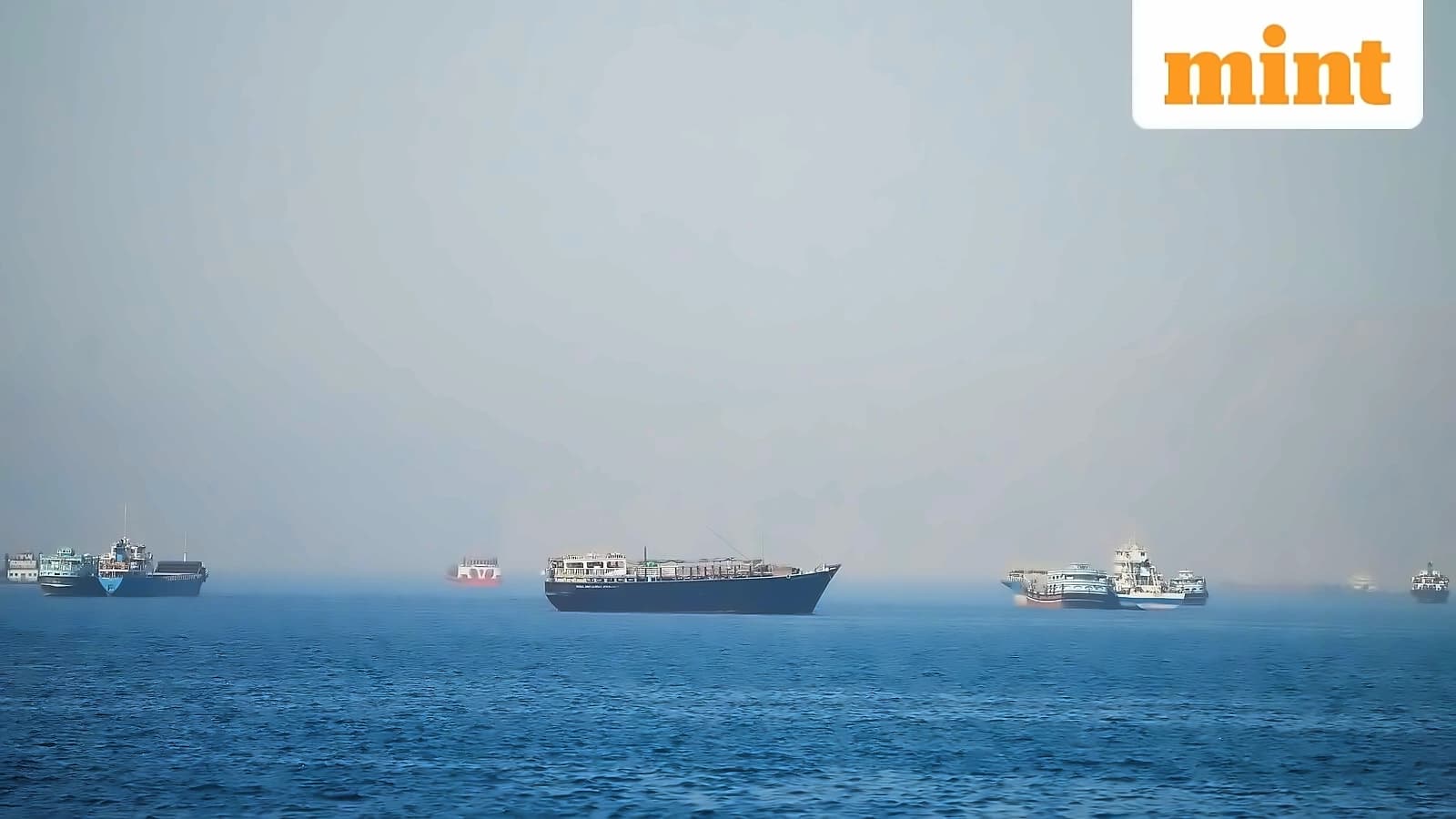
Oil prices surged on Monday after Iranian forces launched drones toward US warships in the Sea of Oman, following what Tehran described as an American attack on an Iranian commercial vessel. Brent crude climbed 6.76% to $96.49 per barrel by 2327 GMT, while West Texas Intermediate (WTI) rose 7.79% to $90.38 per barrel, according to AFP. This represents a significant recovery from Friday's decline, when crude prices had fallen more than 9% on renewed optimism for a peace deal. The latest trading data shows MCX crude oil prices jumped 6% to ₹8,233 per barrel in India, tracking global rates. As per The Economic Times, crude prices had previously closed Friday at $82.59 for U.S. oil and $90.38 for Brent.
The latest escalation came after President Trump announced that a US Navy destroyer shelled an Iranian-flagged cargo ship that tried to pass the blockade, writing on Truth Social that "The Iranian crew refused to listen, so our Navy ship stopped them right in their tracks by blowing a hole in the engineroom." Iranian officials said Sunday that the strait will remain closed as long as the U.S. continues its blockade of Iranian ports, according to the Associated Press. Trump also posted that the U.S. seized an Iranian-flagged cargo ship in the Gulf of Oman that had tried to run the blockade. The Islamic Revolution Guards Corps (IRGC) has claimed that US forces stationed in the Sea of Oman were forced to retreat after firing at an Iranian merchant vessel, as reported by Press TV. Citing Mehr news agency, Press TV reported that US forces operating in the region targeted an Iranian merchant ship in an attempt to compel it to return to Iranian territorial waters.
The latest escalation saw both sides firing on commercial traffic in the critical waterway. According to CNBC, on Sunday, the US Navy fired at an Iranian container ship in the Gulf of Oman which President Trump says was trying to evade the US blockade, with the vessel subsequently seized by US Marines. On Saturday, Iran's Revolutionary Guard attacked a commercial ship in the Strait of Hormuz, citing information from the United Kingdom Maritime Trade Operations Centre which also lists other incidents of ships being challenged in the critical waterway. Iran reportedly fired on two Indian-flagged ships that were forced to turn around on Saturday, according to Dow Jones reports. Despite the closure, more than 20 ships passed the strait on Saturday carrying oil, liquefied petroleum gas, metals and fertilizers, according to Kpler data reported by The Economic Times, representing the highest number of vessels crossing the waterway since March 1.
The Strait of Hormuz remains a crucial maritime route connecting the Persian Gulf to the Gulf of Oman, facilitating approximately 20% of global oil shipments. As per AFP, the United States has continued enforcing its blockade on Iranian ports, while Iran has alternated between lifting and reinstating its own restrictions on the strait. On Friday, both contracts recorded their steepest single-day losses since April 18 after Iran stated that all commercial vessels could pass through the Strait of Hormuz during the remaining ceasefire period. The oil prices had climbed above $100 per barrel last week after a two-day talk held between the U.S. and Iran in Islamabad failed. Both countries did not reach an agreement, and shortly after the talks concluded, the U.S. President Donald Trump said that the US Navy will "immediately" begin the blockade of the Strait of Hormuz. On March 9, Brent crude surged over 27% to trade at a multi-year high of $119 per barrel amid escalating Middle East tensions, though prices later dropped significantly after the announcement of coordinated oil reserve release by major G7 economies.
There is growing dispute about a new round of peace talks scheduled for next week. US vice-president JD Vance is due to arrive in Pakistan Monday evening to meet with Iranian officials Tuesday, but Iran has strongly rejected these reports. According to IRNA, the official Iranian news agency, the reports of new talks are "false and part of a US propaganda campaign and a 'blame game' aimed at pressuring Iran." The agency states that "US excessive demands, unreasonable and unrealistic expectations, frequent shifts in positions, continuous contradictions, and the so-called naval blockade which violates ceasefire understanding along with threatening rhetoric, have so far hindered progress in the negotiations." The agency further says that "Under these conditions, the outlook for constructive talks remains bleak." According to Bloomberg, Iran has indicated it may opt out of another round of talks this week as long as the US naval blockade remains in place, intensifying tensions that had briefly eased on Friday and driven a broad stock market rally.