US oil prices topped $90 a barrel for the first time since late July as fresh American strikes on Iran raised concerns about prolonged disruptions to energy flows through the Strait of Hormuz. West Texas Intermediate rose as much as 5.1% after US forces struck targets in Iran starting at 12 p.m. Eastern time on Tuesday, according to a post on X from US Central Command. This latest surge follows a strong performance in the previous session, with Brent crude futures climbing 56 cents or 0.6% to $91.05 per barrel and WTI crude gaining 83 cents or 1% to $86.59 per barrel, as reported by Business Standard. The fresh gains are rippling through global markets as higher energy costs stoke concerns over inflation and the potential for rising interest rates, with global bond yields climbing back to the highest level in almost two decades on Tuesday. Crude notched a marginal gain in August after a volatile month, with prices up more than 50% this year as hopes for a resolution have repeatedly surfaced, only to fade amid stop-start diplomacy.
The renewed price surge came after the first direct exchange of attacks between the US and Iran in a month on Sunday, as reported by Moneycontrol. US President Donald Trump on Monday warned of additional strikes against Iran after the two countries exchanged direct attacks, escalating tensions after the conflict had recently evolved into an economic standoff. US forces attacked Larak Island in the Strait of Hormuz on Sunday (August 30), destroying two Iranian rocket launchers—the first publicly acknowledged US strike on targets inside Iran since late July, according to BigGo Finance. US Central Command stated that Iran's Islamic Revolutionary Guard Corps was preparing to use rocket and naval mines to threaten shipping in the Strait of Hormuz. Iranian media reported that Iran launched ballistic missiles at two US military bases in Jordan, with Iran claiming to have inflicted "significant losses." In an interview with Fox News, Trump said: "We're going to hit them very hard." He further threatened to include Kharg Island, Iran's primary oil export terminal, in the strike zone, and shared an AI-generated video on Truth Social claiming the facility "will be blown to smithereens." However, there is currently no evidence that Kharg Island was attacked, and Iranian officials dismissed the claim as "ridiculous." US forces launched new air strikes on Iranian targets on Tuesday, with US Central Command posting on X that strikes began at 12 p.m. ET (1600 GMT) targeting Islamic Revolutionary Guard Corps (IRGC), as reported by Business Standard. Iran's state broadcaster said there had been reports of explosions on Iran's Qeshm Island, on the northern side of the strait, while the state-linked news agency Nour News reported explosions in the port city of Bandar Abbas and in Chabahar, a port on the southern coast, according to Business Standard. Iran's Fars news agency cited an IRGC spokesperson as saying the US "will regret its new attacks," while the US Embassy in Qatar urged Americans currently in the Middle East to exercise "heightened vigilance and be aware of potential flight cancellations, airspace closures, and travel disruptions."
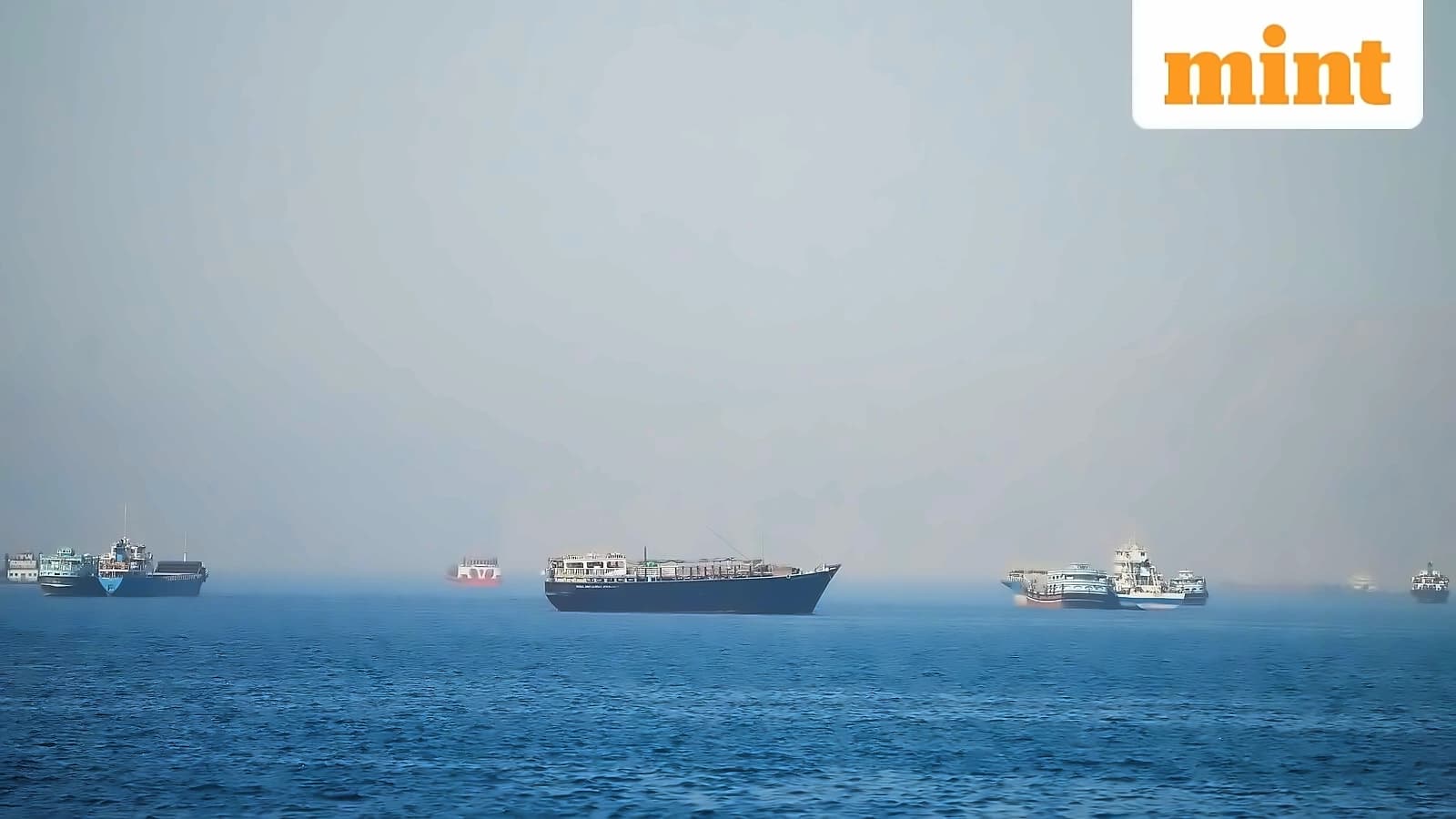
The situation around the Strait of Hormuz remains a key concern for oil markets, with shipping data showing the number of commercial vessels transiting the strait over the weekend fell to just five per day, reflecting extreme concern over waterway safety, as reported by BigGo Finance. The strait carried about a fifth of global oil supplies before the conflict began in late February, when Iran closed the waterway after the US and Israel attacked the country on February 28. Mediation efforts by Qatar and Oman to secure a deal to reopen the Strait of Hormuz have so far made little progress, with the risks to shipping and oil supplies remaining elevated. The risks were underscored on Tuesday when the United Kingdom Maritime Trade Operations agency (UKMTO) said a tanker had reported being struck by three projectiles while sailing out of the Strait of Hormuz, though no casualties or environmental impact were reported, as reported by Reuters. Over the weekend, the number of trackable commodity vessels passing through the strait dropped to about five per day, as reported by TradingKey. Highlighting such concerns, two supertankers carrying Saudi oil were struck by unknown projectiles within minutes of each other while transiting outbound through the Strait of Hormuz late on Monday, according to data from shipping intelligence and tracking firms Marisks and Kpler, as reported by Business Standard. Tim Waterer, chief market analyst at KCM, noted that these developments "bring the potential for Iranian retaliation back into the equation" and "adds fresh uncertainty for shipping through the Strait of Hormuz," highlighting the ongoing risks to energy infrastructure around the Gulf. Bloomberg Intelligence analysts Salih Yilmaz and Will Hares wrote that "adaptation to prolonged disruption through the Strait of Hormuz — with dark flows, bypass routes and recovering Gulf exports" has helped keep Brent below $100 a barrel, yet "renewed US-Iran hostilities underscore the risk that further disruption could quickly push an already constrained market into a much tighter balance."
The oil surge has directly impacted American consumers, with the national average gasoline price reaching $4.08 per gallon on Monday (approximately NT$130), up nearly 30% from a year earlier, according to BigGo Finance. More notably, gasoline prices remained above $4 for the entire month of August—an unprecedented record—surpassing even the previous high of $3.97 set in August 2022 during the pandemic. AAA data shows gasoline prices are one of the most direct indicators of inflationary pressure felt by American consumers. White House spokesperson Taylor Rogers announced that Trump would meet with representatives of US refiners and fuel distributors on Tuesday (September 1) to seek concrete measures for expanding domestic refining capacity and lowering gasoline prices. Trump's overall approval rating has fallen to 33%, the lowest of his second term, with a Reuters/Ipsos poll showing that nearly half of Americans rank the cost of living as their top voting issue, with 71% of respondents expressing dissatisfaction with Trump's handling of the issue. The rally remains somewhat limited as exports continue to move through Hormuz, often on tankers with their transponders switched off to avoid detection, with Persian Gulf producers including the UAE, Saudi Arabia, Kuwait and Iraq all getting some barrels out. Hostilities in the Middle East, as well as the war between Russia and Ukraine, have sent refined-product prices rallying even more sharply than crude as supplies tighten, particularly for diesel, with the profit margin for making diesel from crude oil soaring to a fresh all-time record Tuesday.
On Friday, Trump announced a deal with Venezuela to control oil reserves in the country, which he later said would help replenish the US Strategic Petroleum Reserve, which is near a 44-year low, as reported by Business Standard. U.S. companies Chevron and GE Vernova, India's ONGC, Italy's Eni and Colombia's GeoPark are on track to sign final agreements in Venezuela after months of negotiations to firm up energy projects in the OPEC country, according to five sources close to the preparations. Crude oil inventories in the U.S. Strategic Petroleum Reserve declined by about 3.1 million barrels last week, leaving stockpiles at 286.6 million barrels. Analysts polled by Reuters in August expect oil prices to remain above $80 a barrel in 2026 as shipping disruptions continue, highlighting the sustained impact of the ongoing US-Iran conflict on global energy markets. Separately, Abu Dhabi National Oil Co. has restored its Ruwais refinery to full capacity after it was damaged earlier in the war, according to people familiar with the situation. The facility, one of the world's biggest, has been running at its full potential for about a month, boosting exports of diesel and jet fuel.