Oil prices jumped by more than 4% on Monday when US President Donald Trump condemned Iran's terms for ending the war as 'TOTALLY UNACCEPTABLE'. According to Reuters, Brent crude futures were up 30 cents, or 0.29%, at $104.51 per barrel, while U.S. West Texas Intermediate gained 31 cents, or 0.32%, to $98.38 by 0002 GMT. The latest surge represents a significant escalation from earlier gains, with Monday's 4% jump following Trump's angry reaction to Iran's response to the latest US peace proposal. As per Reuters, the latest price movements reflect sustained supply concerns as negotiations appear to be stalling, with the energy crisis in the Strait of Hormuz yet to properly register on US markets. International oil benchmark Brent rose by more than 4% to $105.94 (£77.74) a barrel at one point before falling back to around $105, according to latest reports. Crude oil futures traded higher on Tuesday morning after Trump said the ceasefire with Iran was on 'life support', with July Brent oil futures at $105.04, up by 0.80%, and June WTI crude at $98.96, up by 0.91% at 9:18 am on Tuesday.

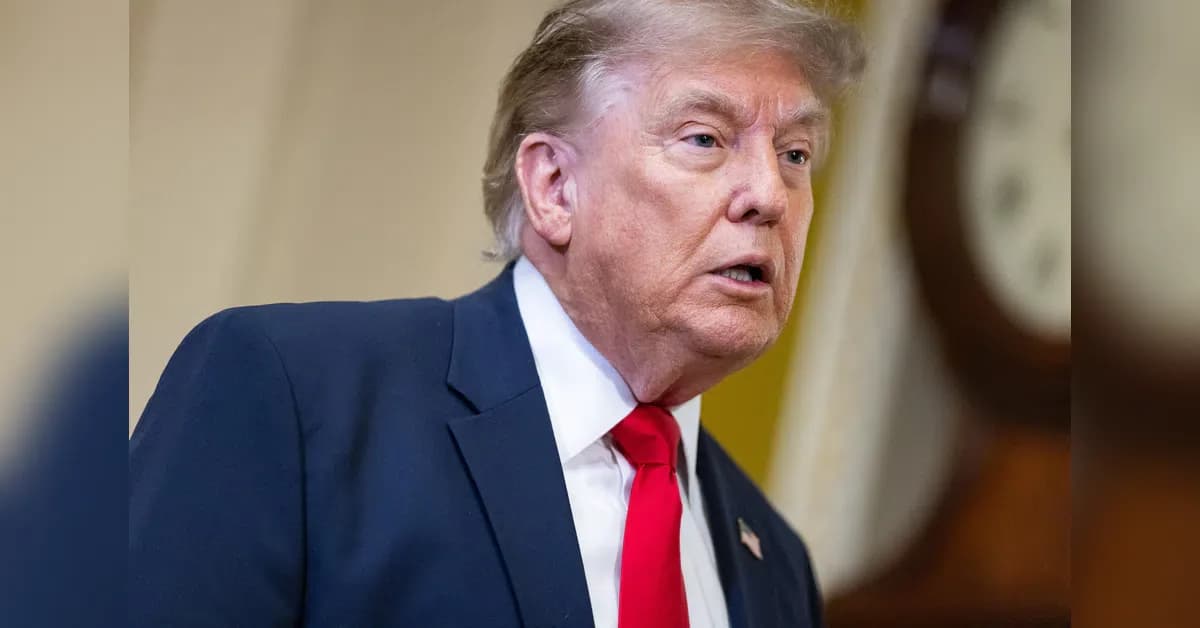
Trump's condemnation came after Iran's foreign ministry called for an end to the US naval blockade and to the war 'across the region' – implying a halt to Israel's strikes targeting Hezbollah in Lebanon. According to Reuters, Tehran's foreign ministry spokesman Esmaeil Baqaei told reporters that Iran demanded the 'release of assets belonging to the Iranian people, which have for years been unjustly trapped in foreign banks'. Baqaei emphasized that 'We did not demand any concessions. The only thing we demanded was Iran's legitimate rights'. The stark differences in Tehran's response to U.S. proposals have kept supply concerns alive and reinforced market volatility, with Trump not specifying what specifically offended him in Iran's response. Iran's semi-official Tasnim news agency reported that Tehran sent its response via Pakistan, which has served as a mediator between the two sides, calling for an immediate end to the conflict and guarantees of no further US-Israeli attacks. Referring to the ceasefire with Iran, Trump said: 'I would call it the weakest right now, after reading that piece of garbage they (Iran) sent us. I didn't even finish reading it.'
The US Department of Energy has announced significant measures to address the supply crisis, with contract awards for the exchange of approximately 53.3 million barrels of crude from the Strategic Petroleum Reserve's (SPR) Bayou Choctaw, Bryan Mound, Big Hill, and West Hackberry sites. As reported by The Hindu BusinessLine, this marks the next phase of DoE's execution of the US' 172-million-barrel contribution to the International Energy Agency's collective action to stabilise global oil supplies. DOE Assistant Secretary Kyle Haustveit said: 'With today's announcement of contract awards, we are advancing the President's commitment to carrying out this historic emergency exchange. These actions continue to move oil swiftly into the market, address near-term supply needs, and ensure that the Strategic Petroleum Reserve remains strong through the return of premium barrels'. Deliveries will begin immediately as the Department continues to move swiftly to address short-term supply disruptions and strengthen US energy security.
The energy crisis in the Strait of Hormuz has intensified significantly, with Saudi Aramco CEO Amin Nasser warning that the energy supply shock is the 'largest the world has ever experienced'. As reported by Reuters, if the Strait of Hormuz opens today, it will still take months for the market to rebalance, and if its opening is delayed by a few more weeks, then normalisation will last into 2027. The strait handles about a fifth of global oil and liquefied natural gas flows, making its disruption particularly critical for global energy markets. Nasser told investors on Monday that the market had seen an 'unprecedented supply loss of about a billion barrels of oil' and that the energy shock triggered by the war was likely to extend into 2027, even if the Strait reopens. The bottleneck would likely shift from the 'Strait itself to tanker availability, refinery ramp-ups and wider logistical constraints' once the Strait reopens, according to JP Morgan analysis.
The oil price surge caused most Asian markets to fall on Monday, with Tokyo stocks declining, Hong Kong remaining little changed, and Shanghai jumping more than 1%. As reported by AFP, Briefing.com analyst Patrick O'Hare said Monday's gains were a 'token response' compared to the 10% drop when the peace proposal was announced, noting that traders see Trump as unlikely to aggravate the oil supply situation ahead of his summit meeting with Chinese President Xi Jinping. Beijing has said it is ready to work with Washington in pursuit of 'more stability' as the two countries remain at odds over key issues. The US is in disagreement with Iran on its demands such as an end to hostilities on all fronts, the removal of a US blockade at the Strait of Hormuz, the resumption of oil sales from Iran, and compensation for war damage. Investment bank JP Morgan expects oil to remain in the 'low $100s' even if the Strait of Hormuz were to reopen next month, with the bank's analysis suggesting oil prices should average $97 for 2026 as a whole.