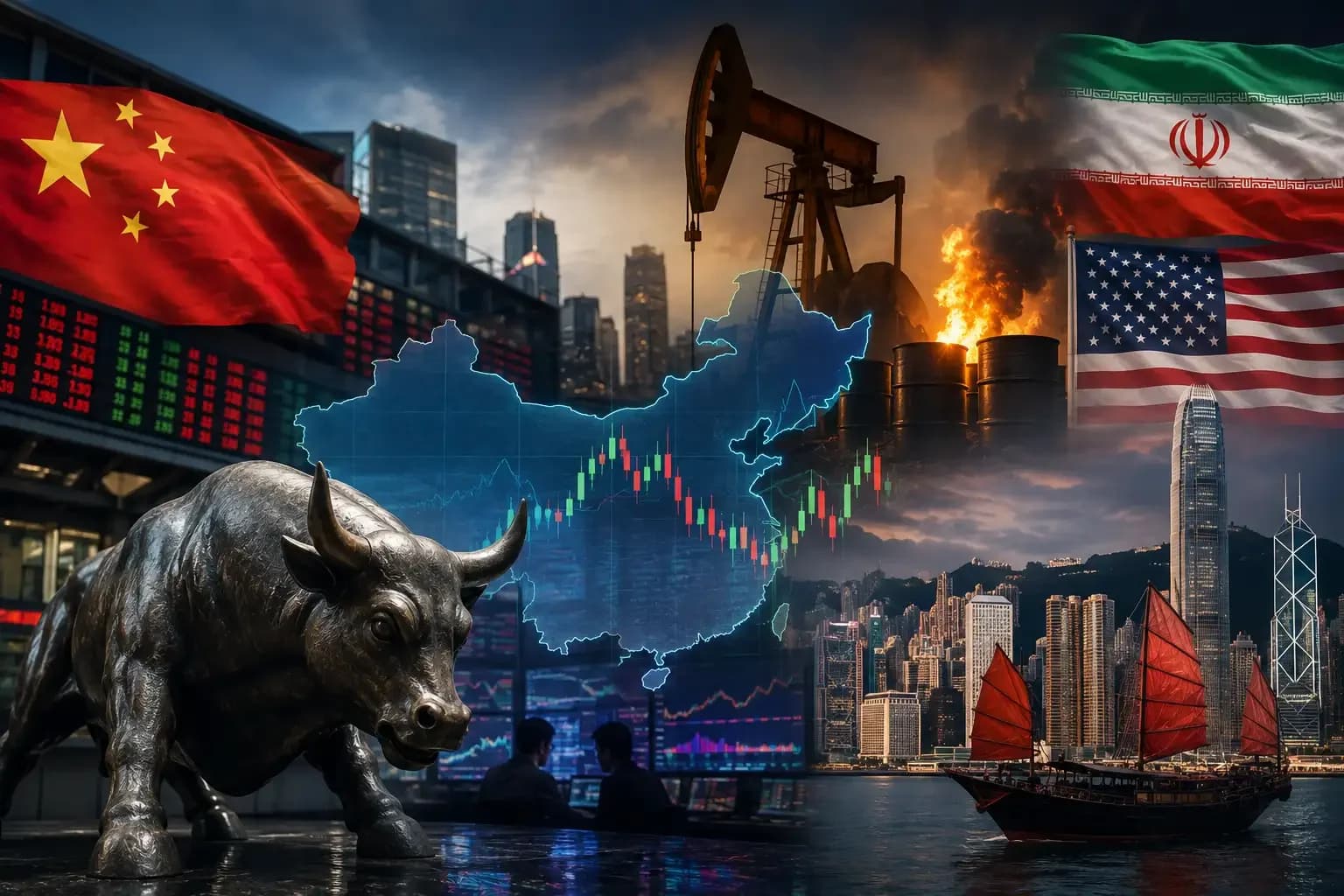
Oil prices surged approximately 5% on Monday following reports from Iran's Fars news agency of an incident involving a US warship in the Strait of Hormuz. According to The Economic Times, Brent crude futures were up $5.52, or 5.1%, at $113.69 a barrel by 1025 GMT, having settled down $2.23 on Friday. US West Texas Intermediate was up $5.10, or 5%, at $107.04 a barrel, after a $3.13 loss on Friday. The price surge came after a US warship attempting to pass through the Strait was turned back after ignoring Iran's warning, with two missiles reportedly hitting it when sailing near Jask. However, CBS News reports that a US military spokesperson has denied these claims, with Captain Tim Hawkins stating that 'no U.S. Navy ships have been struck' and that the reports by Iran's Fars news agency were not true.
Iran has now escalated its threats to commercial shipping, with Major General Ali Abdollahi of the Iranian military's central command stating that 'any foreign armed force — especially the aggressive U.S. military — if they intend to approach or enter the Strait of Hormuz, will be targeted and attacked,' as reported by CBS News. Brigadier General Mohbi from Iran's Revolutionary Guard Corps warned that 'violating vessels will be stopped with force,' with any vessel trying to transit the strait without adhering to Iran's 'transit protocols' facing serious risks. This represents a direct challenge to President Trump's 'Project Freedom' initiative, which aims to guide commercial vessels through the restricted waterway. The UAE has also condemned what it called an 'Iranian terrorist attack' after a tanker owned by Abu Dhabi state energy giant ADNOC was targeted by two drones while transiting the strait, with no injuries reported.
President Trump announced the launch of 'Project Freedom' on Sunday, with the U.S. military establishing an 'enhanced security area' south of typical shipping routes through the Strait of Hormuz. According to CBS News, the operation includes guided-missile destroyers, over 100 land and sea-based aircraft, multi-domain unmanned platforms, and 15,000 service members. The Joint Maritime Information Center urged mariners to coordinate closely with Omani authorities 'due to anticipated high traffic volume,' warning that passing close to usual routes 'should be considered extremely hazardous due the presence of mines that have not been fully surveyed and mitigated.' Trump described the effort as a 'humanitarian gesture' to help merchant vessels get through the restricted waterway, noting that ships are running low on food and essential supplies. The US struck military targets in Iran after the country fired on three navy destroyers sailing in the strait, heightening tensions as the US tries to exit a war now in its third month.
On Sunday, the Organization of the Petroleum Exporting Countries and its allies, known as OPEC+, announced it would raise oil output targets by 188,000 barrels per day in June for seven members, marking the third consecutive monthly increase, as reported by The Economic Times. The rise matches that agreed for May, minus the share of the United Arab Emirates, which left OPEC on May 1. However, the additional barrels are expected to remain largely on paper as long as the Iran war continues to disrupt Gulf oil supplies through the Strait of Hormuz. The disruption of the waterway through which roughly one-fifth of the world's oil typically passes has become one of the most enduring consequences of the war that the U.S. and Israel launched on February 28.
French President Emmanuel Macron has called on the U.S. and Iran to reopen the Strait of Hormuz in a 'coordinated' way, stating that France won't join any military operation that seems unclear, as reported by CBS News. Macron told fellow European leaders during a meeting in Armenia that 'what we want above all is a coordinated reopening by the United States and Iran — that is the only solution for reopening the Strait of Hormuz.' France and the UK have led efforts to build a coalition of nations to deploy military assets to the region, but European countries have declined to take up these efforts until a deal is reached to end the war. The U.S. has imposed a naval blockade of Iranian ports and vessels, which Tehran considers a breach of the truce, while Iran has responded by maintaining its threat to commercial shipping, keeping oil and gas prices high and fueling inflation globally.