Oil prices jumped over 1% on Wednesday as tensions in the Middle East continued to intensify after Iran launched ballistic missiles towards Kuwait and Bahrain. According to the US military, the missiles failed to hit their intended targets, with Washington saying its forces later carried out strikes on Iran's Qeshm Island in response to what it described as attempted attacks. Iran's state-run broadcaster IRIB reported that Tehran had hit American bases in Kuwait following what it called American aggression in the Persian Gulf. Kuwait said its air defence systems intercepted incoming missiles and drones after explosions were heard in different parts of the country, with the Kuwaiti Army's General Staff confirming the sounds were linked to operations carried out by air defence units responding to hostile aerial threats. Brent crude futures gained $1.05, or 1.09%, to reach $97.05 a barrel, while US West Texas Intermediate (WTI) crude advanced $1.01, or 1.08%, to $94.77.
The crisis has entered a potentially deadly new phase with Iran's Tasnim News Agency reporting that Tehran is determined to fully shut the Strait of Hormuz and "active all other fronts, including Bab el-Mandeb Strait" to punish Israel for its actions in Lebanon. Bab el-Mandeb, sometimes written Bab al-Mandab, means "Gate of Tears" or "Gate of Grief" in Arabic, a small waterway that separates Djibouti and Eritrea on the Horn of Africa from Yemen on the Arabian Peninsula. The physical and historical dangers of crossing this strait are reflected in the name, with the tiny river notorious for hazardous crosscurrents, reefs, erratic winds, and multiple shipwrecks that claimed many lives. An ancient Arab legend also attributes the name to the massive loss of life from a great earthquake that separated the Arabian Peninsula from the Horn of Africa. It physically links the Indian Ocean and the Gulf of Aden to the south and the Red Sea to the north, serving as one of the world's most important shipping chokepoints that handles around 20% of the world's energy transit and 30% of the world's container traffic.
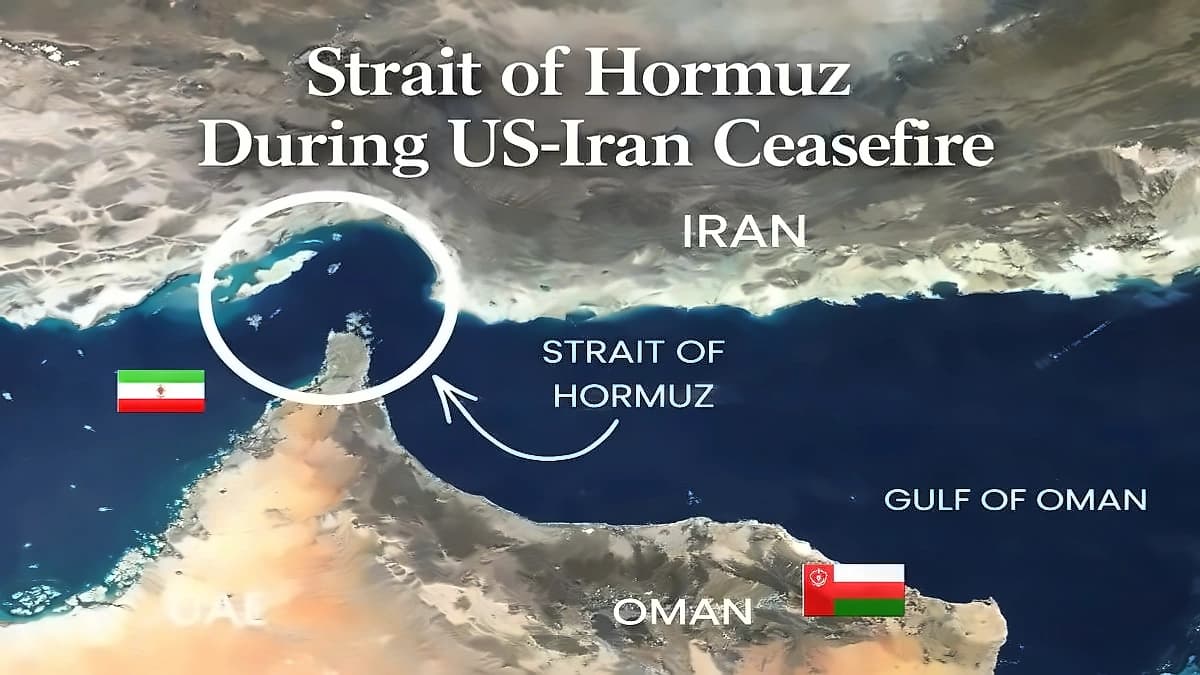
The latest escalation has prompted traders to reassess geopolitical risks after weeks of relative stability, with energy analysts noting that any prolonged disruption involving Hormuz or Bab el-Mandeb could significantly tighten global oil supplies and add further inflationary pressures to the global economy. Prediction market traders are increasingly pessimistic about the Strait of Hormuz returning to normal operations, with betting markets giving only a 26% probability that shipping traffic will return to normal by the end of June, according to Polymarket data. This represents a sharp decline from odds that stood nearer to 50% in May as the US-Iran conflict drags on with no clear resolution. Before the United States and Israel launched attacks on Iran in late February, around 3,000 vessels typically passed through the strait each month. However, transits have since fallen to less than 10% of pre-conflict traffic, with the waterway commercially unnavigable for most shipping. More than 1,550 commercial vessels remain stranded in and around the strait, with an estimated 22,500 mariners trapped aboard them. The Iran conflict and the dual blockade around Hormuz have severely disrupted global energy markets, forcing several Middle Eastern producers to halt millions of barrels per day of crude output.
The extended disruption has sent crude prices to levels not seen in years, with Brent crude averaging $117 a barrel in April after spiking to a high of $138 on 7 April as the de facto closure of the strait tightened global oil supplies. Prices have since retreated, with WTI crude falling to below $88 a barrel at the end of May, its lowest in around six weeks, after reports emerged that the US and Iran had reached a preliminary agreement to extend the ceasefire and ease shipping restrictions. However, analysts caution that even a formal resolution would not quickly translate into normal flows, as restoring the strait to full operation would require clearing mines, repairing damaged infrastructure and restarting shut-in production. Estimates suggest it could take until at least September for tanker markets to normalise even if the waterway reopened immediately, explaining why Polymarket bettors have grown increasingly skeptical that June's deadline will be met. Meanwhile, US crude inventories fell for a seventh consecutive week, with market sources citing data from the American Petroleum Institute showing crude stockpiles declined by 6.8 million barrels during the week ended May 29.
The conflict has now entered its fourth month, with the two sides yet to reach a conclusion even after repeated peace efforts. The Middle East crisis began back on February 28, when the US and Israel launched joint strikes on Iran. After the attack, Tehran tightened its noose on the crucial Strait of Hormuz, the passage carrying 20% of the world's energy supplies. Consequently, with the pipeline blocked, fuel shipments came under strain, pushing crude prices higher, from the $70 per barrel before the conflict began to beyond the $125 per barrel mark, sending ripples across economies. However, prices have soothed after signs of diplomatic efforts between the two sides, falling below the $100 per barrel mark. Markets continued to monitor developments surrounding the conflict, with Iran reviewing a proposed agreement with the United States aimed at ending hostilities, though earlier reports suggested Tehran had not been in contact with Washington for several days.