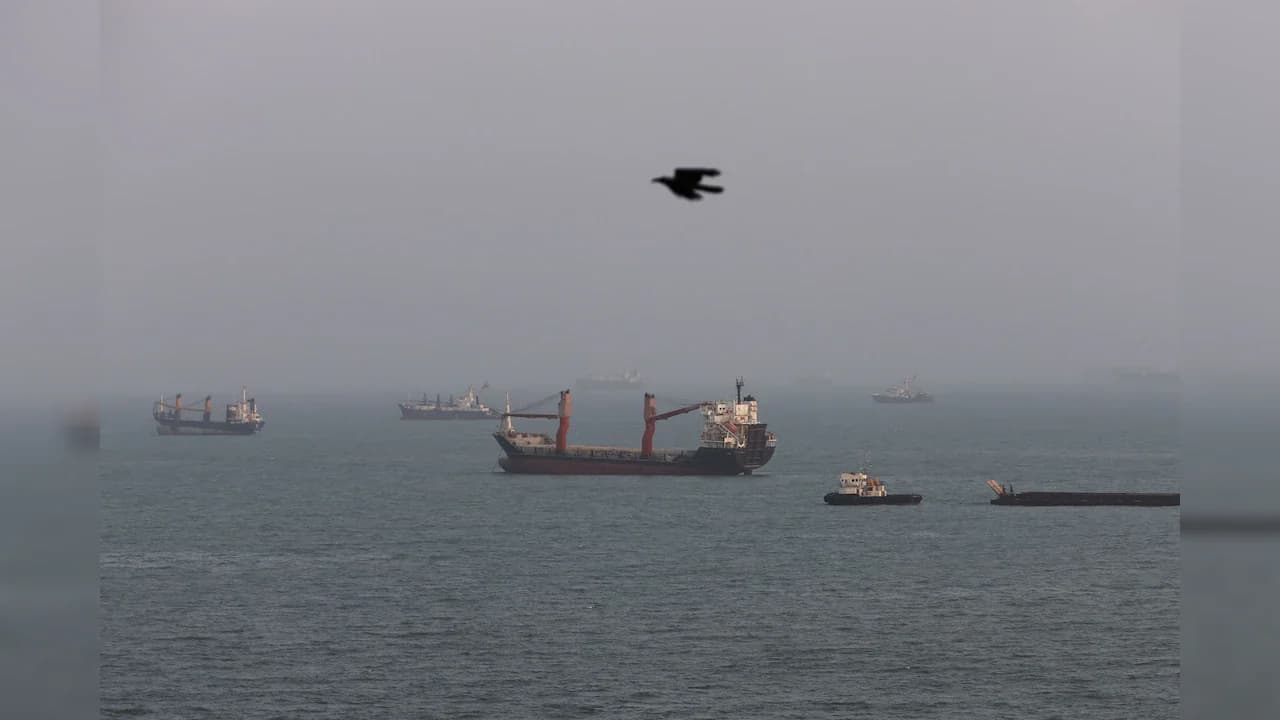
US crude oil exports to Asia are set to hit multi-year lows after the Iran war disrupted global shipping and pushed the cost to lease a tanker for the Pacific journey to a record of almost $80 million. The tanker rate along the US Gulf Coast-to-China route has more than tripled since the US-Iran conflict erupted in late February to almost $60 million as of Thursday, according to Bloomberg citing Baltic Exchange figures. Earlier in the month, it touched $79.6 million, an unprecedented ruction in a market where rates averaged less than $8 million in the half decade before the conflict. As it stands, leasing the largest class of crude carriers for the 30-day voyage is equivalent to half the cost of building a brand-new vessel. The eye-watering rates don't include the cost of the oil itself, which is trading around $100 a barrel, making the total shipping cost prohibitive for many buyers.
Indian refiners have substantially slowed purchases of US crude in recent months due to record freight rates and punishing economics, according to senior refining officials. Indian refiners paid the highest premium of $21 per barrel to the Indian Crude Basket (ICB) for US crude in August, with similar levels maintained in July, making US barrels the most expensive option for Indian refiners. As Aaron Kudlow, crude commodity owner at UK-based Sparta Commodities, noted, "The arb for US barrels into the Far East remains closed for January delivery." US crude oil was the most expensive at $111 per barrel on a landed basis in August, weighed down by high transport and insurance costs, while Arab Light crude from Saudi Arabia averaged $93 per barrel during the period. Freight costs have become around 30% of cargo cost compared with less than 5% in pre-war February, with Indian refiners ready to charter VLCCs at more than $1 million per day compared with $50,000-$100,000 in February.

Venezuelan crude oil offers significantly better economics for Indian refiners despite being supply-constrained, with discounts expanding nearly five-fold from July to August. Venezuelan crude landed in India at an average discount of $24 per barrel to the ICB in August on a delivered basis, compared with a discount of $5 per barrel in July, according to customs data. Kpler data showed 350,000 barrels per day of Venezuelan crude landed in India in August, compared with 218,000 bpd in July, with Reliance Industries being the only buyer in July and September and the largest buyer in August. The landed cost of Venezuelan oil stood at $66 per barrel in August, $11 lower than $77 per barrel in July, with Reliance being the only Indian refiner to consistently process Venezuelan oil due to its blending infrastructure and refining capability for Merey grades.
Persian Gulf oil exports have climbed above prewar levels despite intensifying attacks on shipping in the Strait of Hormuz, as tankers adapt to the risks with US protection and alternative routes helping keep supplies moving. Oil flows from the Middle East, including shipments through the Strait of Hormuz and alternative routes, averaged more than 24 million barrels a day in the week ending October 18, exceeding the prewar average of 23.3 million barrels a day, according to ship-tracking firm Kpler. However, shipments through the Strait of Hormuz remain below earlier levels, with preliminary estimates putting average flows through the strait at around 14 million barrels a day during the same period, about 82% of prewar volumes, as reported by the Wall Street Journal. The recovery comes as the risks to shipping remain high, with around 30 attacks on vessels reported in October, accounting for about 20% of all ship attacks recorded during the war.
The drop in Asian demand appears to be rippling across US crude pricing, with export-bound Permian Basin oil trading for 25 cents above the benchmark futures contract at the Magellan East Houston hub as of Wednesday, down from more than $3 six weeks earlier, according to Link Data Services. Medium sour export grade Mars, which is pumped from deepwater wells in the Gulf of Mexico and is similar to Middle Eastern crude, has seen its premium to futures plunge to $6 from $17.50 in late March. Goldman Sachs analysts including Yulia Zhestkova Grigsby note that higher freight rates pose upside risk to oil prices, with the bank's baseline forecast for Brent crude dropping to $90 per barrel by year-end. The primary factor remains high freight costs, which continue to squeeze arbitrage economics for long-haul routes, as Vortexa's Rathod noted, with the incentive for Asian buyers to source from the US Gulf Coast having diminished.