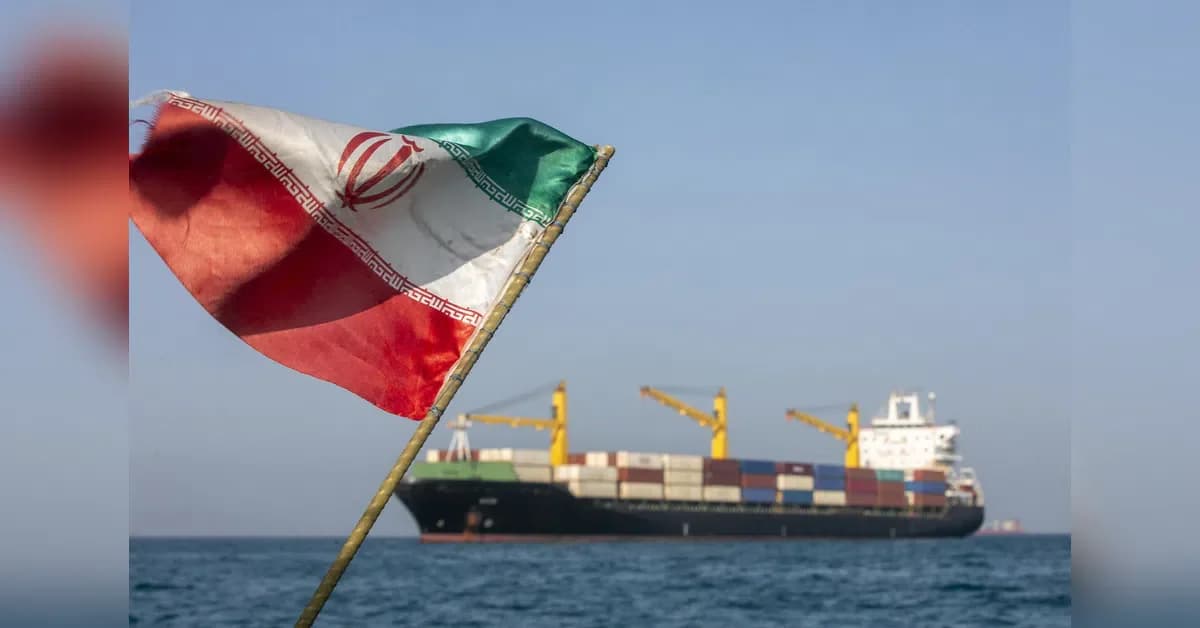
European Union nations have spent over €100 billion (USD 113.5 billion) on energy imports since the outbreak of the Iran war, pushing politicians to seek alternatives to fossil fuels as prices skyrocket. According to Business Standard, consumers in some European countries pay nearly 50% more at the pump, equivalent to more than USD 11 a gallon, following the closure of the Strait of Hormuz. EU energy commissioner Dan Jorgensen stated during a gathering in Dublin that despite the additional money spent, the members haven't received "one extra molecule of gas or oil." The crisis has intensified as about 50% of Europe's diesel supply comes directly from the US, with Republicans in key states calling for bans on diesel exports ahead of midterm elections, casting doubt on President Trump's 2025 deal to sell USD 750 billion worth of energy to the EU.
European natural gas prices have surged as traders await developments in efforts to revive shipping through the Strait of Hormuz. According to Bloomberg, benchmark futures rose in another choppy session amid signs that Iran and the US remained far apart on a new ceasefire deal or the reopening of Hormuz. Tehran said it's sticking to a proposal that President Donald Trump has rejected, while Trump indicated that negotiations could resume this week. Iran will meet mediators on Monday, the semi-official Iranian Students' News Agency reported. Meanwhile, Qatar extended force majeure on liquefied natural gas shipments to Asia and Europe by another month as disruptions continue in the critical waterway. The Strait of Hormuz is crucial waterway through which a fifth of the world's traded oil passed in peacetime, making the current closure particularly severe for global energy markets.
Europe is running out of time to rebuild its unusually low gas inventories before the heating season, with European gas prices fluctuating sharply last week as mixed signals emerged on Hormuz revival efforts. As reported by Bloomberg, around a fifth of the world's LNG used to transit Hormuz, and the prolonged disruption is setting the stage for intense competition among global buyers of the fuel. The European Union warned its member states about a potential energy price crisis, asking them to consider measures to cut demand and continue filling storage. Europe's vast gas-storage sites are about 71% full — well below the five-year seasonal average of 87% — though LNG imports have picked up since mid-August after a sharp drop. Fatih Birol, executive director of the International Energy Agency, noted that "Europe is one of the most exposed regions - if not the most exposed one - when it comes to diesel" as the bloc imports a huge amount of diesel, particularly entering the harsh winter season.
Facing mounting energy costs and supply chain vulnerabilities, EU ministers are discussing plans to accelerate the shift from fossil fuels to electricity and expand electrical infrastructure across the bloc. According to Business Standard, Jorgensen sent "a very clear signal" to US authorities to scrap potential diesel export bans while calling on EU ministers to wean the bloc off of outside energy whose supply can be rocked by war and politics. Sari Multala, Finnish environment minister, pointed to her country as an example, noting that nuclear reactors, turbines, peat bogs, and hydropower dams provide 95% of Finland's electricity, creating very reasonable prices for electricity. The rising concern about energy prices as winter approaches "creates a lot of pressure for us politicians to try to help our citizens to cope with the situation," she said, highlighting the political pressure to address the energy crisis.
Despite crude oil volatility from West Asian geopolitical tensions, natural gas prices remain contained around $2.50-$3.50/MMBtu. According to reports from The Economic Times, this stability reflects a fundamental difference between oil and gas markets, with Henry Hub continuing to be driven predominantly by North American supply-demand fundamentals rather than global geopolitical risks. Abundant US supply remains the biggest bearish factor, with US dry natural gas production continuing at elevated levels, contrasting sharply with European markets where supply disruptions are creating significant price pressures. However, the current situation has highlighted the vulnerability of European energy markets to global geopolitical events, with the EU's heavy reliance on US energy imports becoming increasingly problematic as political tensions escalate.