Public sector oil marketing companies have strongly rejected Karnataka's claims about excess ethanol levels in petrol, calling the state government's testing methodology flawed. According to The Times of India, Indian Oil Corporation, Bharat Petroleum Corporation and Hindustan Petroleum Corporation issued a joint statement late Friday evening, questioning the sampling and testing procedures adopted during the state government's October exercise. The OMCs argued that the procedure did not follow the requirements laid down under the Motor Spirit and High Speed Diesel Control Order, 2005, and Marketing Discipline Guidelines (MDG), 2024. They specifically criticized that the samples were drawn without the participation of their representatives, undermining the credibility of the state's findings.
The fuel retailers presented their own comprehensive testing data to counter Karnataka's claims, citing results from a quality monitoring exercise conducted by the petroleum ministry's Centre for High Technology. As reported by The Times of India, all 893 samples collected from OMC depots and retail outlets across 27 states and Union Territories were found to contain ethanol within the prescribed 19-21% range. The OMCs emphasized that the 56 samples tested in Karnataka, covering different locations and all three OMCs, also met the specifications, recording ethanol content between 19% and 20%, with an average of 19.3%. This alternative data directly challenges Karnataka's findings of ethanol levels reaching up to 31.2%.
The dispute centers on fundamental questions about testing procedures and transparency in fuel quality monitoring. According to The Times of India, the OMCs questioned the sampling and testing methodology adopted during the state government's October exercise, arguing that it did not comply with established regulatory frameworks. The state government had initially sent samples to in-house laboratories of IOCL and BPCL, but these companies did not disclose ethanol content despite it being a prescribed testing parameter. This lack of transparency prompted the government to send samples to private NABL-accredited and ISO certified laboratories. The current controversy highlights the transparency of the testing process and raises questions about whether the state's testing procedures followed proper regulatory guidelines.
The state government has raised serious concerns about the transparency of testing procedures by major oil marketing companies and the potential impact on consumers. As reported by The Hindu BusinessLine, Business Standard, and NDTV Profit, Arshad said the government initiated the testing after receiving complaints from motorists about reduced mileage and vehicles requiring frequent repairs. The minister alleged that the higher ethanol content could affect vehicle performance, particularly in vehicles that were not designed to run on fuel with blends exceeding E20. He emphasized that nearly 99% of India's 35 crore vehicles were not built to handle ethanol blends above 20%, and even vehicles manufactured after April 2023 were certified only for E20. The minister questioned whether vehicles currently operating on Indian roads were equipped to handle petrol containing ethanol beyond the E20 threshold, arguing that if the ethanol blend exceeds E20, even these vehicles will face problems. He warned that citing the Automotive Research Association of India (ARAI), excessive ethanol blending could affect fuel-system components, including rubber parts, hoses, gaskets, seals and O-rings, potentially accelerating their deterioration. The government also flagged concerns about fuel dispensing infrastructure, with several dispensing units at petrol pumps designed to handle ethanol blends of only up to 15%.
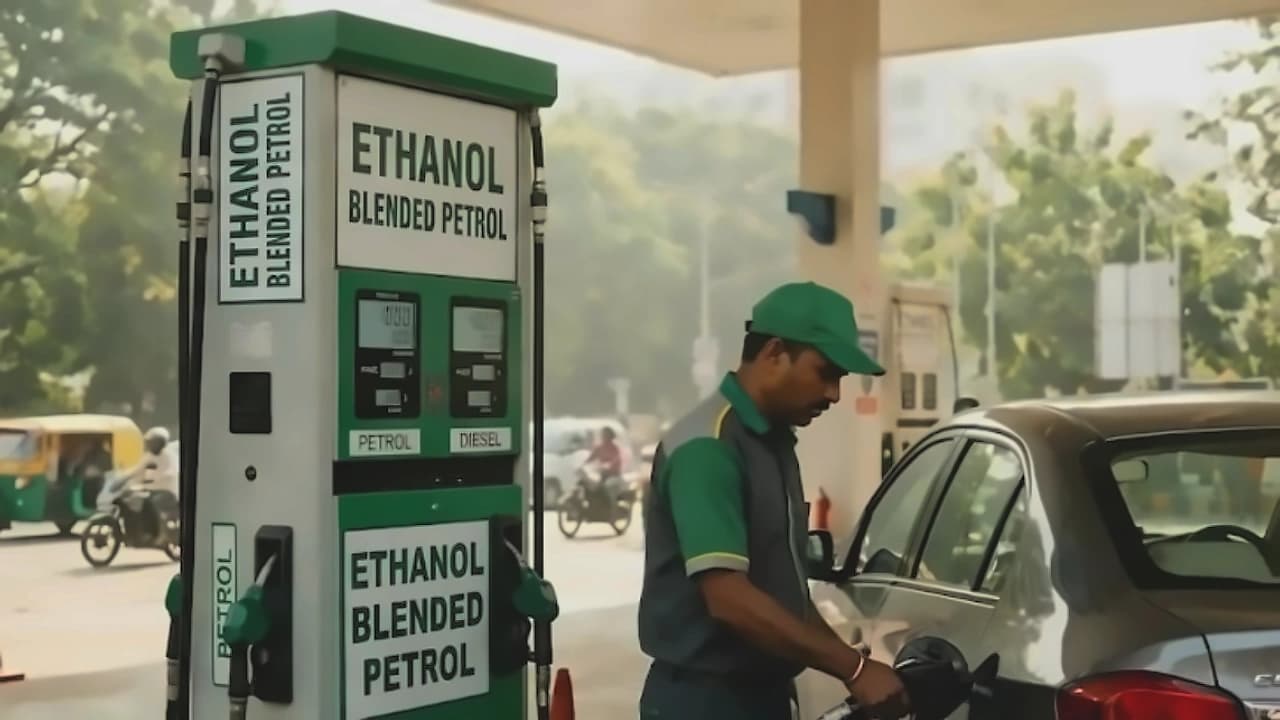
The Karnataka government has called for comprehensive action against oil marketing companies and mandatory transparency measures. As reported by The Hindu BusinessLine, Business Standard, and NDTV Profit, Arshad demanded that the Union government publicly clarify the actual ethanol blend being supplied to consumers, initiate action against all OMCs supplying petrol with more than 20% ethanol and compensate every consumer whose vehicle has been damaged through a time-bound claims process. The minister outlined four demands before the Centre: penal action against oil marketing companies found supplying petrol with ethanol content exceeding 20%, creation of an "E20 spoilage fund" to compensate vehicle owners for damage attributed to excessive ethanol blending, a time-bound compensation mechanism under which claims would be assessed and damage certified by authorised vehicle service centres, and a nationwide mandate requiring petrol pumps to prominently display the ethanol percentage in the fuel being sold, allowing consumers to make informed choices. He also sought a public clarification from the Union government on the actual ethanol blending levels in petrol supplied across the country. The government has also demanded that every fuel pump in the country be mandated to display the ethanol blend percentage, allowing consumers to choose from the range of blends available. The findings come amid a wider debate over India's ethanol-blending programme, with the Union government defending the rollout of E20 petrol citing its potential to reduce crude oil imports, emissions and dependence on fossil fuels. Union Minister for Petroleum and Natural Gas Hardeep Singh Puri had earlier dismissed concerns surrounding E20 fuel as a "contrived narrative" and reiterated that 20% was the government's target with no plans to raise the blending level further.