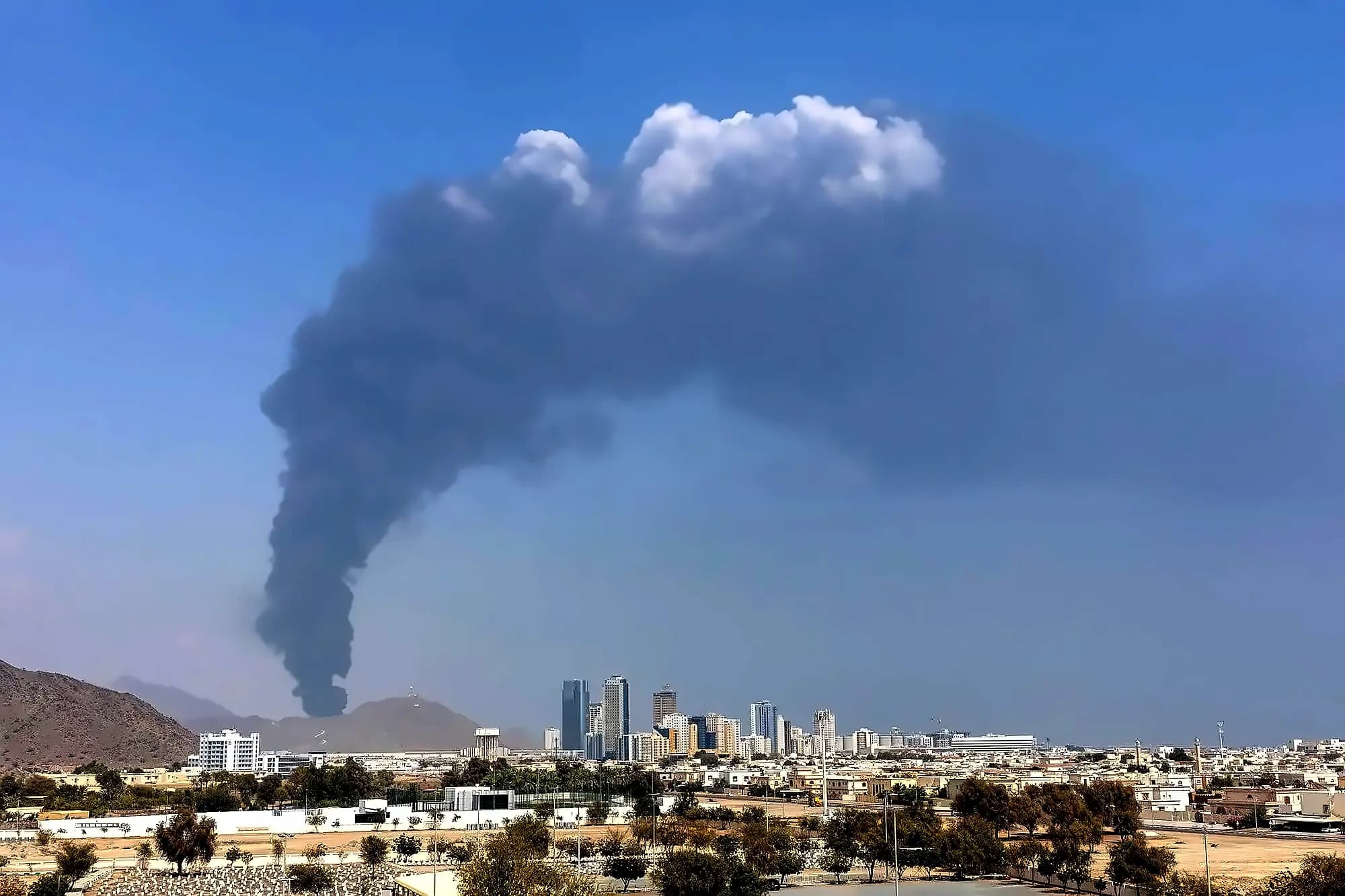
The booming stock market appears to be ignoring the severity of the Iran war's impact on global oil markets. As reported by Bloomberg, some analysts describe the disconnect as similar to the coronavirus pandemic response, where markets initially plunged then bounced back quickly while ignoring lasting supply chain damage. Neil Crosby, head of oil research at Sparta, noted that if told three weeks ago oil futures would be under $100, he would have called it a lie, as after Russia invaded Ukraine, price futures went to $130 with almost no oil at risk. Currently, 20% of the world's oil remains at risk while futures trade at lower levels. Gerry Morton, oil and gas co-chair at Baker Botts, warns that "the further away you get from actually being involved in producing oil, the less you seem to be concerned about the physical reality."
The Iran war has caused a massive disruption to global oil markets, with more than 500 million barrels of crude and condensate knocked out of the global market since the crisis began at the end of February, according to Kpler data. This represents the largest energy supply disruption in modern history. As reported by Reuters, the disruption has been so severe that it's equivalent to curtailing aviation demand globally for 10 weeks, or no road travel by any vehicle globally for 11 days. The missing volumes represent roughly $50 billion in lost revenues at current crude prices averaging around $100 per barrel. Iranian Foreign Minister Abbas Araqchi declared the Strait of Hormuz open following a ceasefire accord agreed in Lebanon, while U.S. President Donald Trump said he believed a deal to end the Iran war would come "soon," though the timing remains unclear. However, as Bloomberg reports, Iran's military announced it would reimpose restrictions on the Strait of Hormuz, throwing the critical waterway's status into doubt. The global economy has suffered losses exceeding $50 billion due to these oil production disruptions, with the consequences expected to be felt for months, if not years.
Gulf Arab countries have lost approximately 8 million barrels per day of crude production in March, which is nearly equivalent to the combined production of Exxon Mobil and Chevron, two of the world's biggest oil companies. According to Kpler data, jet fuel exports from Saudi Arabia, Qatar, the United Arab Emirates, Kuwait, Bahrain and Oman fell dramatically from 19.6 million barrels in February to just 4.1 million barrels for March and April combined. This reduction would have been sufficient for around 20,000 round-trip flights between New York's JFK airport and London Heathrow. The supply shortfall would also be enough to run the world's international shipping industry for around four months, according to Reuters estimates. As Bloomberg reports, Fatih Birol, executive director of the International Energy Agency, warned that "no country, no country is immune to this crisis," with Europe at risk of running out of jet fuel within six weeks.
Even as Iranian Foreign Minister Abbas Araqchi declared the Strait of Hormuz open following a ceasefire accord agreed in Lebanon, recovery of output and flows is expected to be slow. According to Kpler data, global onshore crude inventories have fallen by approximately 45 million barrels so far in April. Since late March, production outages have reached roughly 12 million barrels per day. Heavier crude fields in Kuwait and Iraq could take four to five months to return to normal operating levels, extending stock draws through the summer. Damage to refining capacity and Qatar's Ras Laffan LNG complex means full restoration of regional energy infrastructure could take years. Gerry Morton from Baker Botts warns that "you can ride a bike faster than a tanker moves," meaning it will take weeks, possibly months, for tanker traffic to return to normal. Industry officials know Gulf state production facilities have suffered significant damage, but they have not been able to tally the extent of it yet, as repairs won't begin until bombs stop dropping for good.
The scale of the disruption is significant, with the missing volumes representing roughly six years of fuel consumption for the U.S. military, based on annual usage of about 80 million barrels from fiscal year 2021. According to Wood Mackenzie principal analyst Iain Mowat, the disruption is equivalent to nearly a month of oil demand in the United States, or more than a month of oil for all of Europe. Johannes Rauball, a senior crude analyst at Kpler, noted that the lost volumes represent a 1% cut in Germany's annual gross domestic product, or roughly the entire GDP of smaller countries such as Latvia or Estonia. The aftershock of the crisis will be felt for months and even years to come, according to analysts and Reuters calculations. As Bloomberg reports, fertilizer prices have spiked so high that they could force food prices up into next year, while factories in countries such as Vietnam and Bangladesh are at risk of shutting down due to soaring energy prices. The disconnect between market signals and economic reality is increasingly shaping the global economy, with some of the world's leading economic voices warning that complacency is misplaced.