The Iran war has drained global oil inventories at an unprecedented pace, with Morgan Stanley estimating global oil stockpiles dropped by about 4.8 million barrels a day between March 1 and April 25, far exceeding the previous peak for a quarterly drawdown. Crude accounts for almost 60% of the decline, with refined fuels making up the rest, according to the International Energy Agency (IEA). As per JPMorgan Chase's head of global commodities research Natasha Kaneva, "Inventories are acting as the shock absorber of the global oil system," but "not every barrel can be drawn." The sharp depletion means global visible oil stocks are already close to their lowest since 2018, with the operational minimum reached long before inventories actually hit zero. Some analysts suggest the stress points may be lower than JPMorgan estimates, meaning the industry could have a bigger buffer, while further demand loss would also help reduce pressure on the system.
The 2026 U.S.-Israel war on Iran, the Ramadan War, which began with airstrikes on 28 February 2026 and involved Iranian retaliation via missiles, drones, and a blockade of the Strait of Hormuz, has triggered a global economic and financial crisis that extends far beyond oil markets. According to the International Monetary Fund, global growth forecasts have been downgraded to 4.3% this year, 0.3 percentage points below pre-war projections, with inflation expected to rise significantly. The IMF warns that the Iran war could raise global debt, forcing governments to choose between easing cost-of-living shocks and protecting public finances. As per Bloomberg, $2.5 trillion has been wiped out from the value of global bonds in March alone, while foreign central banks have slashed their holdings of Treasuries at the New York Federal Reserve to their lowest level since 2012, with $82 billion in value dropped since February 2025. The crisis has created a double shock for economies of South, Southeast, and East Asia: higher oil prices in US dollars, compounded by further increases as their currencies weaken against the dollar.
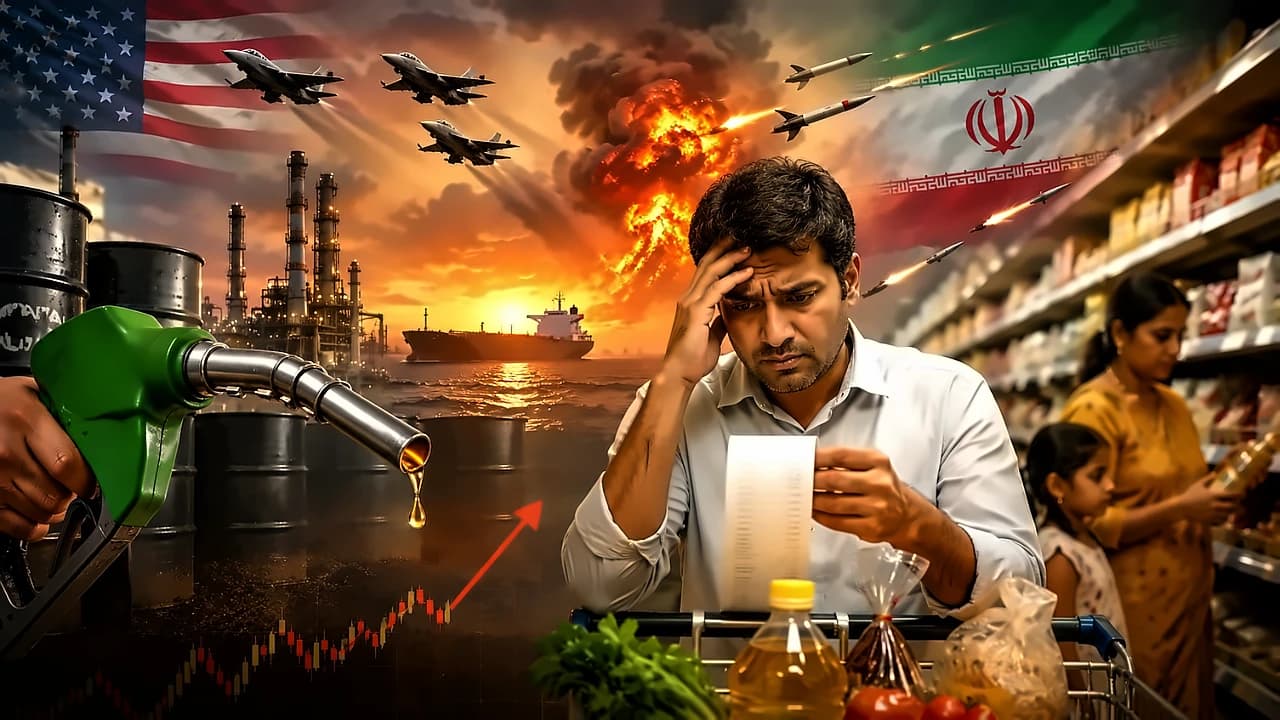
Brent crude prices have surged to more than $126 per barrel following reports that U.S. President Donald Trump will receive a briefing on Thursday regarding plans for fresh military strikes on Iran. According to Reuters, such options have long been part of U.S. planning but the proposed briefing spurred big gains in oil prices, with the benchmark Brent crude contract hitting more than $126 a barrel at one point before later slipping back to around $113 per barrel. Iran has threatened to respond with "long and painful strikes" on U.S. positions if Washington renewed attacks, with Aerospace Force Commander Majid Mousavi warning that "We've seen what happened to your regional bases, we will see the same thing happen to your warships." Supreme Leader Mojtaba Khamenei said in a written message that Tehran would eliminate "the enemies' abuses of the waterway" under new management of the strait, indicating the country intended to maintain its hold over it. U.S. President Donald Trump is slated to receive a briefing on Thursday on plans for a series of fresh military strikes on Iran to compel it to negotiate an end to the conflict.
The war has created significant economic fallout for Gulf petrostates, with GDP hits of up to 14% for Qatar and Kuwait, 5% for the UAE, and 3% for Saudi Arabia if disruptions persist. The United Nations Development Programme estimates the war "may cost economies in the region from 3.7 to 6.0 percent of their collective GDP (GDP) or US$120-194 billion and exceeds the cumulative regional GDP growth achieved in 2025. These petrostates were not direct belligerents but suffered economic fallout from Iranian strikes on their energy infrastructure, ports, aviation, tourism, and logistics, plus the near halt of roughly 20% of global oil and liquified natural gas (LNG) flows through Hormuz. The UAE, one of the world's wealthiest countries, has asked the US for financial support after missiles damaged its gas fields and shipping through the Strait of Hormuz was halted. It has also announced it will leave the Organisation of Petroleum Exporting Countries (OPEC), a move that would let it set its own oil output instead of following the group's production quotas.
The war has created severe oil inventory shortages across Asia, with oil inventories in the Asia-Pacific region outside of China falling by about 70 million barrels since the conflict began, according to Kayrros co-founder Antoine Halff. Japan and India's stockpiles are at an at least 10-year seasonal low, down 50% and 10% respectively since the war began. Kayrros said stockpiles in Japan and India are at an at least 10-year seasonal low, down 50% and 10% respectively, with the region's supplies of naphtha and LPG, both used for petrochemicals, being particularly hit. Pakistan's petroleum minister in late April said it has roughly 20 days of commercial reserves of refined products, while India's oil ministry said on May 3 that refineries have adequate crude inventories, though state-run refiners privately acknowledged that they have burnt through a sizable amount. Vietnam and Philippines are in a more dire situation compared to North-east Asian countries such as China, Japan and South Korea, which hold ample crude and product stocks in their storage tanks.
In a sign the U.S. was also envisaging a scenario where hostilities cease, the State Department has invited partner countries to join a new coalition called Maritime Freedom Construct (MFC) to enable ships to navigate the strait. According to the State Department cable, "The MFC constitutes a critical first step in the establishment of a post-conflict maritime security architecture for the Middle East." The cable was due to be delivered orally to partner nations by May 1. France, Britain and other countries have held talks on contributing to such a coalition but said they were willing to help open the Strait only when the conflict ends. U.N. Secretary-General Antonio Guterres warned that if the disruption caused by the closure dragged on through mid-year, global growth would fall, inflation would rise and tens of millions more people would be pushed into poverty and extreme hunger. "The longer this vital artery is choked, the harder it will be to reverse the damage," he told reporters in New York. Amazon said restoring normal operations for its cloud regions in Bahrain and the United Arab Emirates could take months after damage last month from the conflict, which has killed thousands in Iran and across the Middle East.