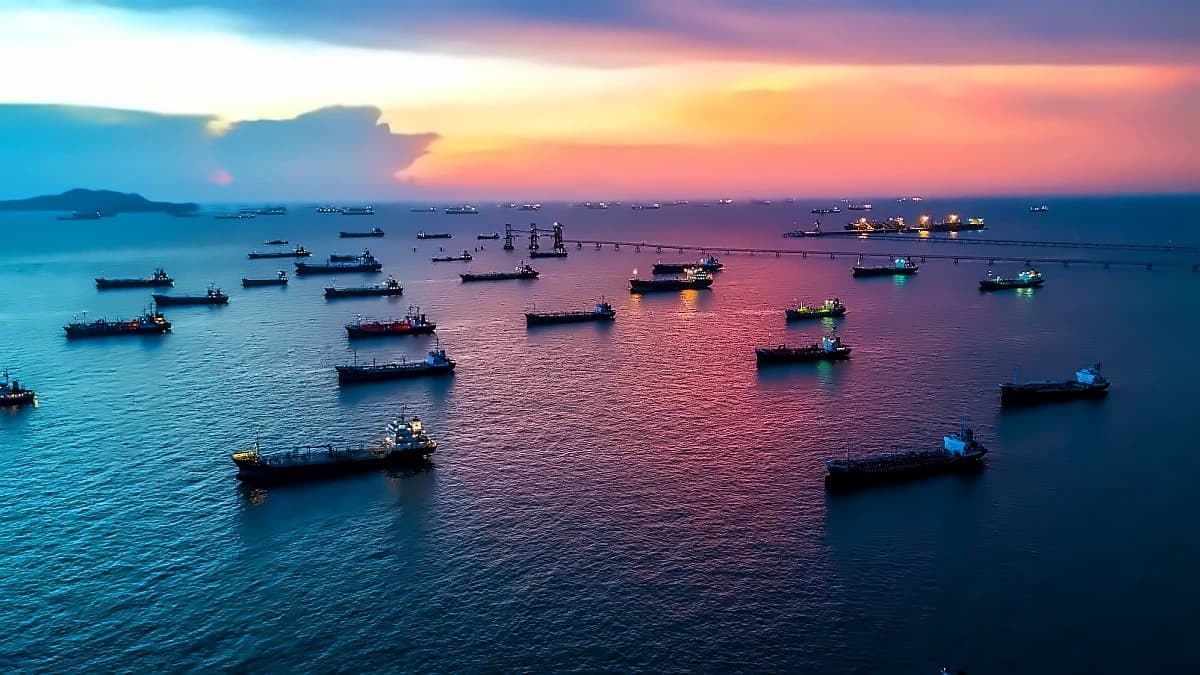
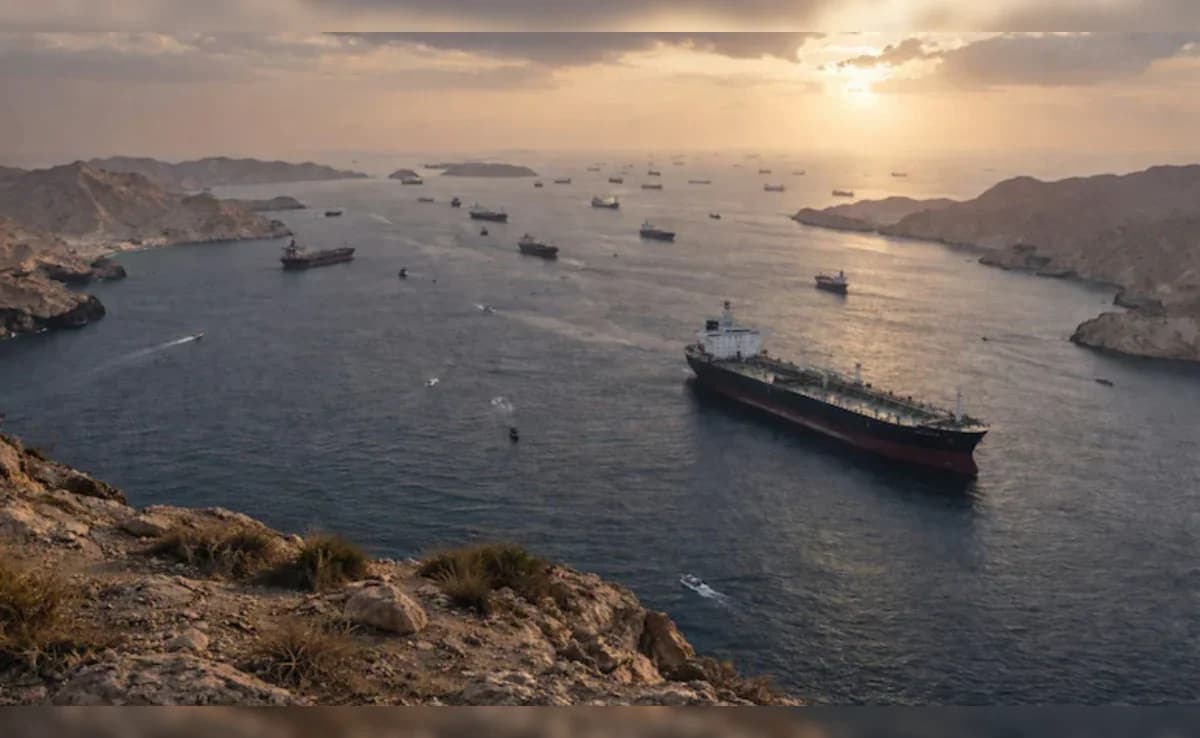
Iran's Islamic Revolutionary Guard Corps (IRGC) Navy announced that 26 commercial vessels safely transited through the strategically important Strait of Hormuz over a 24-hour period. According to the IRGC Navy statement, the vessels included five supertankers carrying approximately 2 million barrels of crude oil each, bringing the total volume to nearly 10 million barrels. As reported by Iranian state television, these transits were only permitted under the coordination and security provided by the IRGC Navy following the acquisition of required authorizations. The latest developments show Iran has established a multi-tiered system for clearing vessels, involving government-to-government arrangements, intense vetting by the Iranian government, and sometimes fees in exchange for safe passage.
Oil prices experienced significant volatility as Iran allowed the supertankers to pass through the Strait of Hormuz, with Brent crude falling nearly 6% to about $105 per barrel as Asia-bound vessels raised hopes of resumption of energy flows. West Texas Intermediate (WTI) crude also declined before trimming losses later in the session. Despite the recent decline, oil prices still remain roughly 50% above pre-war levels after the effective closure of the strait removed around 13 million barrels of oil supply per day from global markets since the conflict started. The clearance of the supertankers raised hopes for a return to more normal shipping activity through the key global energy artery after weeks of severe disruption.
Iran has consolidated control of the Strait of Hormuz through a complex multi-tiered mechanism that involves government-to-government arrangements, intense vetting by the Iranian government, and sometimes fees in exchange for safe passage. According to Reuters interviews with 20 people with knowledge of the evolving mechanism, including Asian and European shipping sources and Iranian and Iraqi officials, the system gives preference to ships linked to Iran's allies Russia and China, followed by countries such as India and Pakistan with close ties to Tehran. The Agios Fanourios I, a 330-metre-long tanker loaded with Iraqi crude oil bound for Vietnam, crossed the strait on May 10 under a direct deal with Iran overseen by Iraq's prime minister. The vessel navigated through multiple Iranian checkpoints at Abu Musa, Greater Tunb and Larak islands before being briefly stopped by IRGC speedboats at Hormuz Island due to suspicions of smuggled cargo, though it was cleared after inspection.
Despite recent improvements, traffic levels remain significantly below normal operations. By early May, around 1,500 vessels with about 22,500 sailors aboard were trapped in the Gulf, according to the U.S. military. Between April 18 and May 6, fewer than 60 ships made it through the strait, compared to typical daily volumes of 120 to 140 ships before the war, with about half being oil tankers. Iran has been pushing ahead with transit fees reportedly set at around $1 per barrel of oil, meaning charges for fully loaded supertankers can climb as high as $2 million per voyage. However, Reuters reports that some vessels not covered by government-to-government deals are paying Iranian authorities upwards of $150,000 to secure safe passage through the Strait of Hormuz, with ship owners' willingness to deal directly with Iran despite risks showing the degree to which the strait is under Iranian control.
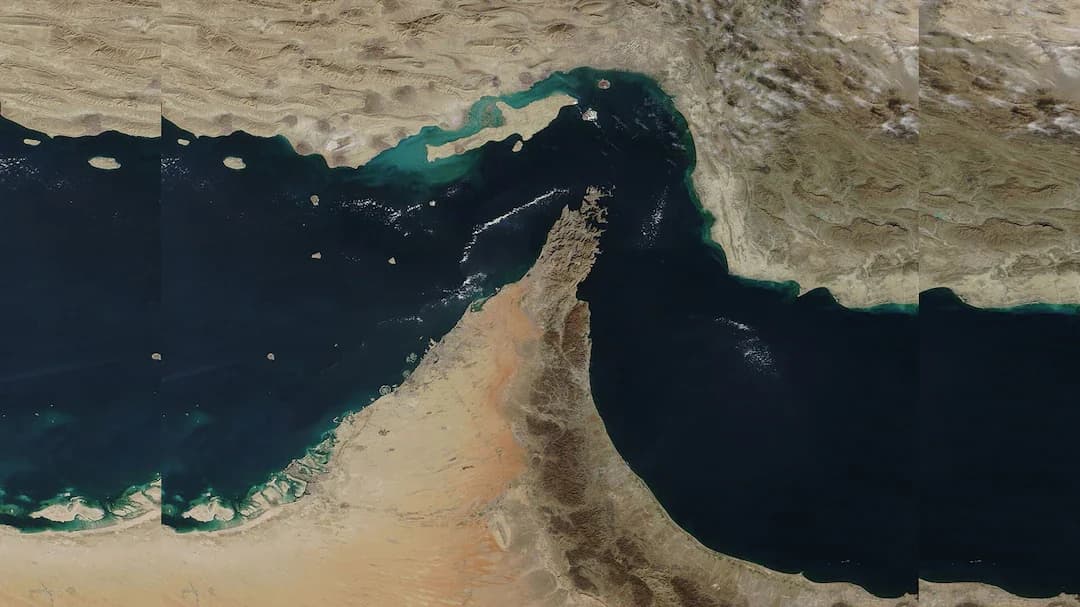
South Korea announced that one of its oil tankers safely crossed the strait for the first time since the start of the war, marking the first confirmed passage by a South Korean vessel since the Iran war began. South Korea's Oceans Minister Hwang Jong-woo pushed back against Iran's decision to impose transit fees on ships passing through the strategically vital Strait of Hormuz, stressing that Seoul rejects any such charges as a violation of international law. The U.S. Navy has responded by imposing its own blockade of Iranian ships and cargo with a cordon outside the strait, with the Agios Fanourios I being snared in the U.S. Navy's blockade for six days after exiting Iranian waters. China's Ministry of Foreign Affairs called for Hormuz to be opened and expressed concern about "future arrangements for the strait," stating that such arrangements should comply with international law and take into account legitimate security concerns of coastal states.