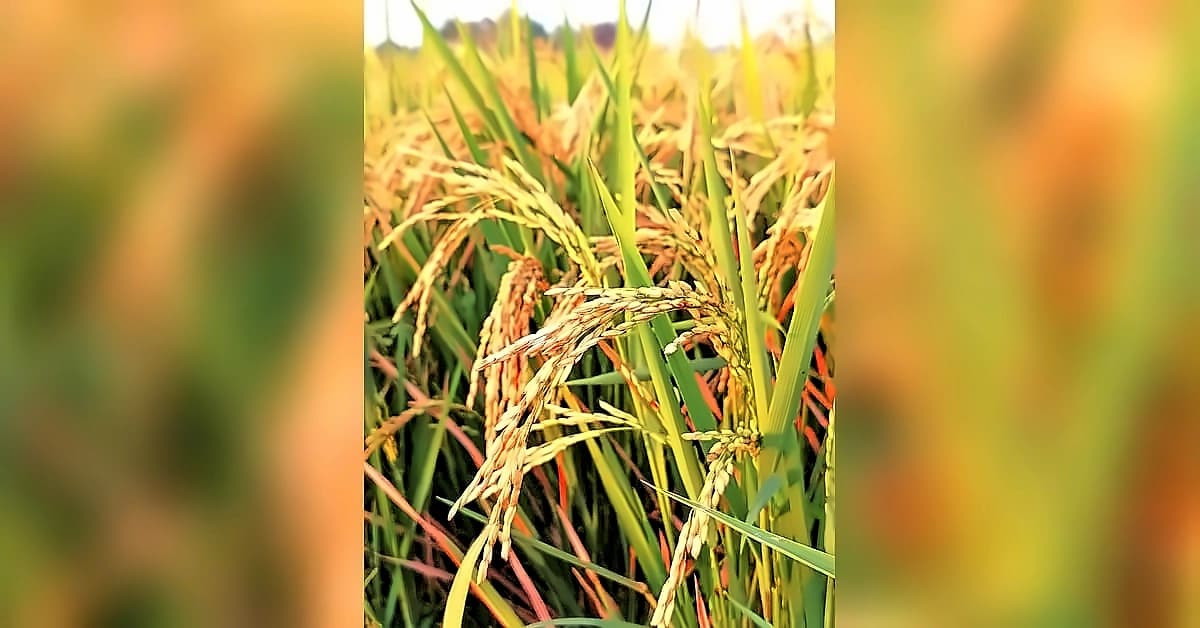
India's total foodgrain production has reached a historic milestone, with government estimates projecting 376.56 million tonnes for 2025-26, representing a 5% increase from the previous year's 357.73 million tonnes. The agriculture ministry described this as the highest foodgrain output in India's history, driven by better monsoon rains in 2025 and a higher minimum support price (MSP). As per the latest third advance estimates, the record production was led by rice, wheat, and maize, with wheat output specifically pegged at a record 120.65 million tonnes compared to 117.94 million tonnes in 2024-25, showing a 2.29% increase despite localised damage from unseasonal rainfall and hailstorms. The Ministry of Agriculture and Farmers Welfare has confirmed these figures, with rice yield hitting an unprecedented 154.02 million tonnes. However, recent heatwave conditions are now creating new challenges for the agricultural sector.
Northern India's severe heatwave conditions are creating significant disruptions in key agricultural supply chains. Temperatures have reached as high as 45-47 degrees centigrade across multiple states, with workers facing unbearable conditions that are causing 15-20% productivity losses over the past fortnight. According to Dev Garg, vice president of the Indian Rice Exporters Federation (IREF), loading and unloading of basmati rice from rice mills to ports for both export and domestic supply has been severely impacted. India annually produces 7.2 million tonnes of basmati rice, with 6 million tonnes exported, making this disruption particularly significant for the country's agricultural economy. The textile industry in Delhi-NCR is also facing challenges, with the Noida Apparel Export Cluster (NAEC), home to about 2,000 manufacturing units employing 1 million people, experiencing productivity losses due to extreme heat conditions.
The government has significantly increased its wheat procurement target for the current season, deciding to purchase 34.5 million tonnes from farmers, which is 15% higher than the earlier target of 30 million tonnes. According to Business Standard, procurement till date stands at 34 million tonnes after initial slack. This increased procurement reflects the government's confidence in the bumper harvest and its commitment to supporting farmers through higher purchase prices. The ministry emphasized that wheat production remained "stable and resilient" despite localised damage caused by unseasonal rainfall and hailstorms. The government now has strategic food security reserves that can continue ration systems uninterrupted even if rainfall weakens regionally, making food inflation risks easier to manage.
Rice production showed strong growth with the third advance estimates putting output at 154.02 million tonnes in 2025-26, up from 150.18 million tonnes a year earlier. Maize emerged as a key driver within nutri and coarse cereals, with output estimated at a record 55.09 million tonnes in 2025-26, significantly higher than 43.4 million tonnes in 2024-25. Nutri and coarse cereals were estimated at 74.47 million tonnes, higher than 63.92 million tonnes in the previous year. Union Agriculture Minister Shivraj Singh Chouhan credited farmers for reaching the new peak, noting that the Third Advance Estimates clearly indicate robust production across foodgrains, major cereals, oilseeds and commercial crops. The shift reflects a broader transformation in Indian agriculture – from monsoon dependency toward climate adaptation, with states facing erratic rainfall shifting toward drip irrigation and rainwater retention systems.
In pulses, tur production was estimated at 3.59 million tonnes in 2025-26, slightly lower than 3.62 million tonnes in 2024-25, while gram production was projected to rise to 12.51 million tonnes from 11.11 million tonnes. Lentil output was placed at 1.76 million tonnes. India's edible oil and protein crop output also strengthened significantly, with groundnut expected to increase to 13.07 million tonnes from 11.94 million tonnes, while mustard output was estimated at 13.76 million tonnes compared with 12.66 million tonnes in the previous year. Total oilseeds production was estimated at 43.05 million tonnes in 2025-26, marginally higher than 42.98 million tonnes in 2024-25**. This matters because pulses and edible oils are often the first commodities to see price spikes during weak crop years, providing additional cushion to the food security system.
Among commercial crops, sugarcane production was estimated at 500.06 million tonnes in 2025-26, higher than 454.61 million tonnes in the preceding year. Cotton output was projected at 29.024 million bales, with each bale weighing 170 kg, compared with 29.72 million bales a year earlier. Jute production was pegged at 9.176 million bales in 2025-26, each jute bale estimated at 180 kg, up from 8.48 million bales in 2024-25. The Centre will hold the National Campaign for Kharif conference in Pusa on May 28-29, which comes at a time when India's 2026 southwest monsoon is expected to be 'below normal' due to adverse impact of El Nino. The Indian Council of Agricultural Research (ICAR) released 339 climate-resilient crop varieties designed to survive extreme weather conditions, particularly important as the country, including Odisha, faces moisture stress in soil following extreme heat wave.