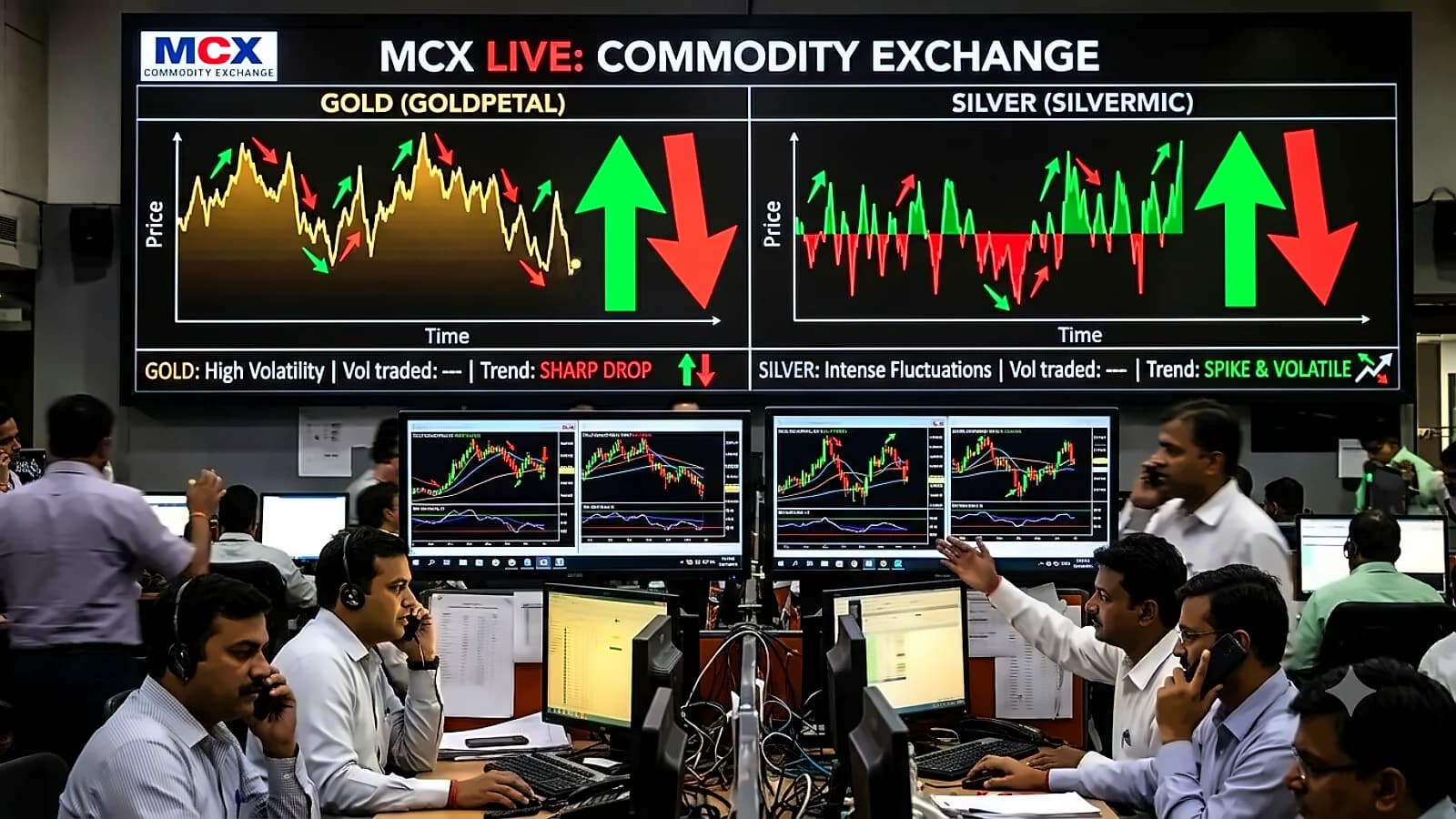
Gold and silver exchange-traded funds (ETFs) gained up to 3% in intraday deals on Friday, in line with the rise seen in precious metals as investors overlooked the US Federal Reserve's rate hike and cheered the decline in crude oil prices. On MCX, gold futures rose ₹690 or 0.44% to ₹154,978 per 10 grams, while silver futures gained ₹2,145 or 0.90% to ₹240,350 per kilogram. As per Business Standard, silver ETFs emerged as the biggest beneficiaries, with Kotak Silver ETF, Tata Silver ETF, UTI Silver ETF, DSP Silver ETF, Zerodha Silver ETF, HDFC Silver ETF and Bandhan Silver ETF rising over 3% each. Among gold ETFs, Axis Mutual Fund ETF, Choice Gold ETF, Angel One Gold ETF and others such as Zerodha Gold ETF and Nippon India ETF Gold BeEs gained nearly 2% each. "The 2-3% rise in gold and silver ETFs today is largely a reflection of the underlying move in bullion rather than a change in ETF fundamentals," said Harshal Dasani, business head at INVasset PMS.
The September 15-16 Federal Open Market Committee (FOMC) meeting served as the primary catalyst for gold market movements this week, with bets that the Fed will issue a rate hike on Wednesday spiking to roughly 92% according to latest market data. As reported by The Hindu BusinessLine, the Fed raised interest rates on Wednesday and flagged more hikes in the coming months, with new US central bank Chief Kevin Warsh joining a unanimous decision that effectively acknowledges the Trump administration's inability so far to control inflation that policymakers worry could worsen. Updated quarterly economic projections showed 16 of 18 policymakers anticipate at least one more quarter-percentage-point hike by the end of this year, with only two of them seeing rates remaining stable from here. Although gold is considered an inflation hedge, higher rates reduce its appeal by boosting the attractiveness of interest-bearing assets. Despite the latest US rate increase, Goldman Sachs retained its end-2027 gold price forecast of $5,400 per troy ounce, stating that tighter monetary policy is expected to slow the rally but is unlikely to derail it.
The fall in oil prices for the third straight day softened inflation concerns, which has been a key driver of precious metals recovery. Brent crude futures fell 0.75% to $104 a barrel amid easing concerns over Saudi supply disruptions. As per Business Standard, a weaker oil price environment reduces the appeal of non-interest-yielding assets such as gold and silver, which had been pressured by elevated crude prices. The rupee was around ₹95.94 against the US dollar, according to CNBC TV18, with a weaker rupee potentially cushioning the impact of international bullion price declines on MCX. U.S. crude, gasoline and distillate inventories all increased last week, with crude inventories rising by 7.1 million barrels in the week ended September 11, compared with analysts' expectations for a decline of around 1.6 million barrels according to a Reuters poll.
Silver has seen a stronger rebound compared to gold, with December silver at ₹2.40 lakh per kg, higher by 0.90% according to Business Standard. Silver can be more volatile than gold because, besides investment demand, it also has significant industrial use, meaning expectations around economic activity can influence its price alongside monetary policy and the dollar. Vedika Narvekar, Research Analyst at Anand Rathi Share and Stock Brokers, attributed the recent support to cooling Treasury yields after their sharp rise around the Fed's rate hike and a decline in oil prices, which has eased some inflation concerns. She also pointed to continued inflows into gold ETFs despite the volatility of the past two weeks, saying this supports the longer-term investment case for the metal. Gaurav Garg, Head of Research at Lemonn, said both gold and silver were recovering sharply after the recent sell-off as the dollar and US Treasury yields eased.
Physical demand could become another factor as India moves deeper into the festive and wedding season. Darshan Desai, CEO of Aspect Bullion & Refinery, said the recent correction has brought some buyers back into the market, although consumers remain selective because of elevated prices. He expects physical demand to gradually strengthen, particularly for coins, bars and lighter-weight jewellery, as the festive season gathers momentum. For Indian investors, the recent MCX recovery reflects a combination of global and domestic factors rather than a single trigger. Fed guidance and US yields remain important for the international price, while the rupee can amplify or moderate those moves in India. Vikram Subburaj, CEO of Giottus.com, said the sharp rebound should be viewed in the context of elevated volatility, suggesting staggered buying as a way to manage price fluctuations for long-term allocations.
In India, gold imports fell 57.75% year-on-year to $2.3 billion in August, while silver imports jumped 127% to $1.02 billion, according to Commerce Ministry data. During April-August 2026-27, gold imports rose 3.38% to $17.47 billion. The inflation data came in largely in line with estimates on Friday, with so-called "core" CPI slightly hotter than expected on a monthly basis, pushing up bets that the Fed will hike rates. According to JPMorgan's chief US economist Michael Feroli, "Simply that core PCE inflation has been above 3% every month this year and has made little recent progress towards 2%," making the case for continued monetary tightening. Investors will also track monetary policy decisions from the Bank of England and Bank of Japan following the Fed, with all three central banks expected to raise interest rates by 25 basis points.