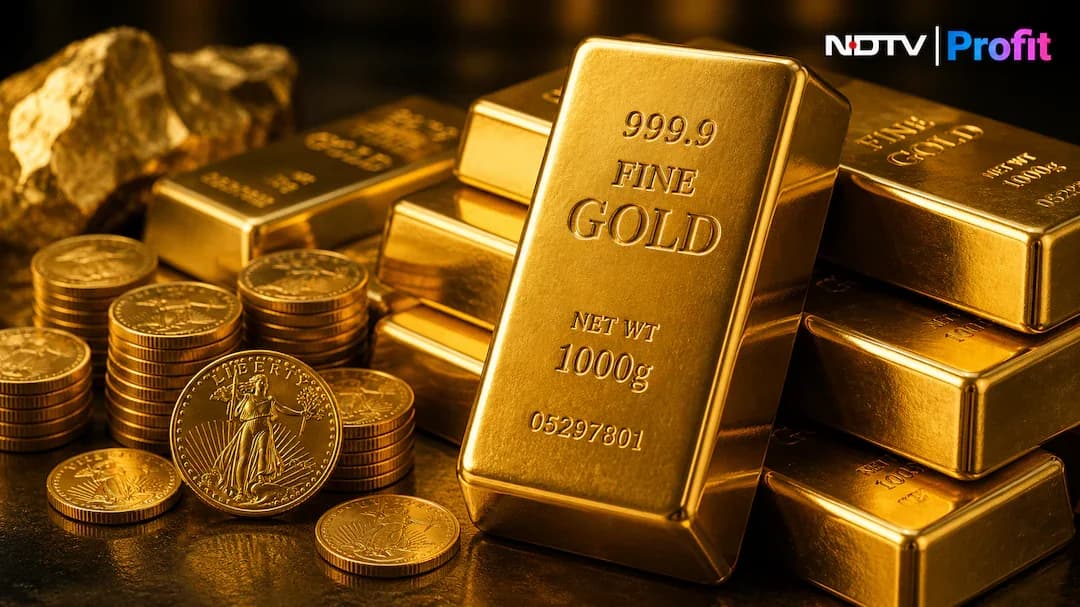
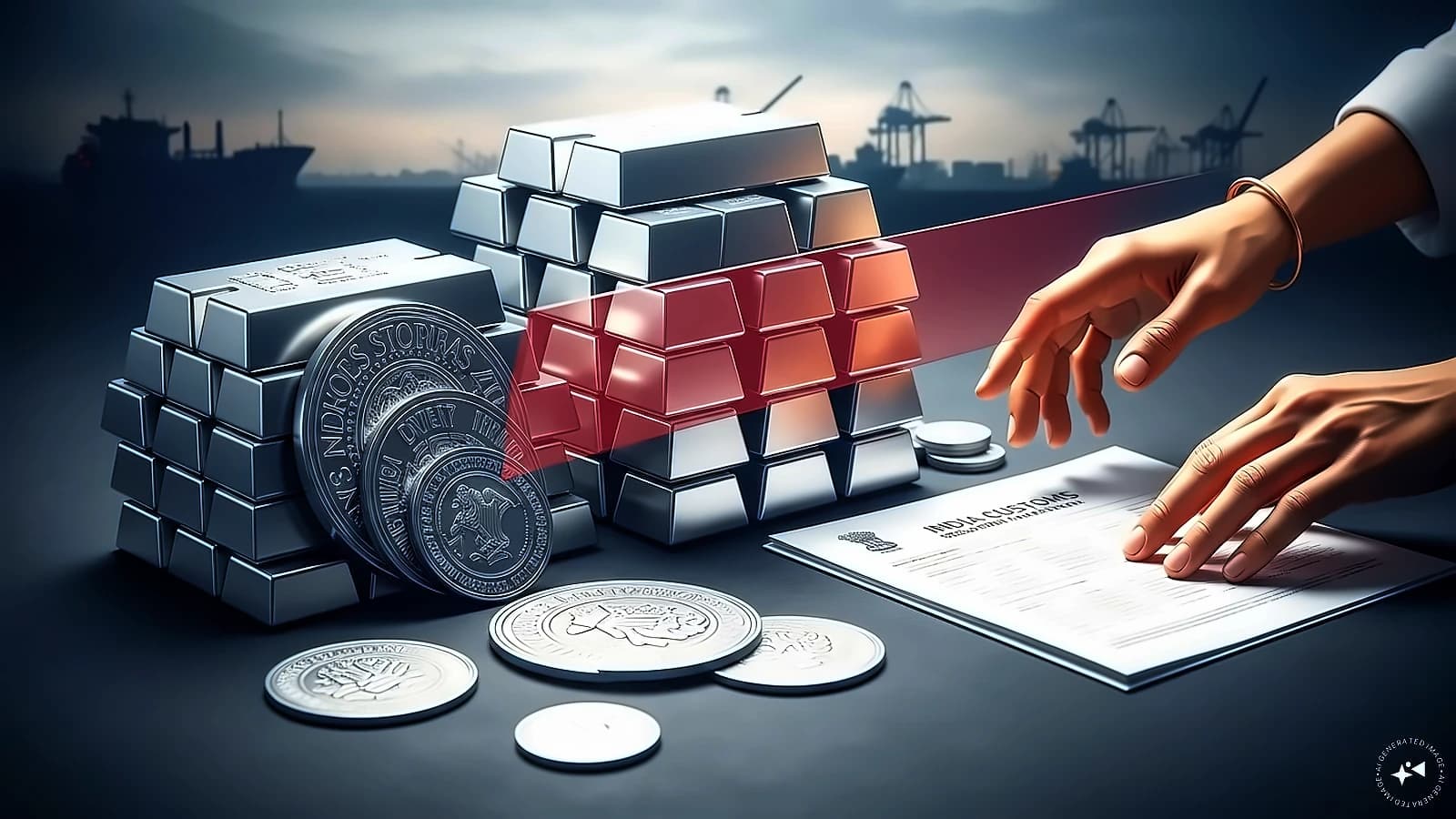
India has banned silver imports overnight, moving the metal from the 'free' category to 'restricted' with immediate effect from May 16, 2026. The government implemented two critical measures: increasing customs duty to 15% (effective tax 18%+) and making silver import a licensed category requiring mandatory government approval. As per Jateen Trivedi, VP Research Analyst-Commodity and Currency at LKP Securities, the silver import restriction doesn't mean India has shut the door, it means the entry is now guarded, with supply being channeled only through nominated agencies like RBI banks, DGFT-approved entities, and jewellers via the bullion exchange. The move follows last week's increase in import duties on gold and silver to 15% from 6%, part of a broader effort to contain precious metal inflows and support foreign exchange reserves amid elevated global commodity and oil-related pressures.
India meets more than 80% of its silver demand through imports, with FY2025–26 shipments reaching a record $12 billion, up sharply from $4.8 billion a year earlier, as reported by CNBC TV18. April imports rose 157% year-on-year to $411 million, highlighting the country's heavy reliance on foreign supplies. Under the new rules, imports of 99.9% pure silver bars and semi-manufactured forms will now require approvals, with these categories accounting for over 90% of India's silver imports. The restrictions are particularly significant given that India relies heavily on imported silver because domestic production remains limited. India sources most of its silver imports from the UAE, Britain and China. The government's action addresses concerns about Thailand flooding India with 'silver jewellery' at zero duty, which was identified as a loophole and scam that was contributing to the rupee's bleeding and widening current account deficit.
India's jewellery buying pattern is expected to shift as consumers adapt to higher gold prices and elevated import duties by changing how they buy rather than whether they buy. Across the industry, jewellers and gold financiers are already expecting stronger interest in old gold exchange and recycling, as households look to unlock value from existing holdings instead of making entirely fresh purchases. Keyur Shah, CEO of Muthoot Exim, noted that customers are expected to exchange old gold for new jewellery or use it for liquidity needs such as selling or pledging. The industry highlights over 32,000 tonnes of idle gold held in households and temple trusts, suggesting that even limited recycling could significantly ease import dependence in a high-duty environment. Neil Sonawala, MD at Zen Diamond India, said buyers are becoming more value-conscious and are expected to "look to unlock value from their existing jewellery collections rather than significantly increasing fresh spending."
Market participants expect tighter availability in the domestic market, particularly for bullion products, with pricing likely to adjust quickly to the new supply structure, according to CNBC TV18. Chirag Thakkar, chief executive of Amrapali Group Gujarat, said reduced inflows would tighten supply conditions and potentially push silver back into premium territory after a recent discount phase. The tighter import rules are expected to reduce easy access to physical silver for traders and importers, potentially creating supply shortages in the domestic market. As supply becomes tighter, silver prices on the MCX could start trading at a premium compared to international silver rates, with domestic premiums widening especially during periods of strong demand or market stress. Industry experts also believe the restrictions could trigger inventory stocking by bullion dealers and industrial users, adding further upward pressure on prices. Currently, 1 kg silver price in India stands at ₹2.80 lakh, while 100 grams and 10 grams silver rates are at ₹28,000 and ₹2,800 respectively, with 1 gram silver price at ₹280. In May so far, silver price has surged by nearly 10%, after falling by 2% in April 2026.
The high-price environment is expected to accelerate demand for lighter, more wearable jewellery formats, especially among younger consumers. According to Visshnupriya Singh, CEO of Svariya Jewels, there's a growing preference for demi-fine categories such as 9KT and 14KT jewellery, as millennials and Gen Z view jewellery as everyday fashion rather than solely a long-term investment. This shift is expected to translate into higher exchange-led purchases and remodelled designs, particularly during weddings and festive buying cycles. The policy shift may also lead to greater focus on physical silver availability rather than paper trading in determining domestic market prices. The MCX–LBMA spread is identified as the key metric to watch, as it captures the premium domestic buyers are paying over global prices, with pricing dynamics expected to shift as physical availability tightens. For the domestic market, Trivedi said it almost always translates into higher premiums, with the MCX-LBMA spread showing exactly how much extra Indians are paying versus the world price.