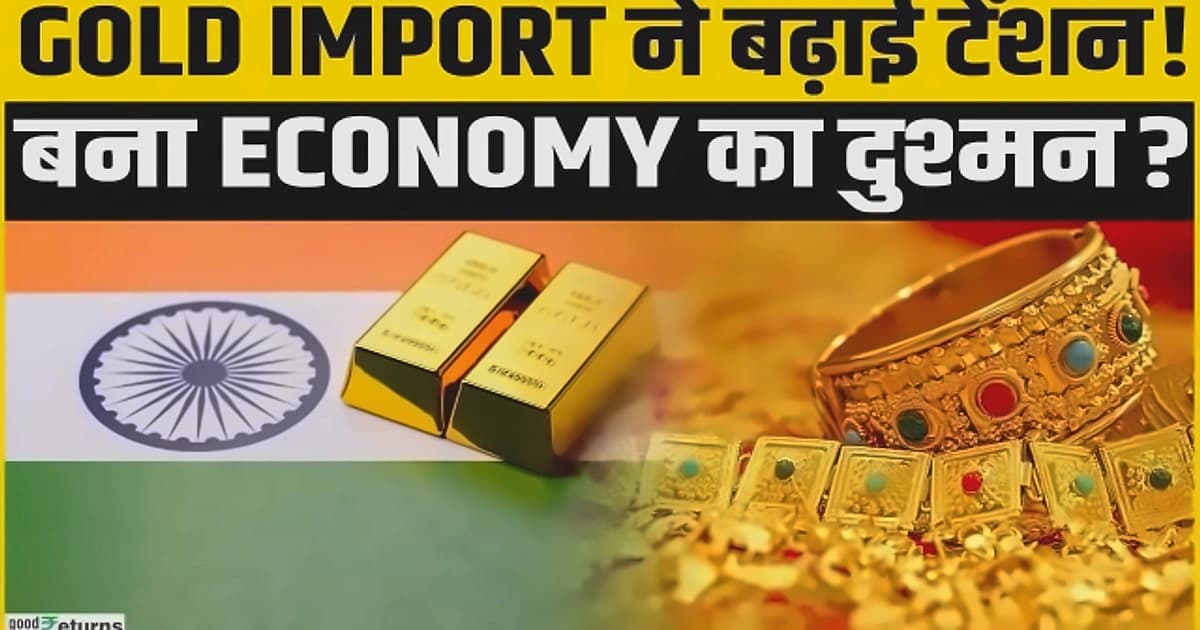
India's gold imports have reached an all-time high of $71.98 billion in 2025-26, marking a 24% increase from previous levels despite the government's efforts to curb purchases. This surge comes even as India implemented a 15% import tariff on gold and silver, comprising a 10% basic customs duty plus a 5% Agricultural Infrastructure and Development Cess (AIDC). The record import figures have raised significant concerns about India's trade deficit and foreign exchange outflow, particularly as the country faces mounting economic pressure linked to West Asian tensions. According to latest reports, gold imports now represent nearly 10% of India's total import bill, making every gold purchase a major drain on foreign exchange reserves.
The India-UAE Comprehensive Economic Partnership Agreement (CEPA) has significantly contributed to India's record gold import levels, with the UAE benefiting from preferential tariff treatment. Under the agreement, India allows gold imports from the UAE at tariffs one percentage point lower than normal import duties through a Tariff Rate Quota (TRQ) system. The quota started at 120 tonnes annually and will rise to 200 tonnes from 2027, covering nearly 25% of India's gold imports. According to Global Trade Research Institute (GTRI), the benefit became even bigger after India cut the normal gold import duty from 15% to 6% in the 2024 Budget, making gold imported from Dubai effectively enter India at only a 5% duty. India also allowed private firms and jewellers to directly import bullion through the India International Bullion Exchange in GIFT City.
India's gold bar imports from the UAE have experienced dramatic growth, rising from $2.9 billion in 2022 to $6.7 billion in 2023 and further to $16.5 billion in 2025. Dubai's share in India's gold imports increased from 7.9% before the FTA to 28% in 2025, as reported by GTRI. The think tank noted that the UAE neither mines gold nor carries out major processing activities, raising concerns about trade routing. "Much of the trade appears to involve routing gold from third countries through Dubai simply to benefit from lower Indian tariffs," said Ajay Srivastava, founder of GTRI. India's total gold bar imports rose sharply from $36.5 billion in 2022 to $58.9 billion in 2025.
Prime Minister Narendra Modi has intensified his appeal to Indians to cut gold purchases, fuel use, and foreign travel amid the West Asian crisis and surging oil prices. Speaking at public events in Hyderabad and Vadodara, Modi asked citizens to postpone non-essential gold purchases for at least a year, avoid destination weddings abroad, and choose domestic tourism instead. He urged schools and colleges to consider temporarily shifting to Covid-19-style online classes to reduce fuel consumption and travel. The prime minister framed these measures as a "patriotic" response to external oil shock, emphasizing that India's heavy dependence on imported crude means every extra dollar spent on fuel widens the trade deficit and weakens the rupee. Modi also appealed to households to stop buying gold for a year and cut edible oil consumption, calling these purchases major drains on foreign exchange.
The government's austerity pitch has triggered significant market volatility, with Indian equity markets falling sharply as investors interpreted Modi's message as a sign of deeper economic stress. On 11 May, the Sensex dropped about 1.7% to around 76,015 and the Nifty 50 fell roughly 1.5% to 23,816, while the rupee closed at a record low near 95.31 per dollar. Jewellery stocks such as Titan, Kalyan Jewellers, and Senco Gold fell 7-12%, with rate-sensitive and consumption-linked sectors hit hardest. Between 10-12 May 2026, the Centre and RBI examined emergency steps including curbs on non-essential imports like gold and electronics, and possible fuel price hikes. On 2 April 2026, the trade ministry moved several gold, silver, and platinum products from "free" to "restricted" import category, adding licence checks to discourage speculative bullion inflows.