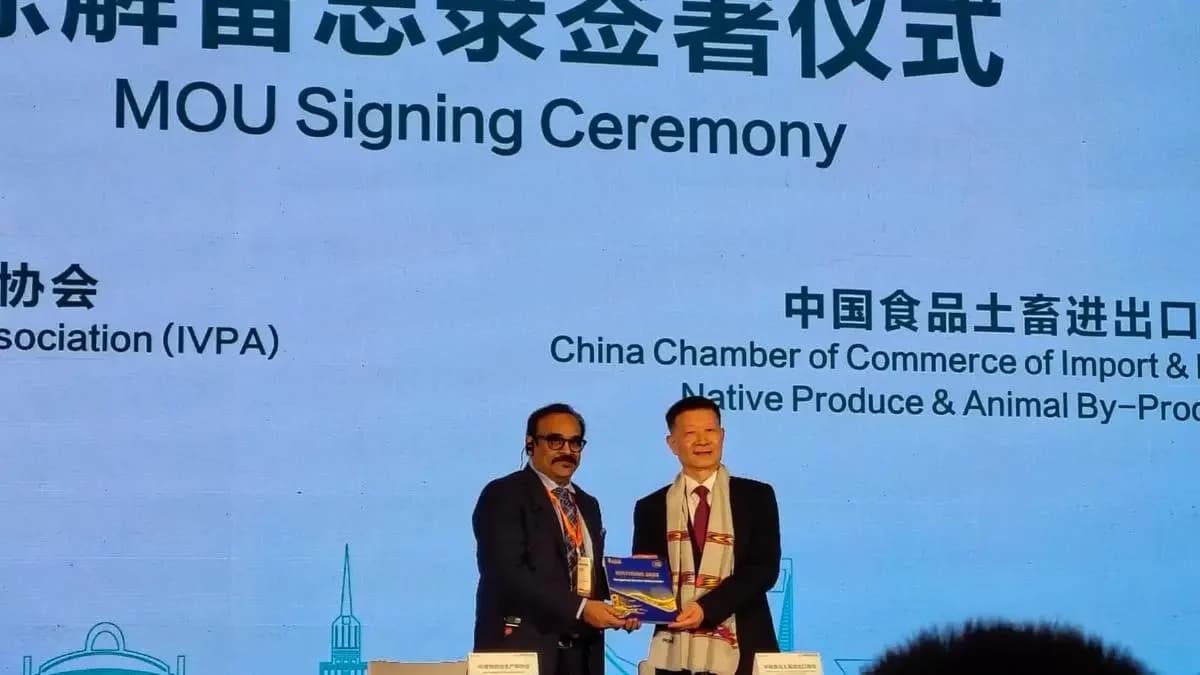
The Solvent Extractors' Association of India (SEA) and the Government of Nampula Province in northern Mozambique have signed a 'Statement of Interest' to explore a sustainable oilseed and vegetable oil corridor between Nampula and the Indian market. According to reports from The Hindu BusinessLine and TradingView News, the agreement was signed on the sidelines of Globoil India 2026 in Mumbai on Wednesday. The partnership includes Solidaridad Network Asia and Solidaridad Southern Africa as sustainability partners to ensure fair terms for farmers and environmentally responsible practices, with the corridor designed from the first day to meet the traceability and responsible production expectations of Indian customers and regulators.
Nampula Province represents one of Mozambique's leading farm regions and its most populous area, with only a small portion of its arable land currently under productive use. As reported by The Hindu BusinessLine and TradingView News, the province's soils and climate suit several oilseed crops, with smallholders already cultivating groundnut, soybean and sesame, while oil palm is native to the African continent. The province's strategic location on the Nacala Development Corridor provides road and rail links to the deep-water Port of Nacala on the Indian Ocean, offering a significantly shorter sea voyage to India's west coast compared to South American cargoes. Eduardo Mariamo Abdula, Governor of Nampula Province, emphasized that "Nampula has the land, the farmers and the port. What we need are partners who will build with us."
The 'Statement of Interest' initiates a three-year exploratory phase during which partners will jointly study opportunities before making commercial decisions. According to The Hindu BusinessLine and TradingView News, investment and sourcing will follow through separate agreements under Mozambican law, with SEA's member companies free to decide individually on their participation. Nampula Province will share data on land, agroecological zones, water and infrastructure, explain land use rights procedures, investment approval processes, and environmental licensing requirements, while opening access to district administrations, cooperatives and local businesses. The Joint Working Group will scope feasibility, land suitability, social, environmental, market and cost studies, assess infrastructure capacity including roads, rail, storage and port facilities, examine farmer finance and phyto-sanitary rules, and consult communities and producer organizations.
SEA will outline long-term Indian industry requirements for oilseeds, crude and refined oils, and oilmeal, along with quality specifications, storage, extraction and refining expertise. As reported by The Hindu BusinessLine and TradingView News, Solidaridad Southern Africa will advise on land rights, soil and water management, forest protection, community consultation and smallholder organization, while Solidaridad Asia will bring sustainability, traceability and due diligence expectations of Indian buyers, consumers and regulators. The partnership addresses India's need for new edible oil sources, with Angshu Mallick, President of SEA and Executive Deputy Chairman of AWL Agri Business Ltd, noting that "India cannot keep relying on a few countries for most of its edible oil. Every disruption in those markets reaches the Indian consumer within weeks. Africa is the natural next frontier for India's edible oil security, and today Nampula gives Indian industry a serious place to start."
The exploratory phase will scope feasibility, land suitability, social, environmental, market and cost studies, assess infrastructure capacity including roads, rail, storage and port facilities, examine farmer finance and phyto-sanitary rules, and consult communities and producer organizations. According to The Hindu BusinessLine and TradingView News, each party will bear its own costs, with partners approaching development partners and financial institutions jointly to fund the studies. BV Mehta, Executive Director of SEA, noted that Indian industry requires consistent volumes, quality meeting specifications, and competitive landed costs from new origins, emphasizing that "Nampula's position on the Indian Ocean gives it a head start on freight and transit time. If we can pair that with organised farmers, good seed, and local aggregation and crushing, Mozambique can become a dependable supply partner for India and not just an occasional one."