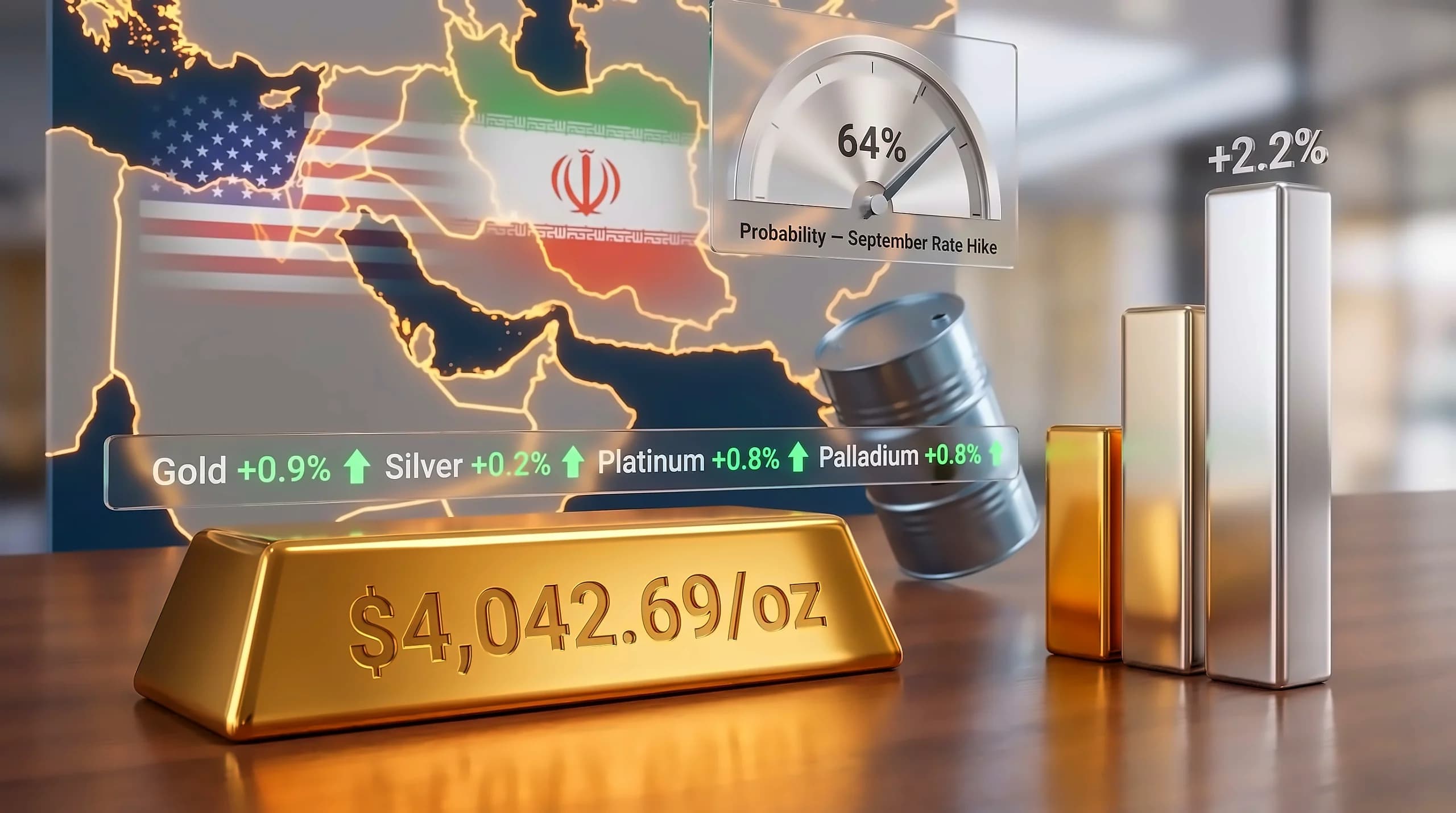
Gold prices declined sharply on Thursday, falling 2% to $4,049 per ounce as intensifying US-Iran conflict and soaring oil prices weighed heavily on the precious metal. Earlier, gold had defied downside pressure from rising oil prices and surged to $4,167 on Wednesday, but the latest surge in crude prices has reversed those gains. As per Praveen Singh, Head of Commodities at Mirae Asset Sharekhan, elevated expectations of a Fed rate hike are bearish for the metal, but the downside is expected to remain limited. Despite the recent weakness, both gold and silver remain on track to post weekly gains, demonstrating resilience despite near-term pressure from oil market volatility.
Central banks added 1,136 tonnes of gold worth around $70 billion to their reserves in 2022, according to data from the World Gold Council, representing the highest yearly purchase since records began. This massive accumulation demonstrates central banks' strategic diversification away from traditional reserve assets. China's central bank purchased $5.7 billion in gold during the first half of 2026, with most buying concentrated in the second quarter when gold prices were consolidating. As reported by Investing.com India, this renewed central bank buying pressure is expected to effectively put a floor under gold prices, with foreign central banks owning more gold than U.S. Treasury securities despite holding almost $10 trillion in U.S. Treasuries.
Brent crude oil surged for the fifth consecutive day on Thursday, hitting the $100 mark for the first time since May 26 on growing fears of an oil supply crunch. At the time of writing, Brent crude futures were trading at $100.84, up nearly 7% for the day. Oil supply concerns have amplified once again following Yemeni Houthis' attacks on ships in the Red Sea, as nearly 6 mbpd of crude oil transits through the Bab-al-Mandeb Strait. The rise in oil prices has intensified inflation concerns, boosting expectations of further interest rate hikes and putting pressure on non-yielding assets such as gold. Higher energy prices raise the risk of persistent inflation, reducing expectations of early monetary easing by major central banks, as reported by CNBC TV18.
Implied overnight futures reflect 0.92 rate hikes by September, with traders pricing in 1.09 rate hikes by September, and another rate hike potentially coming as early as March next year. The probability of a rate hike in September stands at 83% while the probability of a rate hike in December has increased to 93% from 77% a week ago. Investors are pricing in the possibility that the Federal Reserve may have to maintain a restrictive policy stance if inflation remains elevated, according to CNBC TV18 reports. A stronger dollar also makes gold more expensive for buyers using other currencies, further limiting demand. Market participants are also awaiting policy decisions from the Federal Reserve, Bank of Japan and Bank of England over the coming days, which could influence the near-term direction of precious metals.
Spot gold remains stuck in the $3,950-$4,200 range as traders monitor the US-Iran conflict and oil prices. Immediate support is seen at $4,000 and $3,950, while resistance is placed at $4,100, $4,170, and $4,200. According to Praveen Singh, the metal remains under pressure as oil prices spiked further, with range-bound trading between $3,950 and $4,200 likely to continue. Total known ETF holdings of gold increased for the second straight day on July 22, currently at 96.43 Moz, though they are down 2.52 Moz year-to-date. Registered COMEX inventory, at 14.85 Moz, remains near a cycle low and is down 38% from the record peak of 24.25 Moz seen in April, as reported by Business Standard.