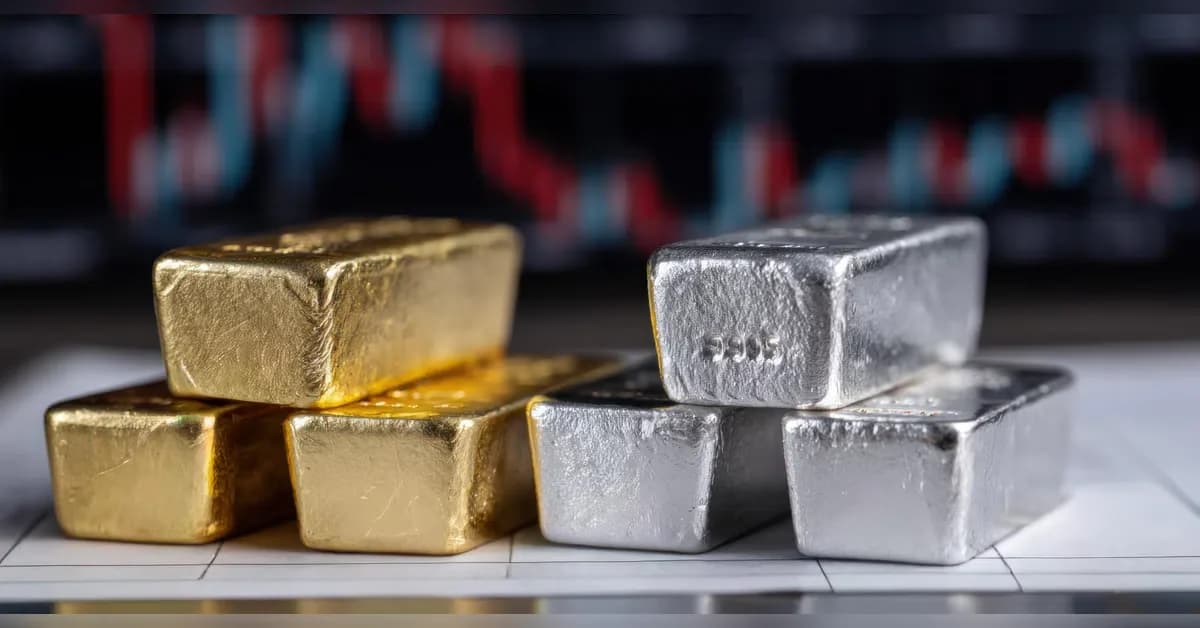
Silver ETFs emerged as the biggest losers on June 25, plunging nearly 4 percent while gold ETFs fell around 2 percent during morning trade. According to reports from Moneycontrol, the decline tracked weakness in domestic and global bullion prices amid heightened volatility in precious metals. At around 10:45 am, Nippon India Silver ETF (SilverBeES) was down 3.81 percent at ₹205.23, while SBI Silver ETF fell 3.76 percent to ₹210.25. ICICI Prudential Silver ETF declined 3.78 percent to ₹214.05, and Tata Silver ETF slipped 3.74 percent to ₹20.85. However, latest NSE data shows even steeper declines with HDFC Silver ETF falling 4.01 percent to ₹200.39 and Tata Silver ETF dropping 3.92 percent to ₹20.01.
Among gold-backed funds, ICICI Prudential Gold ETF dropped 1.94 percent to ₹119.23, SBI Gold ETF declined 1.92 percent to ₹118.91, Nippon India ETF Gold BeES fell 1.86 percent to ₹115.37, and Tata Gold ETF was down 1.81 percent at ₹13.57. As reported by Moneycontrol, the weakness mirrored a sharp decline in precious metal prices on the Multi Commodity Exchange (MCX). Latest data shows Nippon India Gold ETF (GoldBeES) dipped 2.21 percent to ₹114.55, ICICI Prudential Gold ETF fell 2.76 percent to ₹117.95, SBI Gold ETF dropped 2.8 percent to ₹118.17, and HDFC Gold ETF traded 2.64 percent lower at ₹117.75.
On the Multi Commodity Exchange, MCX gold July futures contract fell 0.53 percent to ₹1,38,786 per 10 grams during early trade on Thursday, while MCX silver July futures dropped 1.2 percent to ₹2,10,519 per kg. According to The Hindu BusinessLine, gold prices dropped amid a fall in spot demand. MCX silver futures fell 0.96 percent to ₹2,11,710 per kg. Silver witnessed extreme volatility at the opening bell, with the July futures contract initially plunging by nearly ₹3,000 to around ₹2.10 lakh per kg, roughly half of the record high of ₹4.20 lakh per kg touched in January, before staging a swift recovery to trade above ₹2.15 lakh per kg within minutes. Despite the rebound, silver prices have fallen by around ₹17,000 per kg over the first four trading sessions of the week.

The decline in domestic bullion prices followed continued weakness in international markets, with gold futures declining 0.35 percent to $3,985.43 per ounce in New York. As reported by The Hindu BusinessLine, analysts attributed the fall in precious metal prices to weak global cues. The metal came under pressure as the US dollar remained firm and investors increased bets that the US Federal Reserve could raise interest rates this year to combat persistent inflation, reducing the appeal of non-yielding assets such as gold. Gold futures also opened sharply lower, with the August contract slipping to ₹1,40,543 per 10 grams before rebounding to nearly ₹1,42,000.
According to Harshal Dasani, Business Head at INVasset PMS, the correction in gold and silver ETFs represents a reset in the rate trade rather than just a bullion price move. "The correction in gold and silver ETFs is not just a bullion price move; it is a reset in the rate trade. Precious metals are reacting to a stronger dollar, rising US rate-hike expectations, and the unwind of crowded safe-haven positions after a sharp rally earlier in the cycle," Dasani explained. He noted that silver ETFs have underperformed gold ETFs because silver is a higher-beta metal carrying both precious-metal demand and industrial-demand expectations, making it more vulnerable to liquidity tightening and risk appetite changes. Despite the correction, Dasani emphasized that the recent decline does not weaken the long-term investment case for gold, which continues to serve as a hedge against currency fluctuations, geopolitical risks, and portfolio volatility.