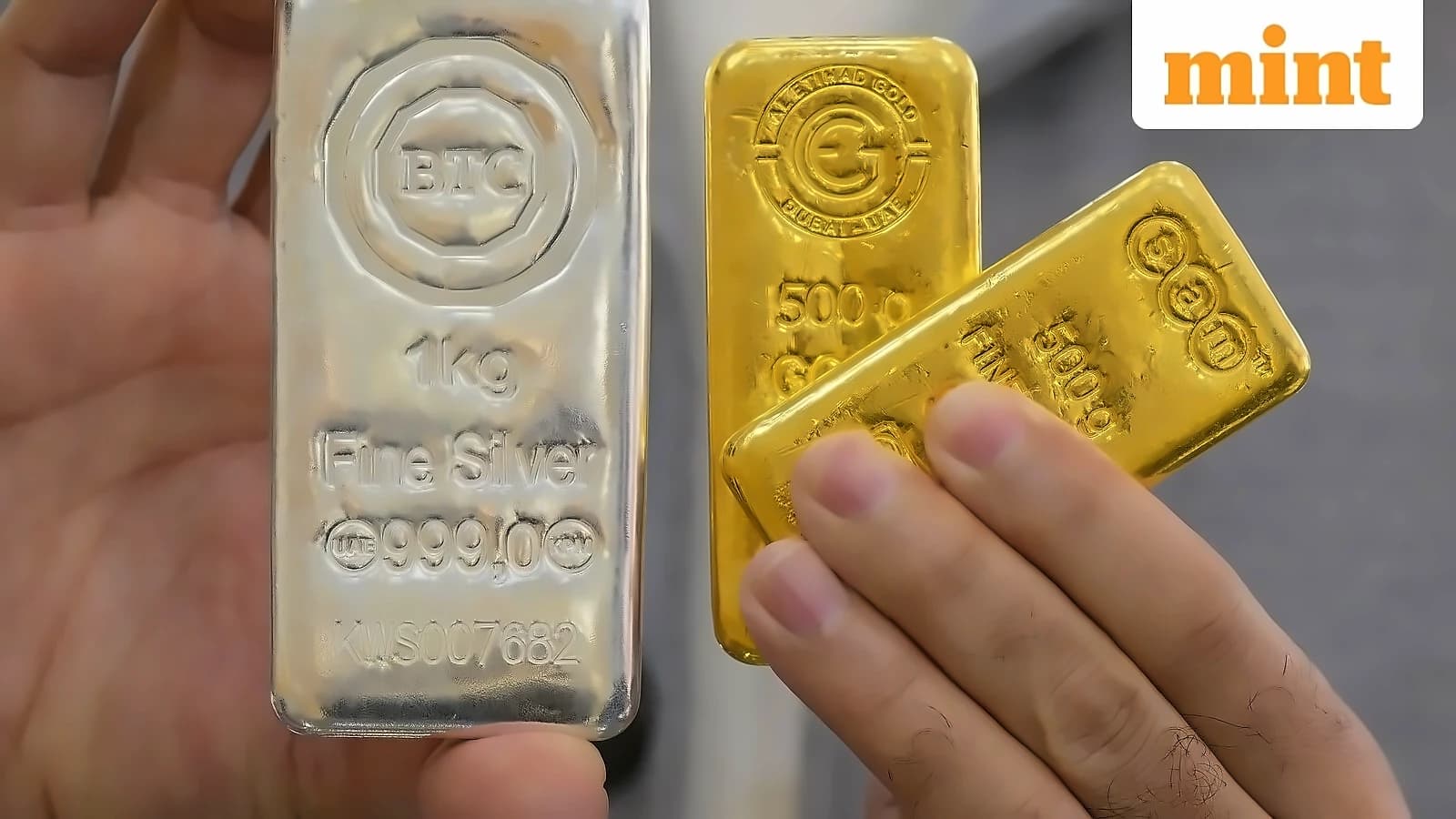
Gold and silver prices have experienced significant declines over the past three sessions on the MCX, with silver dropping ₹15,526 (7%) to ₹2,10,308 per kg and gold falling ₹5,863 to ₹1,40,666 per 10 grams. According to The Economic Times, the precious metals extended their losses for a third consecutive session, pressured by a stronger U.S. dollar and mounting expectations that the Federal Reserve could raise interest rates this year. In the latest trading session, gold was down 0.13% at ₹12,087 per gram while silver declined 1.29% to ₹173,619.64 per kg. International markets showed similar weakness with gold trading at $3,989.01 per ounce, down 0.04%, and silver falling 1.07% to $57.37 per ounce. Gold prices have come under heavy pressure in recent weeks as the Federal Reserve has adopted a more hawkish stance, lifting the U.S. dollar and Treasury yields. Gold prices tumbled to a seven-month low on Thursday, nearing $3,985 per ounce, as a robust dollar and anticipation of Federal Reserve interest rate hikes weighed heavily on the market. Silver has fallen as much as 14% this week, hitting a seven-month low as expectations of US Fed rate cuts fade and bond yields rise, with the metal now trading at less than half of its January all-time high levels.
The decline has been driven by traders now expecting three rate hikes this year and seeing roughly a 67% probability of a hike in September, as reported by The Economic Times. The U.S. dollar rose for a third consecutive session on Wednesday, touching a 13-month high and making gold more expensive for holders of other currencies. According to Business Standard, the dollar climbed to a one-year high near 101.5, with analysts noting that growing expectations of Federal Reserve rate hikes in September, with additional increases potentially following before year-end. Markets are now pricing around a 33% chance of a July rate hike and a 66% probability of a 25-basis-point increase by September, as reported by Investing.com India. A stronger dollar makes U.S. dollar-denominated gold more expensive for overseas buyers, while higher interest rates increase the opportunity cost of holding the non-yielding precious metal. Gold, traditionally viewed as a hedge against inflation, tends to lose some of its appeal when interest rates rise because it does not offer any yield. Investors are now keenly awaiting key U.S. inflation data for further monetary policy direction, with the market closely monitoring upcoming inflation figures to gauge the next steps in the market.
On Tuesday, 30 June, gold prices continued their decline for the third consecutive day, with 24 carat gold tumbling below ₹1,41,000 per 10 gm according to GoodReturns.in. 22 carat and 18 carat gold also fell by ₹2,550 and ₹2,080 per 10 gm, retailing at ₹1,28,450 and ₹1,05,100 respectively. At the IBJA, 24 carat gold of previous trading session traded at ₹1,41,178 per 10 gm. Despite the sharp sell-off, gold on the MCX was trading a tad higher with August futures trading higher by 0.09% at ₹1,41,400 per 10 gm. US gold futures also traded with a positive bias just above $4,000 per ounce level. Gold rate across major Indian jewellers shows Kalyan Jewellers 24 carat gold priced at ₹14,013, while 22 carat and 18 carat gold is available at ₹12,845 and ₹10,510 per gm respectively. Joyalukkas quoted 22 carat gold at ₹12,845 per gm, 24 carat gold at ₹14,013 per gm, and 18 carat gold at ₹10,510.
According to market analyst Jain, gold has support at $3,980-$3,920 per troy ounce and resistance at $4,040-$4,085, while silver has support at $55.50-$53.80 and resistance at $60.00-$61.40 per troy ounce. On MCX, gold has support at ₹1,40,000-₹1,38,800 and resistance at ₹1,42,400-₹1,43,350, while silver has support at ₹2,09,100-₹2,05,000 and resistance at ₹2,16,600-₹2,21,000. XAU/USD has broken below its symmetrical triangle pattern and the 200 SMA, falling to a low of 3,965. The 50 SMA is almost crossing below the 200 SMA to form a bearish death cross. Sellers will look to extend the decline towards 3,930, the November low, ahead of the 3,800 psychological level. Any recovery would first need to reclaim 4,100, the March low, with 4,370 coming into focus above there. As reported by The Economic Times, Jain advised investors against bottom-fishing in precious metals at current levels but suggested exiting short positions as the market has entered an oversold zone. Despite near-term weakness, analysts remain constructive on the long-term outlook, with investors advised to avoid chasing prices and instead adopt a staggered investment approach as gold continues to remain an important portfolio hedge against inflation, currency volatility and future geopolitical uncertainties.
All eyes are now on today's U.S. Core PCE data, the Fed's preferred measure of inflation, which is expected to rise to 3.4% from 3.3%. A stronger-than-expected reading could reinforce expectations of further Fed tightening, lifting the U.S. dollar and Treasury yields while putting additional pressure on gold. A softer reading could trigger some relief after the recent sell-off. Falling oil prices should help ease inflation pressures over time, however, markets continue to focus on sticky underlying inflation and a resilient U.S. labour market, as reflected in elevated 2-year Treasury yields despite crude oil trading near four-month lows. The weakness in gold highlights how markets have shifted their focus away from safe-haven demand and towards the prospect of higher U.S. interest rates. A stronger-than-expected inflation reading would reinforce expectations for further Fed tightening and could provide another leg higher for USD/JPY, while a softer reading could temper recent hawkish repricing and trigger some profit-taking in the dollar.