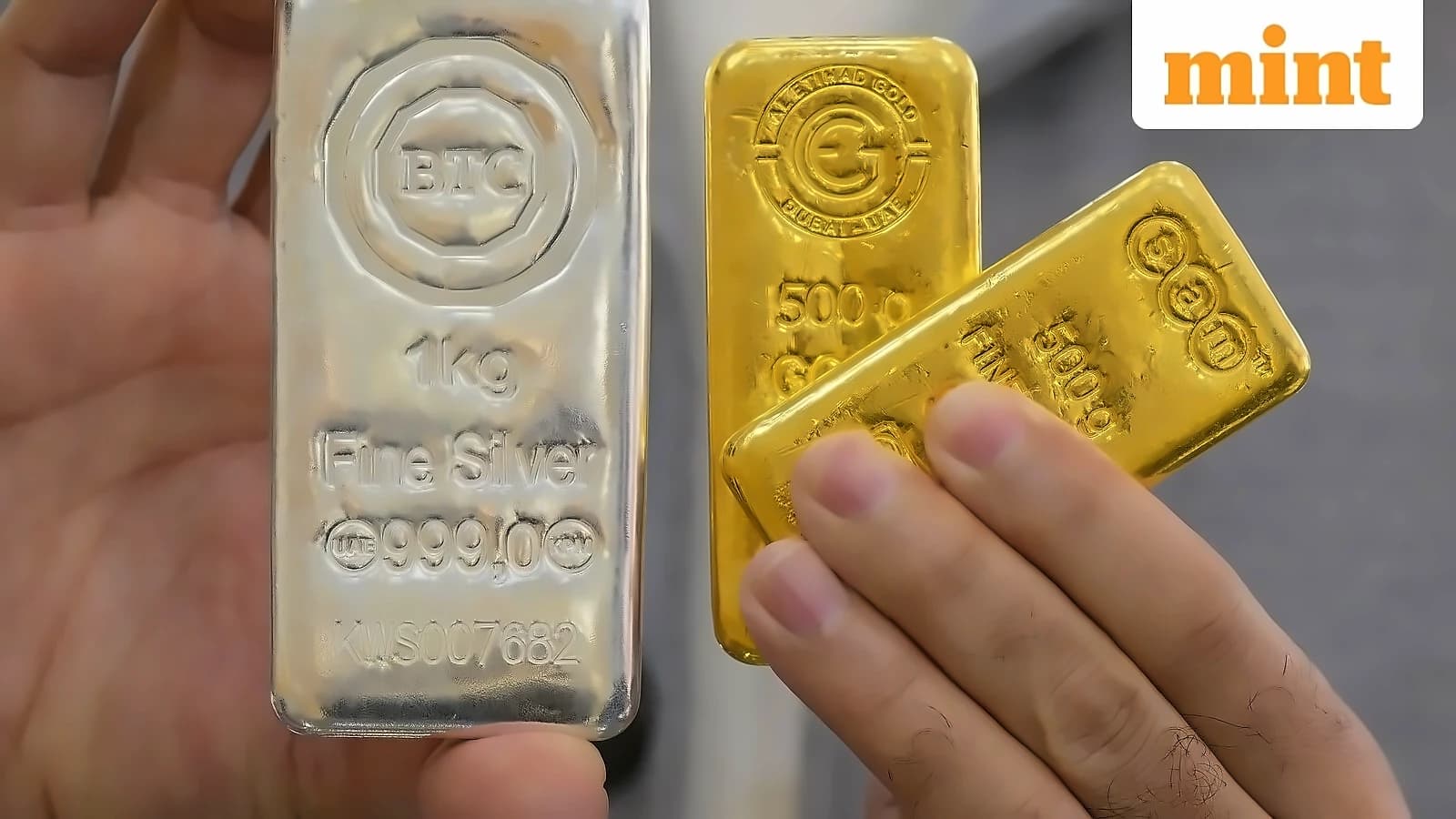
Gold prices experienced a dramatic recovery on Wednesday, rising ₹2,028 per 10 grams to hit ₹1,53,699 on MCX as safe-haven demand strengthened after President Trump extended the ceasefire with Iran. COMEX gold futures rebounded by $70 per troy ounce to an intraday high of $4,790, recouping part of the $109 loss recorded in the previous session. Silver futures also jumped $2.14 to $78.63, recovering over half of the $3.55 decline in the prior session. The precious metal had earlier touched its lowest level since April 13 during the session, with US gold futures for June delivery falling 1.4% to $4,812.60. Spot silver also declined 1.8% to trade at $79.39 per ounce, while platinum fell 1.4% to $2,073.75 per ounce and palladium dropped 1.1% to $1,542.25 per ounce. The sharp intraday reversal underscores a market caught between fleeting geopolitical calm and looming monetary policy decisions, with the metal having earlier closed with a weekly gain of 1.9% at $4,830 in the week ending April 17, marking its fourth straight weekly gain.
Donald Trump announced on social media that the US had agreed to a request by Pakistani mediators to hold attacks on Iran until Tehran presents a unified proposal and negotiations are concluded. Trump's announcement struck a markedly different tone from his earlier comments, as earlier this week he said it was 'highly unlikely' he would extend the two-week truce if an agreement was not reached before it expired. However, recent media reports indicate that Vice President JD Vance cancelled a planned trip to Islamabad for talks after Tehran informed the US via Pakistan that it would not take part in the meeting. Meanwhile, Iran reportedly seized two ships in the Strait of Hormuz on Wednesday, tightening its grip on the strategic waterway after Trump said the US would maintain its blockade of the country even after extending the ceasefire. The extension of diplomatic talks has provided temporary relief to markets, though the sustainability of this trend will depend on how developments unfold in the near term.
According to The Times of India, in the short run, gold prices will move primarily on the Fed nominee Warsh's views on economy, dollar index, oil prices and yields. Kevin Warsh will face a confirmation hearing before the Senate Banking Committee on Tuesday, April 21, with market observers parsing every clue about his potential policy direction. Warsh is expected to tell lawmakers at his confirmation hearing that he is 'committed to ensuring that the conduct of monetary policy remains strictly independent,' according to his prepared opening statement obtained by Reuters. Warsh said the central bank needs a new framework to deal with persistent inflation, though he did not offer specifics, and also said the US president has not asked him to commit to any particular rate decisions. Should Warsh signal a more accommodative stance, perhaps by characterizing tariffs and energy prices as temporary inflationary factors, expectations for rate cuts could rise, providing a tailwind for gold. A hawkish, restrictive tone, conversely, could trigger a rapid test of key support levels.
According to boerse-global.de, global gold-backed Exchange-Traded Funds (ETFs) held a record 4,171 tonnes in February, demonstrating robust underlying interest. J.P. Morgan forecasts substantial central bank purchases this year, expecting these institutions to absorb approximately 755 tonnes from the market—a figure below the record but well above the pre-crisis average of 400-500 tonnes. Notably, the Bank of Korea is reportedly planning its first gold investments since 2013. However, recent flows show a stark regional divide, with Asian funds, led by China and India, saw record monthly inflows of $14 billion, while North American gold ETFs experienced massive outflows of $13 billion in March—the largest monthly withdrawal on record. The SPDR Gold Shares (GLD) reflects this tension, with net inflows of about $132 million over the past five trading days but monthly outflows approaching $2.8 billion. Both gold and silver had closed Tuesday's session with sharp losses, falling ₹2,272 and ₹7,844, respectively, before the current recovery.
According to FXStreet, Gold remains robust, trading above all major medium-term trendlines with immediate support seen around $4,645, further cushions at $4,554 and $4,351. A break below these levels would bring the 200-day moving average near $4,174 into view. On the upside, resistance is firm around $4,937, with the next key hurdle in the $4,867 to $4,881 zone. The metal still trades roughly 14% below its all-time high of $5,595, reached in late January. Some major banks see significant room for recovery; Swiss private bank UBP recently rebuilt its gold position to around 6% and has set a price target of $6,000 for 2026. Market experts believe gold may remain below the $5,000 level unless tensions ease in a sustained way, with analysts noting that central bank buying continues across many countries and governments still hold gold as a reserve asset, providing long-term support despite current short-term pressure. Precious metals have concluded the past three weeks on a positive note as hopes of de-escalation strengthened, with prices extending gains today following the latest ceasefire extension.