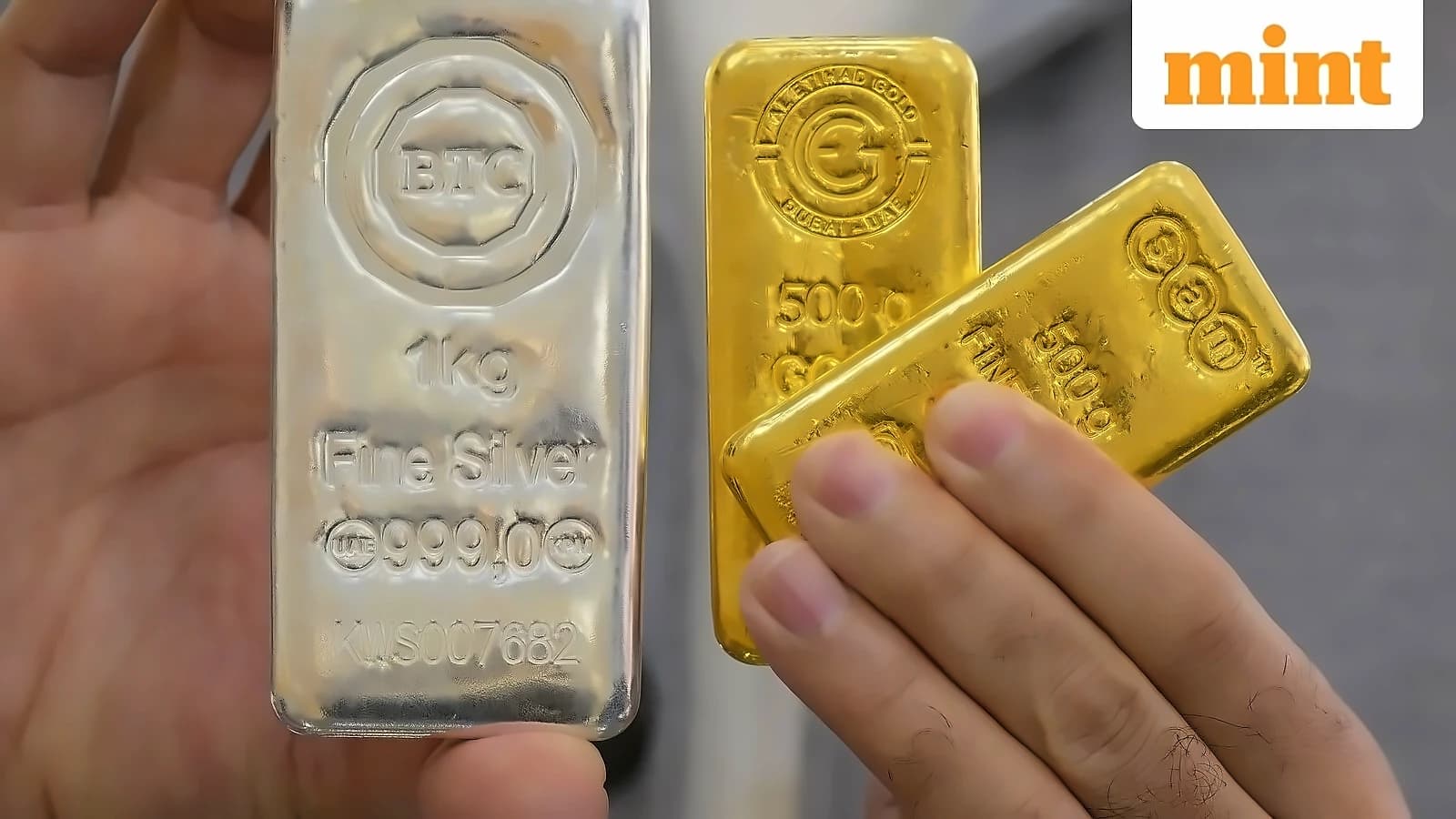
Gold prices have rebounded strongly on Thursday (April 30), with MCX gold June futures rising 1.57% to ₹1,51,350 per 10 grams as of around 2:40 pm, recovering from recent one-month lows. According to Mint, this follows the US Federal Reserve's decision to keep interest rates unchanged at 3.5%-3.75% for the third straight policy meeting on April 29, which provided some relief to precious metals markets. On the international front, spot gold rose 1% to $4,588.09 per ounce, rebounding after hitting its lowest level since March 31 in the previous session. The modest uptick comes after a volatile global backdrop, where COMEX gold rebounded from a one-month low in the previous session, supported by a softer US dollar and selective dip-buying. However, gains remain limited as elevated crude oil prices and expectations of a 'higher-for-longer' interest rate environment continue to cap significant gains.
Gold prices in the retail market have declined for the third-straight day, with 24 carat gold down 0.47% or ₹720 per 10 gm, quoting at ₹1,50,940 per 10 gm, while 22 carat gold is retailing for ₹1,38,380 per 10 gm, down 0.47% or ₹650 per 10 gm, as reported by Upstox. This retail decline contrasts with the MCX futures recovery, highlighting the divergence between wholesale and retail gold markets. The dollar index softened in trade only to recoup losses later, adding complexity to gold's price movements across different market segments.
Oil prices have surged dramatically amid reports of renewed escalation in the US-Iran conflict, with Brent crude trading above $120 per barrel - a level last seen in June 2022. As reported by Mint, this represents a significant escalation from previous levels, with higher oil prices since the onset of the U.S.-Israel war on Iran stoking inflation fears and concerns around elevated interest rates. The persistent strength in oil prices is a key factor driving market caution ahead of central bank meetings this week. While uncertainty lingers over a second round of peace talks, recent media reports suggest that Iran has submitted a new proposal to the US aimed at reopening the Strait of Hormuz and ending the war. The proposal also includes postponement of nuclear negotiation, providing some optimism for market stability. According to CNBC TV18, elevated crude oil prices have reinforced inflation concerns, which in turn are shaping expectations that major central banks may delay rate cuts.
The US Federal Reserve's decision to keep interest rates unchanged at 3.5%-3.75% for the third straight policy meeting on April 29 has provided some relief to precious metals markets. As reported by Mint, Fed Chair Jerome Powell struck a cautious but largely expected tone, which had little impact on market sentiment. US equities, including the S&P 500 and Nasdaq, ended nearly flat on Wednesday, while most Asian markets closed in the red. However, the US dollar and 10-year Treasury yields rose, largely tracking the sharp increase in crude oil prices, with the benchmark US 10-year yield climbing 0.25% to 4.43%. According to Julius Baer's Carsten Menke, the meetings are always a focal point for the gold market, and the decision might reflect the realization that external factors – the Iran war, its impact on energy prices and inflation – could be determining the path of US monetary policy.
Despite the recent rebound, gold is headed for a second consecutive monthly decline as persistently high oil prices continue to fuel inflation concerns and expectations of elevated interest rates. According to Augmont's Renisha Chainani, gold has reached its target level of $4,550 (around ₹1,48,000), with the next downside support placed at $4,450 (approximately ₹1,45,000). On the technical front, MCX Gold opened with a slight gap up and is trading near the ₹1,49,500 zone, attempting a modest recovery after a sharp decline from recent highs near ₹1,51,500. As per Enrich Money's Ponmudi R, immediate resistance stands at ₹1,50,000; a sustained move above this level could ease near-term bearish pressure toward the ₹1,51,000–₹1,51,500 zone. On the downside, a break below ₹1,49,000 could trigger extended weakness toward ₹1,48,600–₹1,48,000, with ₹1,47,000 acting as a deeper floor. The near-term bias remains bearish-to-cautious, weighed down by dollar demand and evolving geopolitical developments.