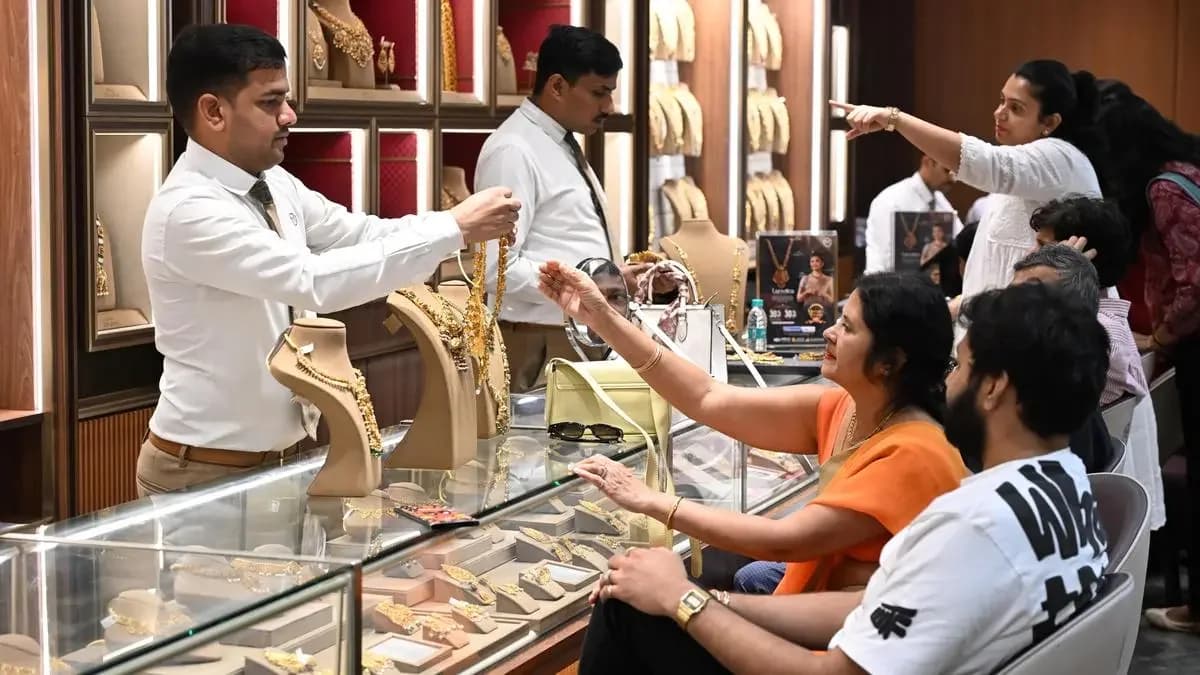
Investment demand for gold in India overtook jewellery consumption for the first time ever in the March quarter of 2026, as consumers deferred their jewellery purchases due to volatile prices and opted instead to invest in instruments such as gold exchange traded funds. According to the World Gold Council's demand trends for Q1, investment demand surged 52% on-year to 82 tonnes, surpassing jewellery demand, which declined 19.5% to 66 tonnes during the quarter. This shift was driven by a sharp rise in domestic gold prices, which climbed 81% on-year to record levels, denting affordability in the jewellery segment while boosting gold's appeal as a safe-haven investment. The trend reflects a broader change in consumer behaviour, with Indians increasingly viewing gold as a financial asset rather than just a cultural or ornamental purchase.
Overall, gold demand in India rose 10.2% to 151 tonnes in Q1 2026, while in value terms it nearly doubled to a record ₹2.27 lakh crore, reflecting the impact of elevated prices. Investment demand was led by record inflows into gold ETFs, jumping 186% to 20 tonnes in value and 3 times in volume to 20 tons, in addition to strong buying of bars and coins, which accounted for 62 tonnes, nearly matching jewellery volumes. In contrast, jewellery demand was down 19.5% to 66 tonnes but increased 47% to ₹99,920 crore in value terms as prices turned volatile and hit record highs in the March quarter. The World Gold Council notes that "investment demand now far exceeds fabrication demand," underscoring a structural shift in the gold market.
The yellow metal prices zoomed 81% to ₹1.51 lakh per 10 gram against ₹83,375 logged last year, with gold imports increasing 39% to 196 tonnes even as prices rallied 82% to $4,873 an ounce. Despite high prices, recycled gold quantum increased 19% at 31 tonnes compared to 26 tonnes previously. According to Sachin Jain, Regional CEO, India, World Gold Council, the domestic gold market reflects a continued divergence between volume trend and value growth, shaped by record-high prices and evolving consumer preferences. However, gold has corrected sharply from its peak, falling nearly 26% (around ₹53,000 per 10g) from its MCX high of ₹2,02,984, with prices now moving in a narrow range due to lack of fresh triggers. The World Gold Council reports that "investment demand will become increasingly prominent in the coming quarters, with both financial and retail investors showing more interest in gold."
Consumer behaviour is clearly adapting to affordability constraints, with buyers increasingly opting for lighter-weight jewellery, lower purity, and studded designs to manage costs. The divergence between income segments is becoming more visible, as while high-income consumers continue to purchase heavier pieces, mass-market buyers are either cutting back or shifting to smaller, more affordable formats. Additionally, exchange of old gold jewellery and gold-backed loans have become more prominent, indicating liquidity-driven behaviour amid elevated prices. Globally, bar and coin demand jumped 42% to 474 tonnes, one of the highest quarters on record, with Asian investors leading the trend. India's investment appetite extends beyond physical gold, with Gold ETFs and digital gold platforms seeing strong traction, as retail investors diversify their exposure across formats with a clear tilt towards financial gold. The World Gold Council notes that "weak stock market performance in recent quarters has been drawing investors to gold ETFs, and the trend is likely to continue."
The World Gold Council has estimated full year demand to be in the range of 650-750 tonnes against 768 tonnes registered in 2026, with investment demand to remain a key driver supported by macroeconomic uncertainty, volatile equity markets and continued global price strength. While elevated prices may act as a near-term headwind for jewellery demand, the summer wedding season and regional festivals are expected to provide support, building on the momentum seen during Akshaya Tritiya. Elevated prices, geopolitical risks, and inflationary pressures are likely to keep gold attractive as a store of value, with jewellery demand expected to remain under pressure in volume terms even if spending holds steady. This marks a pivotal transition where gold is no longer just a symbol of wealth — it is increasingly becoming a strategic financial asset in household portfolios. The trend has been particularly supported by subdued equity market performance, with the Nifty 50 gaining just about 2.4% since early 2025, while domestic gold prices have nearly doubled over the same period, creating a clear gap in returns that has encouraged investors to increase their allocation to gold.