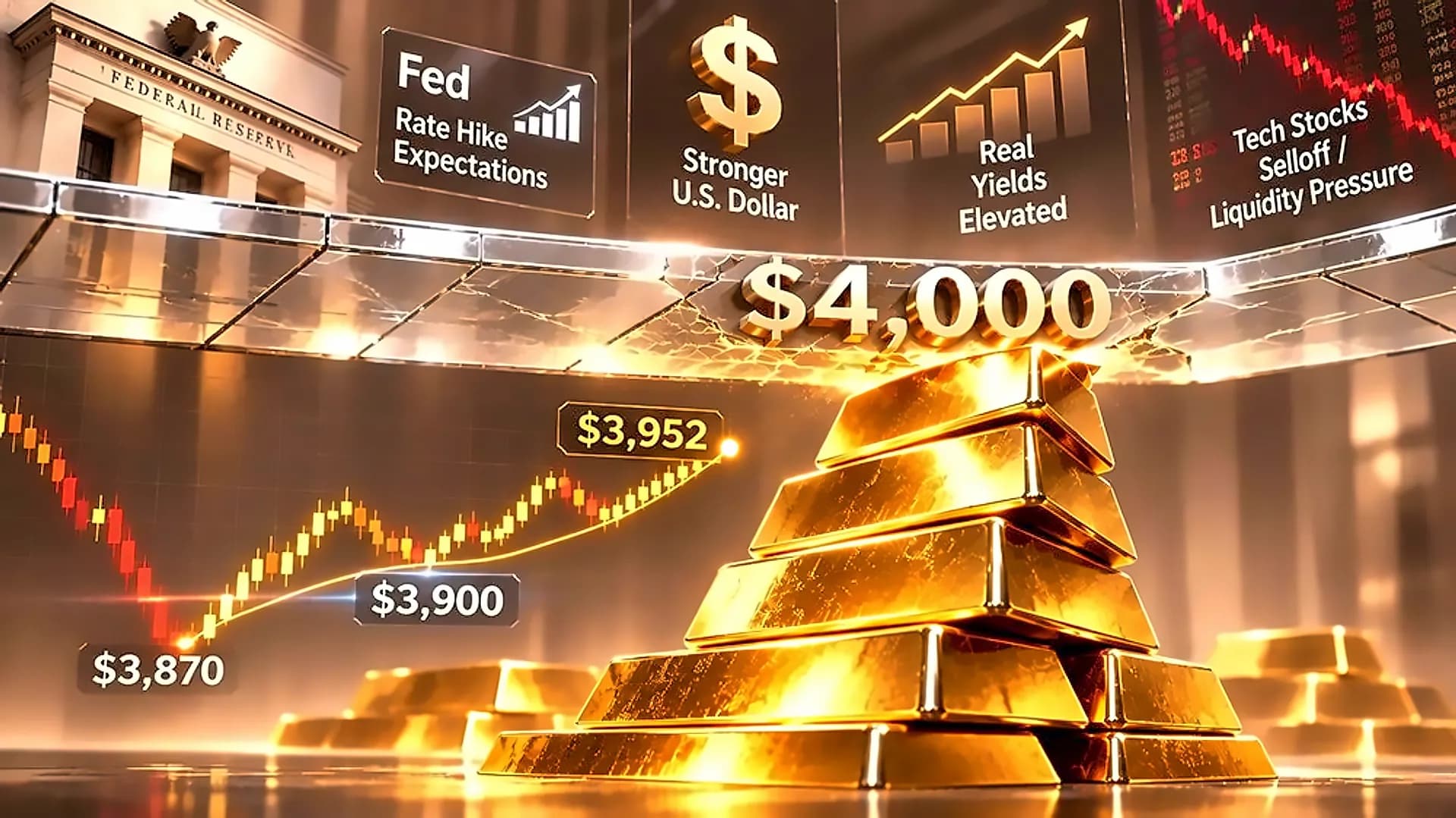
Gold prices showed continued weakness with spot gold falling through the support at $4,066 on October 22, trading at $4,037 - the lowest level since August 3, according to Business Standard. This represents a 2.5% decline for the day as the metal moved out of its $4,066-$4,226 October range. In India, gold of 99.9% purity fell ₹1,300 to ₹1.49 lakh per 10 grams on October 21, while silver declined ₹1,600 to ₹2.13 lakh per kilogram, according to the All India Sarafa Association. US gold futures for December delivery had fallen 0.2% to $4,136.20, compared with the previous close of $4,143.40 an ounce, while spot silver fell 0.9% to $57.44 per ounce, against the previous close of $58.155 an ounce, according to Reuters. Silver was trading lower at $57.97 in the latest session, while platinum and palladium also edged lower, as reported by Bloomberg. The precious metal has fallen by about a fifth since the US-Iran conflict erupted in late February, pushing energy prices higher and fueling inflation concerns.
Markets continue to price a 7% chance of a Federal Reserve rate increase at the October 28 meeting, representing a significant shift from earlier expectations, according to Business Standard. This represents a dramatic reduction from the 92% chance of a December rate hike that markets had previously priced in. The probability of a quarter-point hike sits at less than one-in-six, with Chair Kevin Warsh doing nothing to dispel expectations it will hold interest rates steady in his Friday speech ahead of a communications blackout. Inflation remains well above the central bank's 2% target, and traders see around an 85% probability of another rate increase later in the year, as reported by Bloomberg. Elevated energy costs increase the possibility that the US central bank will need to further adjust monetary policy to contain price pressures, with higher rates typically a headwind for the precious metal as it pays no interest. Signs of a softening US economy emerged in recent days when data showed September housing starts fell and pending home sales were at a record low, adding to the case for maintaining current policy.
Crude oil prices surged more than 3% on October 22 as the US President Trump denied Iran talks, according to Business Standard. Brent crude oil futures jumped to $112.68 on Thursday, the highest since May, and were up more than 3% for the day. A drone attack on Aramco's Shaybah field on October 21 killed two people, which amplified supply worries and contributed to the oil price surge. Although crude oil flows through the Middle East have topped pre-war volumes, concerns over escalation of US-Iran tensions, steep crack spread, low SPR Reserves and lingering uncertainty over oil flows continue to support oil prices. Ashish Rajodiya, Head of Commodities at PL Capital, said early optimism over a possible Iran peace deal had faded after reports of a potential agreement were disputed, allowing crude prices to recover. Elevated crude oil prices can add to inflationary pressures, potentially complicating central banks' decisions on interest rates.
Gold ETF flows remain quite encouraging with total net global gold ETF holdings rising to 101.55 Moz, the highest since July 2022, as reported by Business Standard. ETFs recorded a net inflow of 0.68 Moz in October, with holdings now up 2.60 Moz (81 tons) year-to-date and up 0.63 Moz (20 tons) since the beginning of the Iran war on February 28. Gold bar and coin demand has moderated this year on waning price momentum, but net ETF inflows rose to US $466.2 million in September, the highest in seven months, with nearly 3 tons of gold added to holdings during the month, taking cumulative holdings to 124 tons. According to Kavita Chacko, research head for India at the World Gold Council (WGC), domestic gold price discounts for gold narrowed sharply in October, with discounts dropping from an average of $66 per ounce in September to $8 as of October 16 on improving seasonal demand. Seasonal gold demand is gaining strength in annual festive and wedding period as recent decline in gold prices supports demand.
Near-term resistance is at $4,140/$4,227, while support is at $4,000/$3,930, according to Business Standard. MCX December gold futures were trading at ₹1.46 lakh per 10 grams, down 0.35%, while December silver futures fell 1.20% to ₹2.08 lakh per kg on October 21, as reported by CNBC TV18. Gold prices had touched a high of ₹1,80,779 per 10 gram earlier this year, while silver prices had touched a high of ₹4,20,048 per kg earlier this year. According to Ajay Kedia, director of Kedia Advisory, gold was technically witnessing fresh selling pressure, with open interest rising 0.42% to 16,829 contracts as prices declined by ₹747. Gold has initial support at ₹1,45,750, followed by ₹1,44,980, with resistance at ₹1,47,320. Silver was technically witnessing short covering, with open interest falling 1.45% to 19,522 contracts as prices rose by ₹1,657. Silver has initial support at ₹2,08,570, followed by ₹2,05,650, with resistance at ₹2,13,920. For international gold, international prices are holding a support zone of $4,080-$4,200 an ounce, with a sustained move above $4,200 potentially opening the way towards $4,400, while a break below could expose gold to further downside towards $3,950. For international silver, the $57 an ounce level is an important support, with a decline towards $54-$55.50 remaining a downside possibility, while a sustained move above $59 could open the way towards $62. As oil prices are expected to rise further, the shiny metal may fall further, though selling aggressively at the prevailing levels without a strict stoploss should be avoided.